The Real Value of the Remote Work Premium

Working across research, policy, and data-driven analysis, the Editorial Board ensures that published pieces reflect a consistent institutional perspective grounded in quantitative reasoning and long-term structural assessment.
Authored On
Modified
The remote work premium depends on job design and management
Productivity gaps between remote and office work are often small
Well-designed hybrid systems capture flexibility without losing performance

Workers express a clear preference for flexible work arrangements, often valuing them above higher salaries. Market research, including experiments and surveys, supports this assertion. Employees are willing to accept pay reductions, sometimes in the single-digit to double-digit percentages, to maintain remote work options. One rigorous study focusing on tech workers in the U.S. suggests they value entirely remote positions at a 25% salary discount. Work flexibility is a key consideration for many workers. Thus, our approach to remote work needs to evolve beyond a simple "good" or "bad" determination. A better approach is to consider the remote work premium as a mix of benefits that vary by workplace, work requirements, and employee needs. It's a combination of a perk, a compensation consideration, and an operational design issue. Viewing the topic in this way changes our thinking, suggesting improvements for educators, managers, and policymakers. The goal is to leverage flexibility while retaining the advantages of in-office work.
Reframing the Remote Work Premium: From a Simple Debate to a Conditional Package
The debate around remote work has polarized into two simplistic viewpoints. One camp considers remote work as almost universally beneficial, resulting in happier employees, greater output, and less turnover. The other sees it as a danger to mentorship, teamwork, and company culture. Neither of these views is totally right because they overlook the distinction between what employees want and what organizations require to operate effectively. The remote work premium is often viewed as a single number, for example, a certain dollar amount or percentage difference in wages. This approach hides a more complex reality: the premium includes the value of work flexibility, the willingness to trade salary for it, and the company's practices that either strengthen or weaken the impact of remote work.
Since 2023, studies have confirmed that remote work success depends on the environment. Different surveys show different numbers of how much work is performed at home. Published comparisons of data show that work-from-home estimates for 2023–24 range from about 15% to over 35% of paid workdays. The differences depend on the methods used and how the questions are asked. Standardized methods that account for these variations estimate that about one-quarter of paid workdays have been remote recently. This is a key point to consider: to calculate the premium, we must first decide what portion of the work is remote and how we define remote. Otherwise, we're comparing different things.
When Pay, Production and the Premium Don't Match: Investigating Why
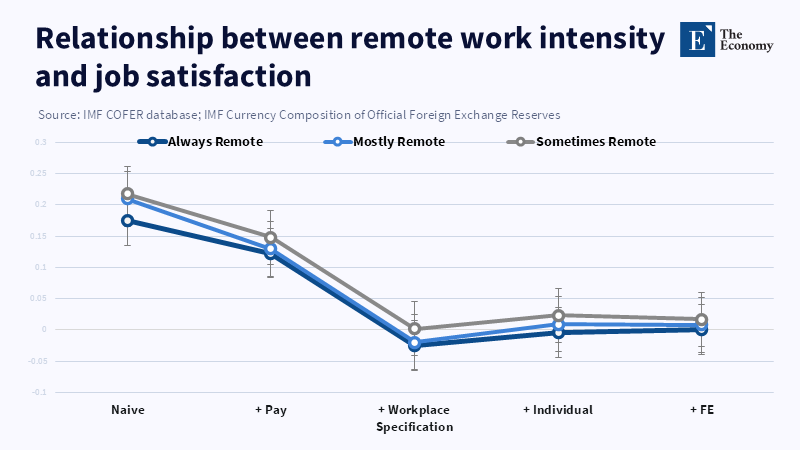
Let's consider pay first. Several recent studies ask a practical question: How much less money are people willing to accept for remote work options? The answers vary depending on who is asked. According to a new report from the World Economic Forum, employees who choose remote work typically earn less than those who go into the office, with the highest salaries often reserved for in-office roles. The different averages do not suggest that the studies are wrong. They imply that the premium varies from person to person. Highly skilled tech workers see remote work as a desirable benefit. Surveys of the general population report smaller numbers. Regulations have to address these individual differences as a basic fact, not an insignificant detail.
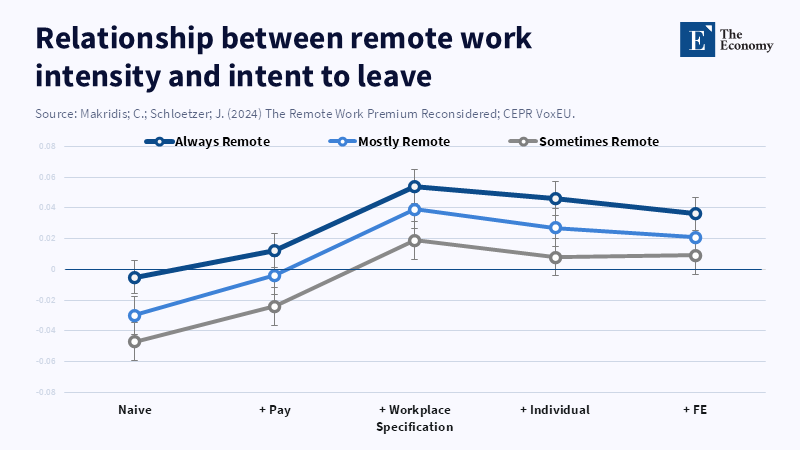
Next is output. According to a report from the U.S. Bureau of Labor Statistics, industries that saw greater increases in remote work during the pandemic experienced faster growth in total factor productivity. This increase is partly because of reduced costs other than labor, such as smaller office spaces and lower costs for energy and local services. At the same time, trials within companies, mainly testing mixed schedules of about two days at home, do not show any measurable damage to work quality and often show large decreases in people quitting their jobs. Taken together, these indicate that remote working increases or maintains output when companies change their processes, invest in online tools, and change how they manage employees. If those changes are not made, output can suffer.
Adjustments Necessary for Educators, Managers and Decision Makers
Consider remote work as one option in the plan, not a basic employee right. For educators, focus on skills that allow people to work together from different places and at different times. Teaching should include written communication, project planning, and online mentorship. There are specific skills that can be taught. Students who can write clear and brief reports, organize computer source code with good notes, and create easily accessible resources will be more valuable in a flexible work environment. According to AACSB International, universities and professional programs should update their grading criteria to recognize work completed remotely, ensuring it is valued as reliably as in-person work. This approach helps graduates prepare for and contribute effectively to organizations that use both remote and traditional work methods.
Managers need to consider remote work as a systems issue. Studies show that matching combined schedules to the kind of work and the manager's style preserves output and reduces resignations significantly. But this outcome relies on particular actions: clearly defined roles, regular meeting schedules, carefully documented onboarding, and localized ways to measure performance. When these things are in place, the extra pay employees want for remote work is less. When they are missing, employees look for higher pay or switch to companies that have those systems. So, a practical checklist for managers is more important than simple statements about trust or culture.
Those who make policy should think of remote work not simply as a strange aspect of the job market, but as an instrument for urban and social improvement. Collecting standardized data is essential. Government surveys should have consistent ways to measure how much paid work is done remotely, whether partial days count, and how hybrid setups are classified. These consistent measurements are important for calculating taxes, transportation support, and long-term housing needs. With more transparent national numbers, we can create better regional transportation plans, retraining programs for workers in traditional industries, and encouragement for small companies to adopt remote practices without paying for bad management.
Expected pushback: Critics will claim that these suggestions don't account for the less obvious advantages of working together in person, such as spontaneous conversations, the luck of being in the same place, and the informal coaching that builds careers. That is correct, but that’s why research does not support complete remote work. Studies show that mixed schedules maintain output and decrease turnover, but they do not show that entirely remote environments can completely replace in-person social networks. A good strategy is somewhere in the middle: maintain in-person work for tasks that need teamwork and instant interaction; allow remote options for tasks that are suited to individual work; and spend time developing processes that make transitions between the two reliable.
A Practical Suggestion
The remote work premium does exist, but is not a set number. It reflects the different preferences of workers, different jobs and industries, and the management actions that make remote work run smoothly. We need to stop debating whether remote work is good or bad and instead ask how much of which work can be done in which way without harming mentorship, creativity, and career growth. This change in thinking changes everything: education programs will teach skills for remote work, managers will create processes that make mixed schedules predictable, and policymakers will collect the necessary data to create fair rules. If we do that, the market will show the premium clearly which is efficient and fair. If we don’t, we will have confusing systems in which some workers lose salary, others lose opportunities, and no one benefits fully from work flexibility. Now is the time to consider remote work in planning.
The views expressed in this article are those of the author(s) and do not necessarily reflect the official position of The Economy or its affiliates.
References
Barrero, J. M., Bloom, N. and Davis, S. J. (2021) Why working from home will stick. National Bureau of Economic Research Working Paper.
Crawford, K. (2024) Study finds hybrid work benefits companies and employees. Stanford Report, 12 June.
Cullen, Z. B., Pakzad-Hurson, B. and Perez-Truglia, R. (2025) Home sweet home: How much do employees value remote work? National Bureau of Economic Research Working Paper No. 33383.
Gill, D. (2025) Tech workers take much lower pay to ditch the office. UCLA Anderson Review, 9 July.
Makridis, C. and Schloetzer, J. (2024) The remote work premium reconsidered. CEPR VoxEU.
Masterson, V. (2024) Remote work curbs salaries – new data. World Economic Forum, 25 March.
Pabilonia, S. W. and Redmond, J. J. (2024) The rise in remote work since the pandemic and its impact on productivity. Beyond the Numbers: Productivity. U.S. Bureau of Labor Statistics.
Pabilonia, S. W. and Vernon, V. (2023) Remote work, wages, and hours worked in the United States. U.S. Bureau of Labor Statistics.
U.S. Bureau of Labor Statistics (2024) 35 percent of employed people did some or all of their work at home on days they worked in 2023. The Economics Daily, 15 July.
Yoe, J. (2023) Hybrid work seems to be working out just fine. Monthly Labor Review, 1 May.
Yoon, S., Chan, J., Lin, J. and Nian, T. (2023) The value of remote work in the post-COVID era: An empirical assessment of employee turnover and wage. ICIS 2023 Proceedings.
Working across research, policy, and data-driven analysis, the Editorial Board ensures that published pieces reflect a consistent institutional perspective grounded in quantitative reasoning and long-term structural assessment.