The Gulf Trap: Why a Long Iran War Could Become a US Pivot Away from Asia

Working across research, policy, and data-driven analysis, the Editorial Board ensures that published pieces reflect a consistent institutional perspective grounded in quantitative reasoning and long-term structural assessment.
Authored On
Modified
A long Iran war would weaken US focus in Asia even without a formal strategic shift
China could gain leverage in East Asia simply by letting Washington stay stuck in the Gulf
A fast, limited end to the conflict would help the US contain both Iran and China at once
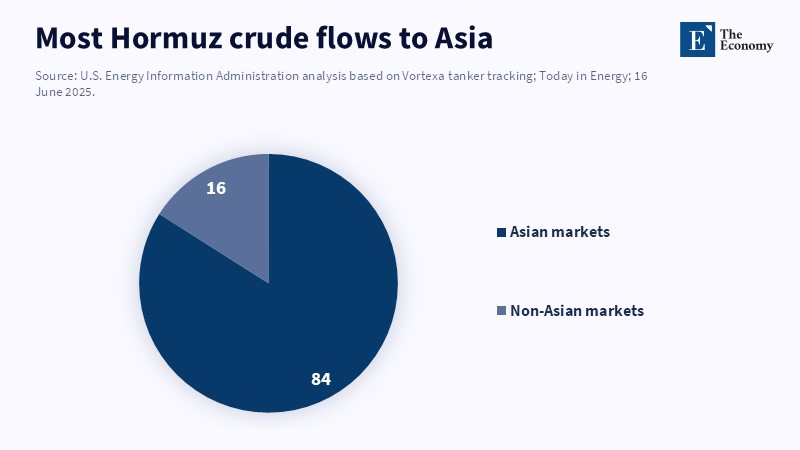
Roughly 20 million barrels of oil moved through the Strait of Hormuz each day in 2024, equal to about one-fifth of global petroleum liquids consumption, and almost nine-tenths of the crude and condensate moving through that chokepoint was headed to Asian markets. That is the number that should frame the debate about a possible US pivot away from Asia. The danger is not only that Washington is spending time and weapons in the Gulf. Every extra week of war pushes the main economic shock into Asia. It forces US allies to answer Middle East demands before Indo-Pacific ones and gives Beijing new room to test nerves without crossing the line into full war. Markets notice it. Allies notice it. Chinese planners notice it. A prolonged Iran campaign would not prove that America has formally abandoned Asia. It would do something worse. It would make a US pivot away from Asia look real to allies, markets and Chinese planners at the same time, which is often how strategic facts are born. States rarely lose their position in a single dramatic moment. They lose it when others quietly revise their expectations.
The US pivot away from Asia begins with time, not geography
The usual argument asks whether Washington has physically shifted forces away from the Indo-Pacific. That is too narrow. Grand strategy fails long before maps change. It fails when attention, alliance diplomacy and crisis management are pulled into another theatre for too long. It also fails when allies spend their best diplomatic visits discussing tanker escorts instead of deterrence in Asia. That is already visible. A planned Trump visit to Beijing has been postponed, while Japan’s prime minister arrived in Washington expecting to talk about China and instead found the Strait of Hormuz at the center of the agenda. Trump has pressed partners to help escort shipping through the Gulf, even as allies from Europe to Asia have tried to avoid being drawn into a widening war they did not choose. A real shift in US focus away from Asia is not marked by an official policy change, but by the gradual prioritization of urgent energy and security challenges in the Gulf region over long-term Indo-Pacific strategy. According to the US Energy Information Administration, ongoing developments in global oil markets and potential disruptions in key areas like the Strait of Hormuz are drawing increased US attention, which could mean less time and focus on issues in Asia. This shift comes at the cost of clarity and credibility in the region, highlighting the trade-offs involved when responding to overlapping international crises. Asia feels it first now.
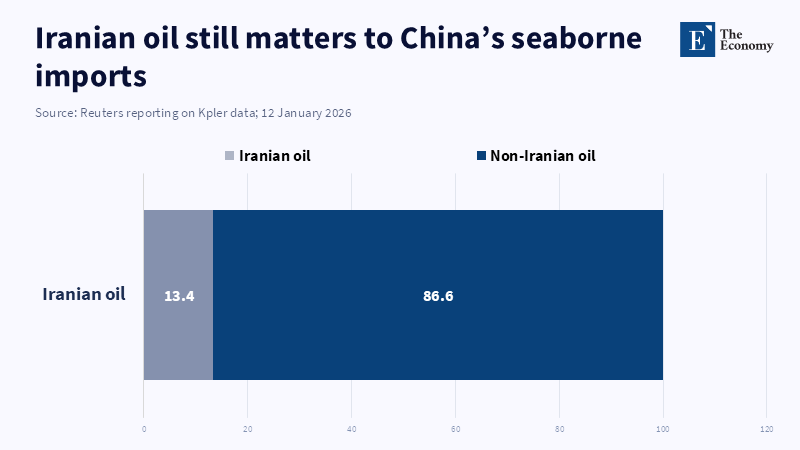
There is, at first glance, a case for saying Washington holds the stronger hand. China is deeply exposed to Gulf energy. Reuters reported that China bought more than 80% of Iran’s shipped oil in 2025, averaging 1.38 million barrels a day, while the EIA estimates China imported 11.1 million barrels a day of crude in 2024 and still relies heavily on imports despite large domestic output and strategic stockpiling. A short and contained campaign that reopens shipping while tightening sanctions could therefore squeeze one of Beijing’s cheapest energy channels. That is the best argument for a fast and disciplined Iran operation. But time changes the equation. The longer the war runs, the less it looks like leverage and the more it looks like self-distraction. The United States may be more energy secure than China, but its allies are not. Japan gets about 90 percent of its oil through Hormuz, Taiwan sourced about one-third of its LNG from Qatar before the current disruption, and every prolonged spike in prices turns a Gulf war into an Asian security crisis that Beijing can watch from the sidelines and exploit. That is especially true when Beijing can pose as a force for de-escalation while Washington appears trapped in open-ended escalation.
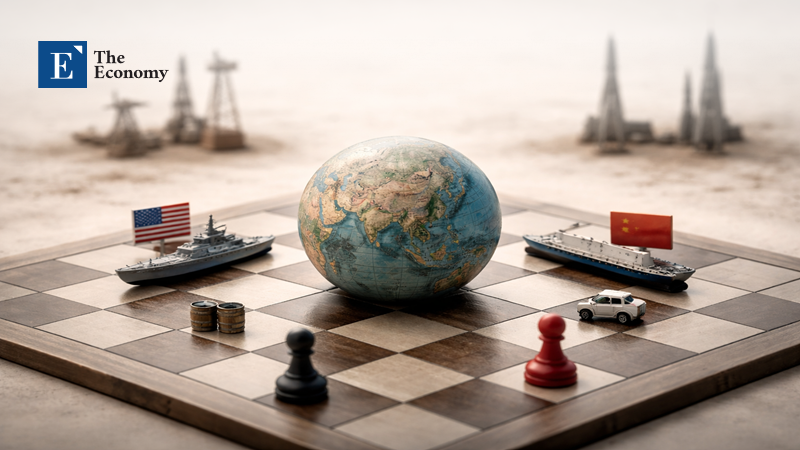
China does not need a Taiwan invasion to profit from a US pivot away from Asia
This is where much commentary goes wrong. It assumes Beijing only benefits if it launches an immediate invasion of Taiwan. But the latest US intelligence assessment runs counter to that simple script. Chinese President Xi Jinping has stated that Taiwan's unification with China is "inevitable" and that Beijing has not ruled out the use of force to achieve this, according to a report from Time. That does not reduce the risk. It clarifies it. The threat is slower, but it is still real, cumulative and politically corrosive. If China prefers pressure short of war, then a prolonged US fixation on Iran is useful even without a landing across the Taiwan Strait. Beijing can intensify coercion, raise the cost of allied cooperation, deepen doubts about American attention, and present itself as the steadier power while Washington burns political capital elsewhere. It can also keep testing what kinds of pressure work best: military signalling, trade pressure, propaganda, legal warfare and energy messaging. In that sense, the most dangerous US pivot away from Asia may be a psychological one before it ever becomes a military one.
Recent events show how easily that advantage can be built. Reuters reported this week that Beijing used the Middle East conflict to offer Taiwan “stable and reliable” energy security under reunification, a message aimed less at immediate conversion than at long-term narrative warfare. According to an AP News report, Japanese Prime Minister Sanae Takaichi’s recent trip to Washington focused on discussions with President Trump about securing the Strait of Hormuz amid global tensions fueled by the war in Iran. Even where the harder evidence remains reassuring, the warning still stands. Reuters also reported that the Iran war has not delayed US weapons shipments to Taiwan and that Taiwan remains a top priority. Good. That matters. But backlog politics, summit delays and alliance strain still matter as well. Credibility is not lost only when missiles stop moving. It erodes when allies start to think Asia will always come second to the next Middle East emergency, or when Beijing can plausibly tell the region that Washington is too busy to focus on it. In modern deterrence, perception is not a side issue. It is part of the battlefield.
A quick endgame could still reverse the US pivot away from Asia
None of this means Washington is doomed to strategic failure. A short Iran episode could still produce the opposite result. China’s dependence on sanctioned Iranian oil is real. Reuters says Sinopec, China’s biggest refiner, has cut crude runs by more than 10 percent because of the squeeze, while Beijing has banned fuel exports to protect domestic supply. EIA data show that about 20 percent of global LNG trade also passed through the Strait of Hormuz in 2024, mostly from Qatar, and Reuters reports that Taiwan and Japan have both had to revisit their energy security choices because of the current shock. If Washington can shorten the war, reopen transit, and keep pressure on the shadow trade that moves Iranian barrels into Chinese refineries, it can leave Beijing paying more for energy while showing Asian allies that the United States can still control escalation rather than be consumed by it. The strategic prize is not regime change or a maximalist victory narrative. It is speed, restraint and a clear hierarchy of interests. It is a bounded outcome that preserves American bandwidth for Asia and forces China to absorb higher energy costs without gaining diplomatic space.
The strongest rebuttal is that the United States can handle both theatres at once. After all, officials say Iran has not delayed weapons shipments to Taiwan, and the administration is still preparing a major Taiwan arms package. Those facts matter and should be acknowledged. But they do not settle the argument. Strategy is not only about inventories. It is about sequence, attention and bargaining power. A war can leave arms deliveries intact and still scramble the diplomacy around them. It can make Japan talk about Hormuz before China. It can push Europe into open refusal. It can delay a summit where Taiwan and trade were meant to be the focus. It can encourage Beijing to sit back and let Washington exhaust itself politically. And it can feed a broad regional impression that Washington reacts to shocks rather than shapes them. That is why a long Iran war would help China even if no US destroyer leaves the Pacific and no shipment to Taiwan misses its slot. The loss would be political first, military later, which is often how deterrence starts to fray.
What educators, administrators and policymakers should do now
For educators and academic administrators, the lesson is simple. Stop teaching Asia strategy as if it sits in a sealed box. The next generation of diplomats, civil servants and analysts needs a joined-up framework that treats sanctions, shipping insurance, LNG contracts, naval deterrence and Taiwan contingency planning as one field, not five. Universities and policy schools should build crisis simulations that connect Gulf disruption to East Asian alliance politics. Public administrators should expand training in energy security, maritime law and Chinese economic statecraft, because the next test of the US pivot away from Asia may arrive through a tanker route rather than a missile launch. Newsrooms, research centers and curriculum designers should also stop treating the Middle East and the Indo-Pacific as separate chapters in a textbook. Students should leave these institutions able to see how energy routes, sanctions, and alliance politics now overlap in real time. Policymakers, meanwhile, need discipline. They should define a narrow political end state in Iran, enforce sanctions on illicit Iran-China oil channels, and pair any Gulf operation with visible reassurance measures for Japan, Taiwan and the Philippines.
The opening number still tells the story. When one-fifth of the world’s oil and a large share of Asia’s energy lifeline moves through a single strait, a long war there will always spill into the balance of power in East Asia. That is why the core question is no longer whether a US pivot away from Asia has been announced. It is whether Washington will allow one to happen by default. China does not need a dramatic assault on Taiwan to benefit. It needs only a United States that stays in the Gulf long enough for allies to doubt, markets to reprice risk, and Beijing to widen its pressure campaign under the cover of another crisis. A short war with a clear exit could still tighten pressure on China and restore confidence among anxious allies. A long one would do the reverse. Washington should end the Gulf campaign fast, lock down the Iran-China energy channel, and return its strategic gaze to Asia before Beijing concludes that the pivot has already happened. Otherwise, the most important strategic shift of 2026 will not be declared in a speech. It will be inferred across the region, one delayed visit and one diverted priority at a time, until allies begin planning for a thinner American presence even before it formally exists.
The views expressed in this article are those of the author(s) and do not necessarily reflect the official position of The Economy or its affiliates.
References
Associated Press (2026) ‘Asia scrambles to conserve energy as Iran war disrupts oil and gas supplies’. 4 March.
Associated Press (2026) ‘War with Iran chokes flows of oil and natural gas, highlighting energy security risks for Asia’. 5 March.
Campbell, C. (2026) ‘How Trump’s War With Iran Could Be Good for Taiwan’. Time, 5 March.
Chellaney, B. (2026) ‘Trump Is Showing China How to Seize Taiwan’. Project Syndicate, 11 March.
Cordesman, A.H. (2017) ‘Ending America’s Grand Strategic Failures’. Center for Strategic and International Studies, 17 May.
East Asia Forum Editorial Board (2026) ‘Washington’s “pivot” away from Asia’. East Asia Forum, 16 March.
Foreign Affairs Forum (2025) ‘China’s Challenge to U.S. Extended Deterrence in the Indo-Pacific: Erosion of America’s Security Architecture’.
Goldwyn, D.L. and Clabough, A. (2026) ‘How the US and its allies can prevent an energy supply crisis in the Strait of Hormuz’. Atlantic Council, 3 March.
Gvosdev, N.K., Matsuda, T., Glasserman, A., Freedman, J., Cooke, M.T., Salazar, C., Beckley, M., Vaughn, S. and Estep, C. (2025) ‘Balancing Acts: Deterrence and Reassurance in US-China Strategy’. Foreign Policy Research Institute, 30 June.
Mooney, J. (1896) The Ghost-Dance Religion and the Sioux Outbreak of 1890. Project Gutenberg edition.
Office of the Director of National Intelligence (2026) Annual Threat Assessment of the U.S. Intelligence Community. Washington, DC: ODNI.
Reuters (2026) ‘China makes energy security “reunification” offer to Taiwan amid Middle East war’. 18 March.
Reuters (2026) ‘China’s heavy reliance on Iranian oil imports’. 13 January.
Reuters (2026) ‘Iran war is not delaying US weapons shipments to Taiwan, officials say’. 17 March.
Reuters (2026) ‘Sinopec plans cut crude runs by over 10% amid Mideast supply squeeze’. 13 March.
Reuters (2026) ‘US assesses China not planning to invade Taiwan in 2027’. 18 March.
Salvetti, F. (2025) ‘China’s crude oil imports decrease in 2024’. World Pipelines, 12 February.
Tang, D. (2026) ‘Iran conflict reveals vulnerability of China’s Middle Eastern interests’. Le Monde, 18 March.
Tang, D. (2026) ‘Japan’s Middle East Energy Dependency – and How It Mitigates Shocks’. World Energy News, 4 March.
U.S. Energy Information Administration (2024) Country Analysis Brief: World Oil Transit Chokepoints. Washington, DC: U.S. Department of Energy.
U.S. Energy Information Administration (2025a) ‘Amid regional conflict, the Strait of Hormuz remains a critical oil chokepoint’. Today in Energy, 16 June.
U.S. Energy Information Administration (2025b) ‘China’s crude oil imports decreased from a record as refinery activity slowed’. Today in Energy, 11 February.
U.S. Energy Information Administration (2025c) ‘About one-fifth of global liquefied natural gas trade flows through the Strait of Hormuz’. Today in Energy, 24 June.
Working across research, policy, and data-driven analysis, the Editorial Board ensures that published pieces reflect a consistent institutional perspective grounded in quantitative reasoning and long-term structural assessment.