Japan China Policy Cannot Be Built on Dislike

Working across research, policy, and data-driven analysis, the Editorial Board ensures that published pieces reflect a consistent institutional perspective grounded in quantitative reasoning and long-term structural assessment.
Authored On
Modified
Japan cannot base China policy on dislike alone
China’s innovation scale makes selective engagement necessary
Japan needs pragmatic China literacy, not emotional distance
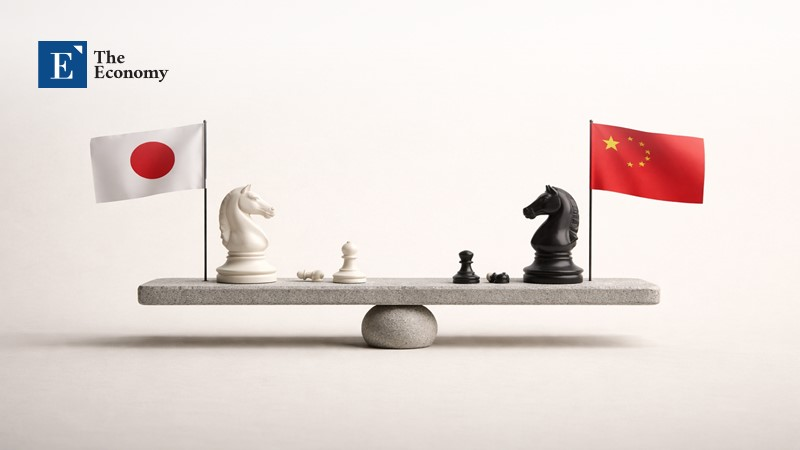
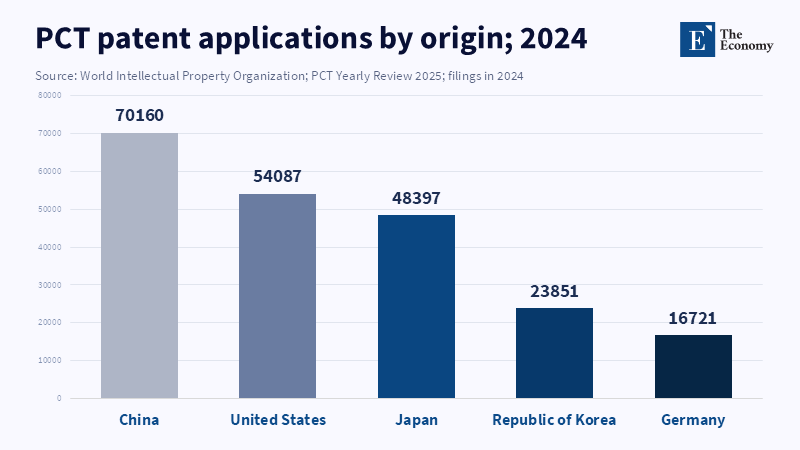
In 2024, China submitted 70,160 international patent applications, surpassing the United States and substantially exceeding Japan’s 48,397. During the same year, China allocated approximately 3.613 trillion yuan to research and development, sold over 11 million electric vehicles domestically, and accounted for more than 70% of global electric vehicle production. These figures do not imply an unstoppable trajectory for China, but they do reinforce a critical reality: Japan is confronted with a proximate source of industrial scale, engineering agility, and commercial experimentation of unmatched magnitude in the global economy. Consequently, Japan’s approach to China now calls for a somewhat measured realism. The primary concern is not whether China is agreeable, liberal, or trustworthy, but whether Japan can safeguard its security and revitalize its economy while engaging with a major driver of regional innovation—an entity that cannot be treated solely as a threat. Prolonged misjudgment in this regard would be untenable for a serious state.
The Gap Between Rhetoric and Reality
The prevailing discussion of Japan-China relations in Japan remains largely framed in social and moral categories. China is frequently depicted as a menace, a civilizational challenge, or a source of concern extending from geopolitics into everyday life. This attitude is grounded in genuine concerns: the security tensions over Taiwan, instances of Chinese coercion, and widespread public distrust. A 2024 joint opinion survey emphasized that Japanese respondents see cultural, musical, and artistic exchanges, as well as student exchange programs and grassroots dialogues, as priority areas for cooperation with China, according to China.org.cn. This indicates that while overall affinity toward China may be limited, many Japanese still value educational and cultural contacts as important channels for maintaining bilateral ties. When public emotion dominates the narrative, Japan risks conflating moral clarity with planned clarity, resulting in political posturing that favors separation at a time when discerning engagement is required.
This contradiction is apparent in Japan’s economic reality. According to the Ministry of Foreign Affairs, China remains Japan’s largest trading partner; bilateral trade reached 44.2 trillion yen ($292.6 billion) in 2024, comprising 20.2% of Japan’s total trade. Japanese investment in China increased by 6.1% to 511.6 billion yen, while over 31,000 Japanese corporate establishments operated in China. Such economic integration suggests that Japan's public rhetoric of security concerns coexists with deep economic exposure. Business, supply chain, and technological networks have accepted China's scale and innovation, even as political discourse resists acknowledging it as anything other than a problem to be distanced from.
In this context, thoughtful viewpoints on Japan-China relations frequently arise from less politicized sectors. Business leaders, trade officials, academic administrators, and experts tend to adopt a subtler stance, accepting the complexity without romanticizing China or reducing it to popular opinion. Their assessments, informed by continuous evaluations of markets, technologies, and regulatory contexts, embody a pragmatic balance between competition and cooperation. The difficulty lies not in the absence of such professional judgment but in translating it into sustainable public policy. Regional commentary frequently notes this disconnect, observing that diplomacy and commerce tend to operate pragmatically, whereas mass politics rewards more rigid symbolic stances.
Innovation, Technology, and Strategic Interdependence
A pragmatic Japan-China strategy has to prioritize a realistic understanding of innovation dynamics. The issue is not primarily cultural but systemic: China is central to emerging technologies that will shape industrial power in the coming decade. The World Intellectual Property Organization reports China leading in international patent filings under the PCT in 2024; national R&D spending expanded by 8.3% to 3.613 trillion yuan; and China accounted for over 70% of global electric vehicle production, selling more than 11 million units domestically. According to an article published in 2024, strong innovation systems in China integrate state support, mass production, local market orientation, and swift adaptation, which also play a key role in promoting local officials. While Japan may attempt to counter this reality, it cannot base its plans on the expectation that such an innovation system will weaken.
Therefore, Japan’s strategy should not pursue trust in an idealistic sense, but instead manage interdependence in sectors where engagement enhances Japanese capabilities. This demands clearer distinctions between sensitive and less sensitive areas. National security-related semiconductors, core defense technologies, and critical infrastructure require tight oversight, whereas indiscriminate suspicion risks severing connections toward ecosystems developing battery chemistry, industrial software, green engineering, and applied artificial intelligence. The Japan External Trade Organization’s FY2025 survey found that 63.2% of Japanese firms operating in China anticipated profitability, showing a prudent yet persistent commercial presence. Firms are becoming more selective in their expansion rather than withdrawing. Japanese policy would benefit from adopting this mindset: mitigating risk where necessary without disengaging from crucial learning opportunities.
This approach connects Japan’s national economic and foreign policy challenges. Achieving greater productivity, advancing green industries, strengthening supply chains, and accelerating technological diffusion cannot be achieved by ignoring China’s technological progress, which already influences Japan's competitive conditions across sectors such as electric vehicles, batteries, industrial machinery, platform commerce, and consumer electronics. Viewing engagement solely as capitulation risks entrenching defensive attitudes among firms and academic institutions. Conversely, treating engagement as an instrument allows Japan to leverage ties with China for domestic development. The objective is not increased dependency, but accelerated learning beyond ideological constraints.
Reforming Education and Building China Literacy
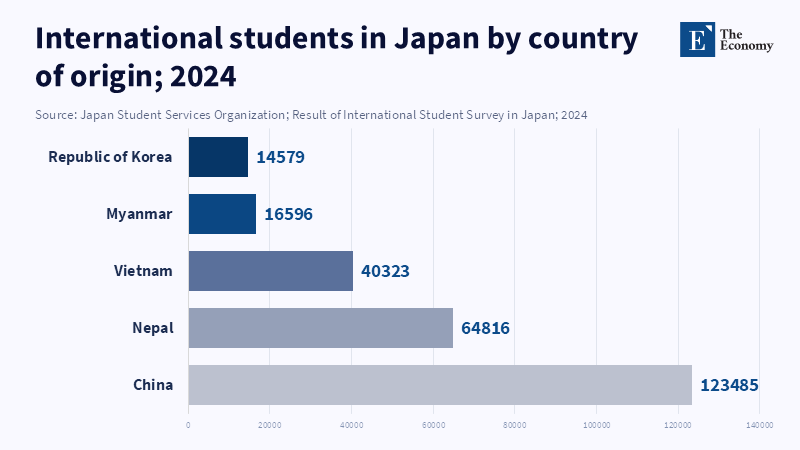
The consequences for education are considerable. Japan’s China policy is no longer confined to diplomatic means; it extends into laboratories, graduate programs, language training, business schools, and technical colleges. As of May 2024, Japan hosted 336,708 international students, 123,485 of whom were from China—the largest national group. Simultaneously, efforts in late 2024 to facilitate visa processes and promote youth exchanges between Tokyo and Beijing signify a strategic dimension rather than a peripheral issue. Universities are among the few institutions capable of developing a workforce able to engage with China in its complicated reality rather than through simplistic stereotypes.
Japanese higher education has to adopt a pragmatic response. This entails organized programs to enhance China literacy, encompassing intensive Mandarin language training beyond specialist circles, curriculum incorporating Chinese industrial policies, clearer frameworks for joint research governance, and interdisciplinary professional courses combining engineering, economics, law, and regional studies. University administrators should establish partnerships with risk protocols rather than adopting indiscriminate openness or categorical bans. Business schools ought to prepare students to understand Chinese firms’ competitive strategies based on speed, supply chain integration, and rapid product iteration. Public policy schools should train officials to analyze China through empirical data, institutional analysis, and incentive structures rather than depending solely on historical disputes. While universities cannot eliminate widespread public sentiment, they can cultivate a cohort that is more knowledgeable, less reactive, and less susceptible to simplistic populist narratives.
There are also practical administrative imperatives. Japan’s higher education sector faces demographic decline, increasing competition for talent, and pressure to internationalize without jeopardizing academic standards. Chinese students, researchers, and visitors are vital to dealing with these realities. Treating them exclusively as security risks would undermine academic vitality. Instead, layered governance strategies—comprehensive due diligence, transparent disclosure requirements, stringent funding scrutiny, and the preservation of sensitive research—should be paired with open but supervised teaching, controlled exchange programs, and professional mobility in low-risk disciplines. This approach exemplifies state capacity inside academic institutions rather than naivety.
Critics could argue that such a stance proves excessively lenient, implying heightened engagement risks espionage, dependency, or coercion. While these concerns are valid and necessitate a robust response, the solution lies in enhanced governance rather than intellectual withdrawal. Shunning study, trade, or engagement with a primary competitor fosters strategic blindness rather than security. The appropriate model entails calibrated exposure: fortified investment review processes, stringent export controls, rigorous university disclosure protocols, and harmonized research security standards alongside protected channels for scientific exchange, commercial intelligence, sectoral dialogue, and student mobility. Mature policy is measured not by rhetorical toughness but by its capacity to sustain essential connections under political pressures.
Institutionalizing Strategy Beyond Public Opinion
This approach gains urgency as public opinion trends toward increasing skepticism. Cultural debates, perspectives on tourism, and social discourse frequently influence national policy attitudes towards China. When such views dominate, policy risks becoming captive to cultural conflicts, treating every engagement as a form of contamination. This would be detrimental for Japan, which requires long-term growth, talent acquisition, and technological innovation. According to a report from the Carnegie Endowment for International Peace, Japan’s significant demographic shifts mean that the country cannot risk having too few experts on China, restricting opportunities for Asian researchers, or misunderstanding the region’s main innovation hubs due to ingrained biases. Long-term policy frameworks should also offer safeguards that protect government decision-making from rapidly changing public opinion.
Politically, Japan’s intellectual elite may not reverse populist trends in the short term. Nevertheless, coexistence with such dynamics should not equate to capitulation but rather to the construction of institutions resilient to emotional fluctuations, making certain that strategy is not hostage to transient moods. Such institutionalization—through established routines, protocols, and expert networks that persist past immediate headlines—is characteristic of states capable of sustained policy execution. Japan requires these institutional structures regarding China.
Japan is neither compelled to admire China nor to excuse its coercive conduct, abandon Taiwan, or forsake its alliance with the United States. However, effective statecraft cannot start from a premise of moral distancing alone. The initial statistic detailing China’s patent filings, R&D investment, and dominance in electric-vehicle production dispels illusions. China represents not simply a diplomatic challenge but a structural reality shaping Asia’s future. Japan’s strategy should be grounded in this fact, aiming to compete where necessary, protect vital interests, and cooperate where collaboration improves national capacity. This approach is not idealistic but disciplined, granting educators, administrators, and policymakers a foundation to prepare Japan for the regional context it faces rather than one nostalgically imagined.
The views expressed in this article are those of the author(s) and do not necessarily reflect the official position of The Economy or its affiliates.
References
Baba, G. (2026) ‘The Breakdown in Japan-China Relations’. Politics Today, 21 January.
Cai, V. (2026) ‘Why Japan thinks China’s growing cultural clout is something it needs to counter’. South China Morning Post, 18 March.
Carnegie Endowment for International Peace (2024) 2024 Annual Report. Washington, DC: Carnegie Endowment for International Peace.
Chen, B., Wang, H. and Wang, X. (2024) ‘Innovation Like China: Evidence from Chinese Local Officials’ Promotions’. China Economic Review, 86, article 102203.
Genron NPO, The, and China International Publishing Group (2024) Japan-China Joint Public Opinion Poll 2024. Tokyo: The Genron NPO and China International Publishing Group.
International Energy Agency (2025) Global EV Outlook 2025. Paris: International Energy Agency.
Japan External Trade Organization (2026a) FY2025 Survey on Business Conditions of Japanese Companies Operating Overseas (Asia and Oceania): Performance Improves in China and Remains Solid in India; Limited Impact of U.S. Tariffs on the Region. Tokyo: Japan External Trade Organization.
Japan External Trade Organization (2026b) ‘FY2025 JETRO Survey on Business Conditions of Japanese Companies Operating Overseas (Asia and Oceania)’. Japan External Trade Organization, 20 January.
Japan Student Services Organization (2025) Result of International Student Survey in Japan, 2024. Tokyo: Japan Student Services Organization.
Keizai Koho Center (Japan Institute for Social and Economic Affairs) (2025) ‘Invitation Program for Chinese University Students’. 14–18 July.
Ministry of Foreign Affairs of Japan (2024) ‘Second Japan-China High-Level People-to-People and Cultural Exchange Dialogue’. 25 December.
Ministry of Foreign Affairs of Japan (2025a) Diplomatic Bluebook 2025. Tokyo: Ministry of Foreign Affairs of Japan.
Ministry of Foreign Affairs of Japan (2025b) Japan-China Economic Relationship and China’s Economy. Tokyo: Ministry of Foreign Affairs of Japan.
National Bureau of Statistics of China (2025) ‘China’s Expenditure on Research and Experimental Development (R&D) Exceeded 3.6 Trillion Yuan in 2024’. 24 January.
Nippon.com (2025) ‘Foreign Students in Japan Hit New Record in 2024’. Nippon.com, 9 June.
Shih, R. (2026) ‘Japanese investment in China keeps rising, despite political tensions’. The Interpreter, 2 March.
Singh, A.G. (2026) ‘China-US-Japan: China’s changing calculus in East Asia’. Observer Research Foundation, 13 March.
Sonoda, S. (2026) ‘Japan’s China policy begins at home’. East Asia Forum, 17 March.
Wikipedia contributors (2026) ‘Made in China 2025’. Wikipedia, The Free Encyclopedia.
World Intellectual Property Organization (2025) PCT Yearly Review 2025 Executive Summary. Geneva: World Intellectual Property Organization.
Xinhua News Agency (2024) ‘China, Japan reach 10 agreements on people-to-people, cultural exchanges’. 26 December.
Xu, J. (2025) ‘China’s R&D spending surpasses 3.6t yuan in 2024’. China Daily, 23 January.
Yonezawa, A. (2024) ‘Japan’s Challenges in Addressing Demographic Decline’. International Higher Education, 117, pp. 36–38.
Working across research, policy, and data-driven analysis, the Editorial Board ensures that published pieces reflect a consistent institutional perspective grounded in quantitative reasoning and long-term structural assessment.