China’s Trade Surplus Is Also an Education Problem: Why Education and Industrial Policy Must Converge

Working across research, policy, and data-driven analysis, the Editorial Board ensures that published pieces reflect a consistent institutional perspective grounded in quantitative reasoning and long-term structural assessment.
Authored On
Modified
China’s trade edge is built, not accidental
Education and industrial policy now shape national competitiveness together
Tariffs alone will not close the gap

China’s trade surplus is usually framed as a price problem. Too many exports. Too much capacity. Too little spending at home. That picture is not wrong. It is just too small. In 2025, China posted a record trade surplus of about $1.19 trillion. In 2024, almost half of all new cars sold in China were electric. China also accounted for almost two-thirds of global electric car sales. The International Energy Agency says battery electric vehicle production costs are now more than 30% lower in China than in advanced economies. Those numbers do not describe a brief market twist. They describe a production system that learns fast and scales fast. That is why the old debate about trade imbalance is no longer enough. This is not only a fight about tariffs, dumping, or currency. It is also a fight about how states build skill, applied knowledge, and industrial discipline. China’s surplus is also an education story. Countries that want to answer it must stop treating education and industrial policy as separate worlds.
Education and industrial policy now belong in the same argument
Most trade debates start too late. They begin when cheap goods hit foreign markets and local firms start to lose ground. By then, the key work is over. It happened years earlier. It happened in technical schools, engineering labs, vocational colleges, industrial parks, and supplier networks. It happened through steady links between firms, local officials, and educators. That does not make every part of the Chinese model fair. It does show why many critics are aiming at the symptom rather than the engine. A country does not become strong in batteries, electric vehicles, machinery, and advanced inputs through subsidy alone. It gets there by building a workforce that can solve process problems, cut design time, raise yields, and move from copying to fast improvement. When education remains outside the industrial policy debate, governments end up arguing over border measures while the deeper sources of advantage continue to grow elsewhere.
This is the point that many Western systems still miss. China’s rise is not proof that any state can spend its way to industrial power. Very few countries could have matched this outcome even with the same room to intervene. The list of success cases is short, and most sit in East Asia. China did it on a far larger scale. According to UNESCO’s World Education Statistics 2024, Eastern and South-Eastern Asia, which includes China, had a tertiary gross enrolment ratio of 62 percent in 2021, making such enrolment uncommon globally. According to a report from China’s Ministry of Education, total higher education enrollment in 2022 reached 46.55 million students. The report does not specify the proportion of students enrolled in vocational programs. UNESCO also reports that annual college graduates exceed 10 million, that more than half are in science, engineering, agriculture, or medicine, and that vocational institutions train more than 70% of new employees in advanced manufacturing, strategic sectors, and modern services. The lesson is plain. Industrial power rests on the mass formation of skills. It rests on systems that turn education into productive capacity.
Education and industrial policy cannot be reduced to subsidy
That is why the usual Western account is too flat. China is often described as if its edge comes only from cheap credit, hidden support, or unfair pricing. Those tools matter. The World Trade Organization’s 2024 review of China recorded strong concerns from many members about subsidy transparency, overcapacity, import substitution, and the role of state-owned firms. The European Commission now says openly that broad support for manufacturing in China creates systemic imbalances and harms many other WTO members. These are not minor complaints. They are serious, and many are well-founded. But even they leave out a practical point for educators. A subsidy may trigger the first jump. It cannot, by itself, explain why firms keep improving year after year. Cost gaps of this size depend on learning curves, production engineering, dense supplier networks, technician quality, and fast feedback between the shop floor and design teams. That is not only a finance story. It is a capability story, and capability is built through education.
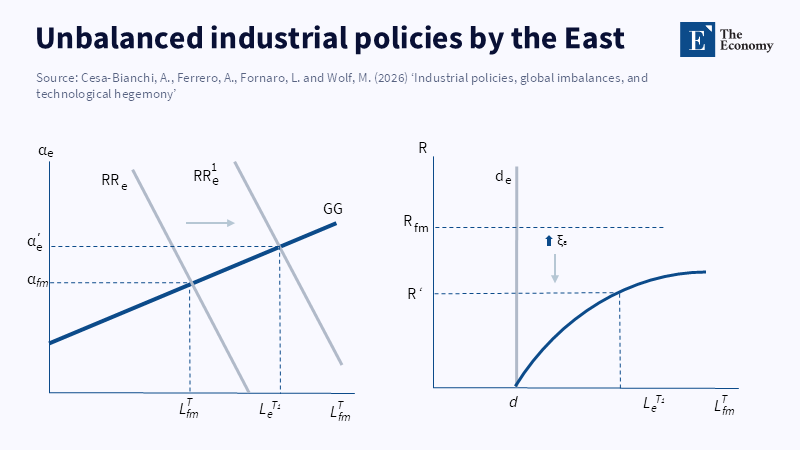
The car industry makes this clear. In March 2026, Volkswagen’s chief executive said German carmakers should look to Chinese planning because it is disciplined and well structured. Days earlier, Volkswagen said its China-based architecture enabled it to develop vehicles 30% faster and to bring a co-developed electric SUV into production in just 24 months. At the same time, German car exports to China fell by roughly a third in 2025 and were down by more than half from their 2022 peak. Those are sharp facts. They show where industrial learning now sits. The West is not only losing price competition in some sectors. It is also losing speed. That should worry education leaders as much as trade ministers. Once a country falls behind in design cycles, production know-how, and applied engineering, schools are asked to fix the damage after firms have already lost scale. That is the wrong order. Education policy works best before a sector slips, not after capacity has been lost.
The same pattern appears in the wider innovation system. China’s official statistics show that R&D spending reached 3.613 trillion yuan in 2024, up 8.3% over the year, with R&D intensity at 2.68% of GDP. OECD data show China’s R&D intensity in 2023 was already close to the OECD average. WIPO reports that China’s patent office received 1.8 million patent applications in 2024, almost half of the world's total and more than three times the volume filed at the U.S. patent office. Patent counts should never be treated as a clean measure of quality. But they do signal the scale of the technical system. When that research base sits next to large manufacturing clusters, it matters even more. Factories become places that learn. Suppliers become places that improve products. Colleges stop being detached service institutions and become part of industrial upgrading. This is why education and industrial policy now have to be treated as one field. The core issue is not only how much a state spends. It is whether the full learning system is aligned.
Education and industrial policy need rules as well as ambition
None of this means China offers a model to copy whole. That would be another mistake. China’s path has been effective, but it has also pushed hard against a rules-based trading order. In 2024, WTO members again raised concerns about poor subsidy transparency, state backing, import substitution, and the lack of competitive neutrality for state-owned firms. Those complaints matter. A serious education and industrial policy cannot be built on the idea that rule-bending is always a harmless stage of growth. The 2018 UNCTAD essay that defended China’s rule-breaking made an important historical point. Many rich countries used more policy space when they developed, then narrowed that space for others. That argument has force. But once a country reaches China’s scale, long periods of opacity and state-backed overcapacity not only create room for late development. They can close the room for others. A good argument about development space can become a bad excuse for permanent asymmetry.
The latest legal changes in China show why this matters. The revised Foreign Trade Law, adopted in late 2025 and in force since March 1, 2026, more clearly ties foreign trade to national security and national development goals. Official summaries and legal analysis note broader powers for countermeasures, more scrutiny of technology and supply chains, and a stronger link between trade governance and state strategy. The OECD Economic Outlook does not specifically mention Chinese officials telling Europe that China is willing to expand imports and reduce frictions. China is not stepping back from strategic industrial policy because it has grown rich enough to relax. It is hardening and refining that policy inside a more formal legal frame. So the hope that China will simply bend back toward a neutral liberal order is weak. Other countries need a different plan. They need domestic capability built under open and lawful conditions. And they need trade enforcement that is firm without becoming a substitute for rebuilding skills.
Education and industrial policy after the China shock
This is where the education journal should care most. For years, many democracies treated education reform as a debate about access, credentials, broad digital fluency, and social mobility. Those goals still matter. But they are not enough for industrial renewal. An economy that wants stronger energy systems, transport supply chains, advanced materials, chip design, robotics, and industrial software needs more than adaptable graduates. It needs concrete talent pipelines. Europe’s labor data now show persistent shortages in engineering, construction, and skilled trades, with welders among the occupations most in short supply across reporting countries. The OECD warns that labor and skills shortages are now a major brake on technology adoption and the green transition. It also says lack of skills is one of the biggest barriers to AI adoption for employers. That is the education side of industrial weakness. If countries cannot train technicians, engineers, electricians, software integrators, toolmakers, and production managers enough, they cannot absorb new technology fast enough to compete.
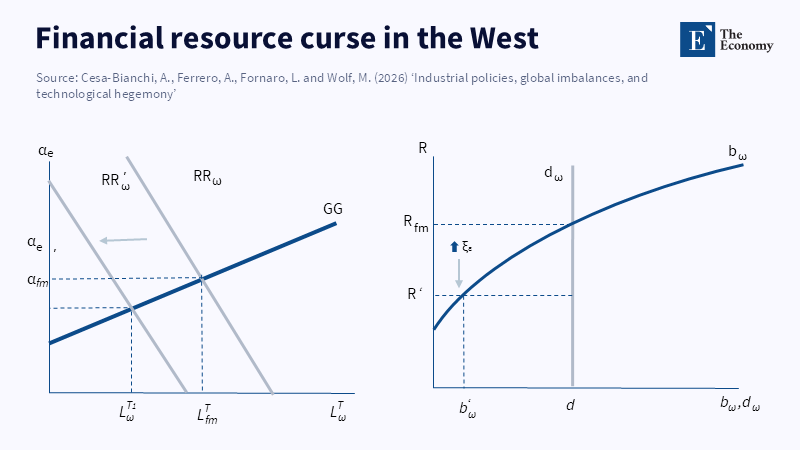
A serious answer would join education and industrial policy on purpose. It would fund applied engineering, modern apprenticeships, technician routes, and mid-career retraining in sectors that matter. It would give regional colleges long-term links to local manufacturers instead of forcing them to guess labor demand from a distance. It would reward universities not only for papers and rankings but also for supplier innovation, translational research, and work with industry. It would elevate the status of technical routes rather than treating them as second best. It would also build stronger bridges between secondary school, vocational training, higher education, and local production. In many countries, those systems still sit in separate boxes. China’s edge suggests that fragmentation is costly. The key question is no longer whether education serves the economy. It always does. The real question is whether it does so by design, with clear public goals, or by accident after markets have already sorted winners and losers.
The opening statistic should stay with us. A trade surplus of that size is not only a macroeconomic imbalance. It is the visible edge of an institutional system that links schooling, engineering, research, infrastructure, and industrial scale with unusual discipline. That system has also created real strain inside the global trading order, and that strain deserves a firm answer. But tariffs alone will not close a capability gap built over decades. The greater risk is that democracies continue to treat Chinese industrial power as a border problem when it is also a classroom, workshop, and laboratory problem. Education policy cannot stop at access, inclusion, or digital literacy alone, important as those aims remain. It has to ask what forms of productive knowledge a country wants to keep, where that knowledge will be taught, and how it will connect to real sectors. If that question is avoided, the debate over trade imbalance will keep returning long after skills, learning systems, and industries have shifted.
The views expressed in this article are those of the author(s) and do not necessarily reflect the official position of The Economy or its affiliates.
References
Cash, J. and Chen, X. (2026) ‘China’s trade ends 2025 with record $1.2 trillion surplus despite Trump tariff jolt’, Reuters, 14 January.
Cesa-Bianchi, A., Ferrero, A., Fornaro, L. and Wolf, M. (2026) ‘Industrial policies, global imbalances, and technological hegemony’, VoxEU, 27 March.
European Commission (2023) Employment and Social Developments in Europe 2023: Addressing labour shortages and skills gaps in the EU. Luxembourg: Publications Office of the European Union.
European Commission (n.d.) ‘EU trade relations with China’. Brussels: European Commission.
European Labour Authority (2025) Labour shortages and surpluses in Europe 2024. Bratislava: European Labour Authority.
Green, A. (2024) ‘Artificial intelligence and the changing demand for skills in the labour market’, OECD Artificial Intelligence Papers, No. 14. Paris: OECD Publishing.
Heine, F. (2026a) ‘German car exports to China plunge by a third in 2025, says economic institute’, Reuters, 24 February.
Heine, F. (2026b) ‘Volkswagen CEO tells newspaper German carmakers should look to Chinese planning’, Reuters, 22 March.
International Energy Agency (2025a) Electric car sales in China, 2019–2024. Paris: IEA.
International Energy Agency (2025b) Global EV Outlook 2025. Paris: IEA.
International Energy Agency (2025c) What Next for the Global Car Industry. Paris: IEA.
Interesse, G. (2026) ‘China’s revised Foreign Trade Law is now in effect: What businesses need to know’, China Briefing, 18 March.
Li, H., Qi, H., Cao, H. and Yuan, L. (2022) ‘Industrial policy and technological innovation of new energy vehicle industry in China’, Energies, 15(24), 9264.
National Bureau of Statistics of China (2025) ‘China’s expenditure on research and experimental development (R&D) exceeded 3.6 trillion yuan in 2024’, 24 January. Beijing: National Bureau of Statistics of China.
OECD (2025a) ‘China’, in OECD Economic Outlook, Volume 2025 Issue 2: Resilient Growth but with Increasing Fragilities. Paris: OECD Publishing.
OECD (2025b) ‘R&D spending growth slows in OECD, surges in China; government support for energy and defence R&D rises sharply’, Statistical release, 31 March. Paris: OECD.
Park, J.-m. and Yan, Z. (2026) ‘VW targets China comeback as first model with Xpeng starts mass production’, Reuters, 13 March.
Poon, D. (2018) ‘China broke the rules of global trade – but for good reason’, UNCTAD, 21 June.
State Council of the People’s Republic of China (2025) ‘China adopts revised Foreign Trade Law’, 27 December. Beijing: State Council of the People’s Republic of China.
UNESCO Global Education Monitoring Report (2026) ‘China’, in 2026 GEM Report: Access and Equity: Countdown to 2030. Paris: UNESCO.
Woo, R. (2026) ‘China willing to actively expand EU imports, says commerce minister’, Reuters, 27 March.
World Intellectual Property Organization (2025a) World Intellectual Property Indicators 2025: Highlights. Geneva: WIPO.
World Intellectual Property Organization (2025b) ‘World Intellectual Property Indicators: Global patent and design filings reach new records in 2024, trademarks flat’, 12 November. Geneva: WIPO.
World Trade Organization (2024) China 2024 – Concluding remarks by the Chairperson. Geneva: WTO.
A few entries are institutional webpages rather than journal articles, so institutional authorship is the correct Harvard treatment there.
Working across research, policy, and data-driven analysis, the Editorial Board ensures that published pieces reflect a consistent institutional perspective grounded in quantitative reasoning and long-term structural assessment.