China Maxxing or the real test of the next Chinese soft power

Working across research, policy, and data-driven analysis, the Editorial Board ensures that published pieces reflect a consistent institutional perspective grounded in quantitative reasoning and long-term structural assessment.
Authored On
Modified
China Maxxing is becoming a real soft power test for China
Its future depends on whether it is a passing trend or a deeper cultural shift
If it lasts, it could mark the start of a broader C-culture wave
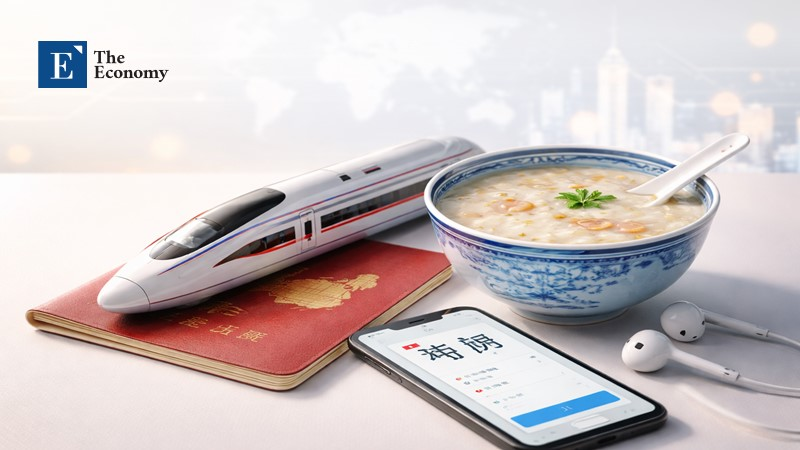
At present, China ranks second only to the US in soft power. In the Brand Finance index of 2026, the country outscores the US on 19 out of 35 brand attributes in 35 nations. You can see the harder signal behind this softer trend. What appears online to be a joke about hot water, slippers, congee, qigong, and 'a very Chinese time' is an entry into a far larger transformation. China Maxxing is what makes increasingly intangible power possible to replicate on a daily basis. This is exactly how cultural power first arrives. It stops being diplomacy and begins being a practice. But even then, it should not be exaggerated. Even a viral identity is not a sustainable global phenomenon. The real questions being asked are whether China Maxxing can be a temporary online eccentric, what is always an image, enhancement by the state, or the leading edge of a more profound C culture wave that will travel worldwide as the Korean Wave once did. Because soft power really only endures when others begin to adopt its look, feel, and ideas involuntarily.
China Maxxing is no mealtime impulse
Maxxing China has spread using the language of digital satire. But it has traveled because it surpassed sarcasm. The trend is based around everyday domestic routines dressed to appear fun, flamboyant, sexy, balanced, and suddenly modern: enjoying a beverage, baking in slippers, piling into joss sticks, living directly in the urban order and city life, and imagining China as an even more efficient place than viewers had guessed. The whole point is that soft power works best when it is forged around irresistibility, not manipulation. Once a nation is seducing viewers with a certain way of life, all of its other nonverbal signals begin to work. That's why Maxxing China has a right to be worth more than its light-hearted tone. It's transforming images once categorized as exotic or remote into concepts that seem modern, trendy, and emotionally attractive.
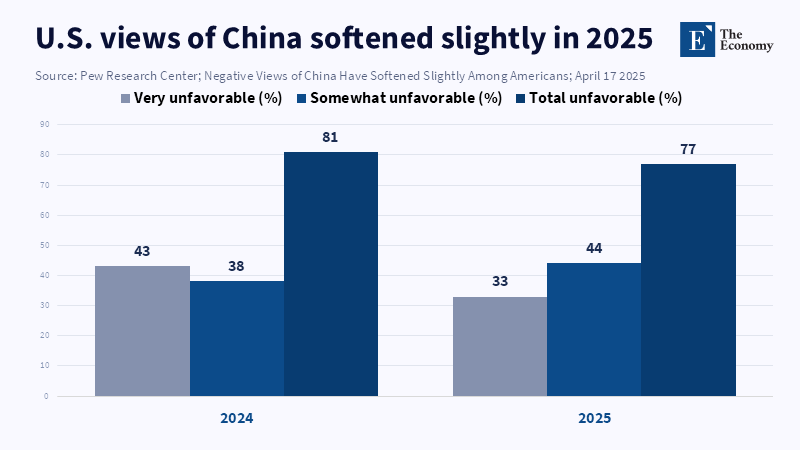
The true reason for its popularity was that it had a casual door. In 2025, even though Pew's global survey found that while 77% of Americans felt unfavorably about China compared to 81% the previous year, they had not yet totally closed in. Pew's wider survey of 25 countries demonstrated that disliked or suspicious feelings towards Chinese people had risen in 15 of these in 2025 (the year before). That's exactly where China Maxxing is. It did not totally convert people, but it was not totally ineffective either. It is not because faces are unwarranted, in fact, but rather that the phenomenon is happening in the previously distinctly unpenetrated minds of now mainly younger respondents. It is that they (for the most part) seem ready to disassociate Chinese everydayness from the more overt security,stress, and identity projections that dominate geographical relations. Users might still hold that they do not trust the Chinese authorities but admire their infrastructure, fashion, objects, routines, and digital expertise. That is a little margin, but it opens a gap.
But that does not explain how China Maxxing should be seen as proof of China's victory in an image war, yet be recognized as an indicator that Western inceptions are no longer fully mirrored in the way younger generations see China. That would be an authentic phenomenon. As to why the trend irritates so many, when users joke about 'becoming Chinese' they are not actually trying to make one statement but two: signaling their own interest in China and also raising a critique of their own land. This is happening because they feel the majority of modern life suggests living in it is inefficient, alien, and senile. It plays because China is in this way constructed as a kind of strawpony. The upside of this trend is not just the appeal of Chinese modes. It is also the appeal in opposition that seems to propel it: order in opposition to laziness, materialism against extravagance, modernity against out-of-control modernization, infrastructure against decaying emptiness, and modernity against the bulk of Western effort. It is not that the trend is close to reality but that it is close to comprehension.
The hidden hand of national confidence
Another way to make this point is that people's national confidence has suddenly reached a new height, which again should be interpreted cautiously. One would not want to jump to the conclusion that the Chinese children are now the world's new crybabies, riot street urchins. It does mean that confidence in the Chinese nation has become something you can comfortably rest within. (A euphemism for) As seen in the (original) China,focused East Asia Forum essay that started this all off, Chinese soft power these days emanates less from a systematically staged,managed messaging but more from everyday online and interpersonal circulation and non-organized relationships between people. This matters because the belief in the homeland is not just that, but also the belief that the moment once the streets are full of your children, is such that confident displays of your habits are normal, as natural as the way a whole canon of cultural icons, silhouettes, figures, and exponents have always produced.
The natural reaction of the Chinese was immediate. On February 6 2026, China's foreign ministry welcomed the 'Becoming Chinese" movement and incorporated it into a broader story about China's glories, from high-speed rail and 5G to undiscovered cities and intangible cultural relics. It helped to note the 82.2836 million international arrivals and departures in 2025, up 26.4% y/y, and with visa-free inflows climbing 49.7%. This reaction exposes the manner in which Beijing responds when cultural history begins to take a life of its own. It does not need to invent fully every new craze. It simply needs to know what makes the nation seem most fortunate and showcase this now,impressive story on a grand scale. So, Maxxing China is more than pure propaganda, but it is not just that either. It exists in the interstice of either the spontaneous orbit of human interest or the official narrative.
This is where a lot of external interpretation begins to read as too blunt. They posit that the trend is either inorganic or natural, created or managed. It is, in fact, probably both. Governments most benefit from aspects of culture that are not fully curated. The state can build on the momentum of events that look like they happen without it. So long as Maxxing China does not begin to resemble political sermons, it is less likely to wither when the pace of the trend begins to resemble the pace of a communiqué. On the other hand, if Maxxing China begins to resemble a lecture about China's incontestable superiority, it will be less sustainable. If, on the other hand, it remains relaxed and diegetic and stays closely connected to actual developments in life, then this trend is more likely to endure. The problem is not whether a state is present, but whether it becomes so omnipresent as to nip spontaneous creativity in the bud. Soft power is not possible if it begins to resemble a warning shot.
Cultural investment, not slogans, is making
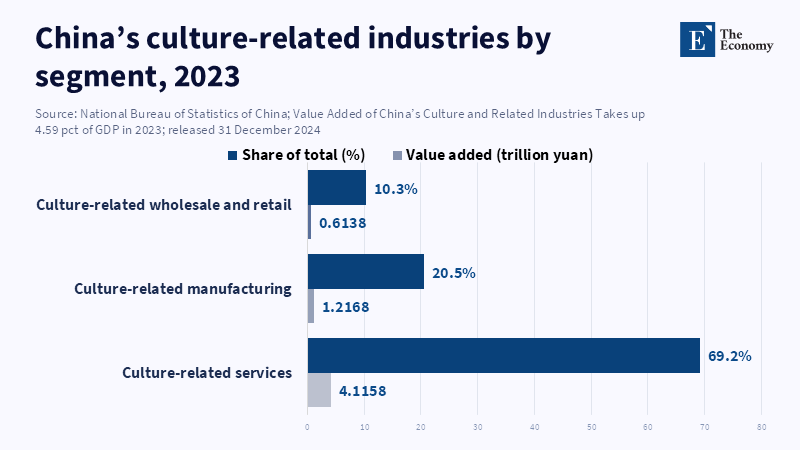
The tangible explanation needs to be explicit. For years, Beijing has laid the cultural and business foundations for the Chinese Maxxing taste to be sustainable. According to the Ministry of Culture and Tourism, the Chinese industry added great value to the extent of 5.964 billion yuan in 2023, 4.59% of GDP. Of this, 69.2% were services related to the culture sector. The Ministry of Commerce noted that the value of exports of personal cultural and entertainment services increased by 39.3%. If one reads these numbers, or more precisely, if they do not seem to lead to any deeper conclusion, one could say that literature and policy ideas are now less distant from growth in China than they were before. Instead, they are another factor in this growth. This makes even flash attention sustainable simply because when you mass up the right supply , content, platforms, talent, distribution, service exports , it turns into a long,running habit and not an utter anomaly.
Distribution, moreover, is visibly changing: Netflix has announced 2025 Chinese programming for five new shows and 2026 two more. It might not yet be the case that Chinese television achieves the same global popularity as Korean-produced series, but it is clear that the world's biggest entertainment aggregator expects the entertainment sands to shift in this direction. It is the change in the very number of bright spots that matters. The guarantee of several global hits may support the road, but a really sustainable soft power needs many types of art, advertising, props, and digital flow working in trinity in shades of one another, until the full culture manages to reach the Asian American/Euro, American hearts through the internet like a continuous flow rather than appearing piecemeal.
But China's roads will have a somewhat more arduous operation than Korea's. Its cultural artifacts will not be able to travel without entwining with the many conflict scenarios of emerging great power relations. Chinese cultural trends will travel in the heat of war: diplomatic rows, trade conflicts, bureaucracies under real resentment, and a deadly aura of mutual suspicion. That requires more of the C, DRAMA channels. It has to be just right: easy to reach but also distinctive, amenable yet true to itself. So long as you do this and you throw in C,DRAMA, language, cosmetics, tourism, fashion, delicacies, and thus the friendly and confident presence of China, the effect will be in the right direction. Fail, and China Maxxing will be only insignificant, cursory, and superficial.
China Maxxing is interesting only because it is not just an act
The greatest difficulty does not necessarily lie in figuring out whether the trend is merely driven by the individual or by the state, or whether it is inauthentic or authentic. It can actually be both. Countries benefit the most from cultural movements not wholly generated by political or commercial effort. This way, the government draws on the forces of spontaneous circulation that are stronger than anything we can gauge. The catch is that China Maxxing will be most sensitive if it begins to resemble propaganda. It can be sure to fail if, once the boom is underway, Chinese culture becomes like a lesson on how great the country is. So long as the trend remains unplanned, unpretentious, and close to Chinese real life, it ought to have enough staying power. The challenge is simply whether the trend becomes too much of a talk and too little of a walk. Therefore, if China Maxxing remains a flawless image-stoking exercise that is more profile than program, then it might just vanish as quickly as it appeared. But if it is more robust: if the state manages to consistently support and publicize a more vigorous cultural sector, flatter more and more accessible arenas, while cultivating a more curious global audience, then the trend could one day start to be surefire.
Whether China Maxxing really matters will only be shown in whether it is an indication of the new Chinese era in cultural soft power or whether it will burn out just as swiftly as it emerged. If it is only superficial, then it will be a brief joke. But if it registers as a thorough, long-term phenomenon, then tomorrow China could emerge as an all-new major source of cultural soft power. And that outcome really matters, because emulation will be the real engine of Chinese soft power. China Maxxing, in fact, leaves the signs that it is preparing the road for emulation to begin.
The views expressed in this article are those of the author(s) and do not necessarily reflect the official position of The Economy or its affiliates.
References
Brand Finance (2026) Global Soft Power Index 2026: A Global Mood Shift. London: Brand Finance.
Ministry of Commerce of the People’s Republic of China (2025) ‘Head of the Department of Trade in Services of the Ministry of Commerce gave a briefing on the development of trade in services in 2024’. Beijing: Ministry of Commerce of the People’s Republic of China.
Ministry of Foreign Affairs of the People’s Republic of China (2026) ‘Foreign Ministry Spokesperson Lin Jian’s Regular Press Conference on February 6, 2026’. Beijing: Ministry of Foreign Affairs of the People’s Republic of China.
National Bureau of Statistics of China (2024) ‘Value Added of China’s Culture and Related Industries Takes up 4.59 pct of GDP in 2023’. Beijing: National Bureau of Statistics of China.
Netflix (2025) ‘Next on Netflix: Chinese-Language Slate 2025’. Los Gatos, CA: Netflix.
Netflix (2026) ‘Next on Netflix: Chinese-Language Slate 2026’. Los Gatos, CA: Netflix.
Pew Research Center (2025a) ‘Negative Views of China Have Softened Slightly Among Americans’. Washington, DC: Pew Research Center.
Pew Research Center (2025b) Views of China and Xi Jinping in 2025. Washington, DC: Pew Research Center.
Wang, P. (2026) ‘The “Becoming Chinese” Trend and Beijing’s Soft Power Shift’. East Asia Forum, 8 April.
Working across research, policy, and data-driven analysis, the Editorial Board ensures that published pieces reflect a consistent institutional perspective grounded in quantitative reasoning and long-term structural assessment.