U.S. Strategic Recalibration Around Greenland’s ‘Unsinkable Aircraft Carrier,’ Pivoting From Annexation to Expanded Military Footprint With Russia-China Containment at Core

Authored On
Modified
Expansion Plan for Three Additional U.S. Military Bases
Primary Mission Focused on Monitoring Russian and Chinese Naval Activity
Greenland Receptive While Iceland Shows Growing Resistance
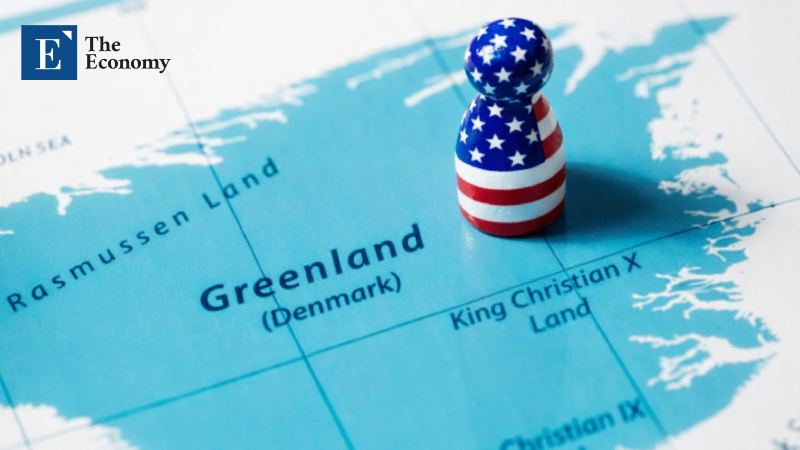
Greenland, the autonomous Danish territory once threatened with annexation by U.S. President Donald Trump, is now reportedly in discussions with Washington over expanding the American military presence and additional base construction across the Arctic island. The development suggests that after stepping back from earlier threats to seize Greenland by force amid mounting backlash from European allies, the United States, Denmark and Greenland have moved toward a diplomatic compromise centered on a broader U.S. military deployment.
Progress in Confidential Negotiations Among Washington, Copenhagen and Nuuk
According to the Associated Press on May 18 local time, U.S., Greenlandic and Danish negotiators responsible for Greenland’s foreign affairs have spent the past four months engaged in confidential talks in Washington over Greenland’s future status. The parties are believed to have met at least five times since mid-January. The negotiations were launched to provide an off-ramp from Trump’s threats of military control over Greenland and to prevent fractures within the North Atlantic Treaty Organization (NATO).
Washington is currently seeking revisions to the 1951 U.S.-Denmark defense agreement that would allow American forces to remain in Greenland indefinitely even in the event of Greenlandic independence. The proposal reportedly includes designating three new military installations in southern Greenland as sovereign U.S. territory. One likely location is Narsarsuaq, home to a former American base and a small airport during earlier periods of U.S. military activity.
The strategic rationale behind Washington’s fixation on Greenland remains clear: monitoring Russian and Chinese maritime operations across the GIUK Gap, the critical North Atlantic corridor between Greenland, Iceland and the United Kingdom. The United States currently operates only the Pituffik Space Base in northwestern Greenland. During the Cold War, the U.S. maintained roughly 17 facilities across the island. While Pituffik supports missile surveillance missions for the North American Aerospace Defense Command (NORAD), it lacks broader maritime monitoring capabilities.
Washington’s demands extend beyond military considerations. The U.S. is also reportedly seeking de facto veto power over major Greenlandic investment agreements in order to block strategic rivals such as Russia and China. Cooperation over natural resource development has likewise emerged as a core issue. Greenland is widely believed to possess substantial reserves of oil, uranium, rare earths and other critical minerals, though much of the resource base remains buried deep beneath the island’s ice sheet.
The Pentagon is simultaneously accelerating its broader Arctic military expansion plans. The U.S. Marine Corps recently visited Narsarsuaq to inspect World War II-era airfields, port facilities and potential troop accommodation zones. Gen. Gregory Guillot, commander of U.S. Northern Command, stated that Washington is envisioning an integrated network of radar stations and military hubs linking Alaska, Canada and Greenland. He added that the U.S. military requires deep-water ports and rotational special operations facilities in Greenland capable of supporting training exercises and Arctic deployments.
The negotiations are reportedly being led by Michael Needham, a senior aide to Secretary of State Marco Rubio. He is said to have attended meetings alongside one or two officials from the State Department or National Security Council. Denmark’s delegation reportedly included the deputy foreign minister, Denmark’s ambassador to Washington and Greenland’s senior diplomatic representative in the U.S. Dylan Johnson, deputy assistant secretary for global public affairs at the State Department, said the national security and economic concerns raised by Trump are “not disputed by any party” and that negotiations aimed at a permanent resolution remain ongoing.
Greenlandic Leadership Signals Security Cooperation
Greenland’s government has adopted a relatively favorable tone toward deeper security and economic cooperation with the United States. Greenlandic Prime Minister Jens-Frederik Nielsen stated that under the 1951 defense agreement, the U.S. already retains authority to establish additional bases in Greenland and could expand military facilities within the framework of the existing arrangement. Nielsen emphasized that while negotiations remain ongoing and no agreement has yet been finalized, Greenland is prepared to assume greater responsibility for national and international security.
Greenland endured significant political turbulence earlier this year after Trump openly reiterated his intention to acquire the island. Following pushback from NATO’s European allies and persuasion efforts by NATO Secretary General Mark Rutte, Trump stepped back from direct annexation rhetoric in late January. Since then, Washington, Copenhagen and Nuuk have continued diplomatic discussions aimed at easing tensions. Nielsen has repeatedly stated that Greenland remains open to broader military and economic cooperation with the U.S., including collaboration in mineral development, while insisting that Greenlandic sovereignty remains non-negotiable. He recently reiterated that “our only demand is respect.”
Compared with the situation earlier this year, when Trump repeatedly suggested the island could be acquired through force if necessary, the current negotiations are increasingly viewed as a far more pragmatic compromise. Greenland’s political establishment no longer rejects U.S. Arctic security interests outright and appears willing to negotiate adjustments to American military activity within the framework of the existing defense agreement.
What Greenland appears willing to accept, however, is expanded security cooperation rather than incorporation into an American-style governing structure. Following recent talks with a U.S. delegation, Nielsen declared that “Greenlanders are not for sale” and stressed once again that self-determination cannot become a negotiating item. While dialogue with Washington will continue, all cooperation, he emphasized, must proceed on the basis of respect for Greenlandic sovereignty. Within Greenlandic politics, a strong distinction is increasingly being drawn between military cooperation with the United States and political subordination to American influence.
Greenland’s relatively flexible negotiating posture also reflects geopolitical realities. The Arctic autonomous territory, home to only around 60,000 people, faces severe financial and infrastructural limitations in independently building comprehensive defense and surveillance capabilities. As competition over Arctic shipping routes intensifies alongside expanding Russian submarine activity and growing Chinese interest in Arctic resources, American military and intelligence assets are increasingly viewed as an indispensable security backstop. This has strengthened pragmatic arguments within Greenland that some degree of expanded U.S. military presence may be unavoidable. There is also growing local acknowledgment that the existing Pituffik-only system is insufficient to close surveillance gaps across the North Atlantic.
Security Anxiety Spreads Across Iceland and the Faroe Islands
Unlike Greenland, however, skepticism toward the U.S.-centric security architecture continues to deepen across other North Atlantic states. Following Trump’s threats to annex Greenland, discussions over European Union membership have regained momentum in Iceland. According to Politico Europe, Iceland’s government is considering moving forward a referendum on reopening EU accession negotiations from next year to as early as August.
Iceland originally applied for EU membership in 2009 after the collapse of its three largest banks triggered a severe financial crisis. However, the country suspended accession talks in 2013 after its economy recovered rapidly and formally requested in 2015 that it no longer be regarded as a candidate state. With the geopolitical environment shifting dramatically, Reykjavik is once again reassessing the strategic calculus surrounding EU membership.
Anxiety inside Iceland intensified further after Trump’s Greenland annexation rhetoric peaked in mid-January, when a nominee for U.S. ambassador to Iceland jokingly suggested that Iceland could become America’s “52nd state.” Iceland’s foreign ministry immediately demanded clarification from the U.S. Embassy and later received an apology, though public unease has persisted. Concerns deepened further during last month’s World Economic Forum in Davos after Trump repeatedly referred to Greenland as Iceland in public remarks.
These anxieties are closely tied to Iceland’s geopolitical reality. Positioned at the heart of the GIUK Gap, Iceland has served since the Cold War as a strategic NATO chokepoint for monitoring and constraining Russian submarine access into the North Atlantic. Iceland also lacks a standing military, relying instead on NATO membership and the 1951 bilateral defense agreement with the United States for national security. As Washington intensifies efforts to reshape Greenland’s strategic role, concerns are growing in Iceland that the country itself may increasingly fall within the direct pressure zone of escalating U.S.-China-Russia Arctic competition.
The nearby Faroe Islands are also displaying heightened sensitivity. The autonomous Danish territory has seen mounting calls for greater authority over Arctic and North Atlantic security policy following the Greenland dispute. In a recent report, the Danish Institute for International Studies (DIIS) warned that demands from Greenland and the Faroe Islands for stronger influence over security policy are placing growing pressure on the constitutional framework of the Danish kingdom. The more aggressively Washington pursues Greenland through bilateral negotiations, the more political fissures inside the Danish realm appear likely to widen.
Similar Post