“The Smartphone’s Two-Decade Reign Is Ending” — Smart Glasses Emerge as the Core Device of the AI Agent Era, With Technological Maturity and Trust Becoming Decisive Factors

Authored On
Modified
AI Glasses Poised to Succeed Smartphones as the Next-Generation Device
AI Delivers Instant Information Through Eyewear Alone, Unlocking Vast Use Cases
From Meta to Samsung, Competition Intensifies Over AI Agent Wearable Dominance
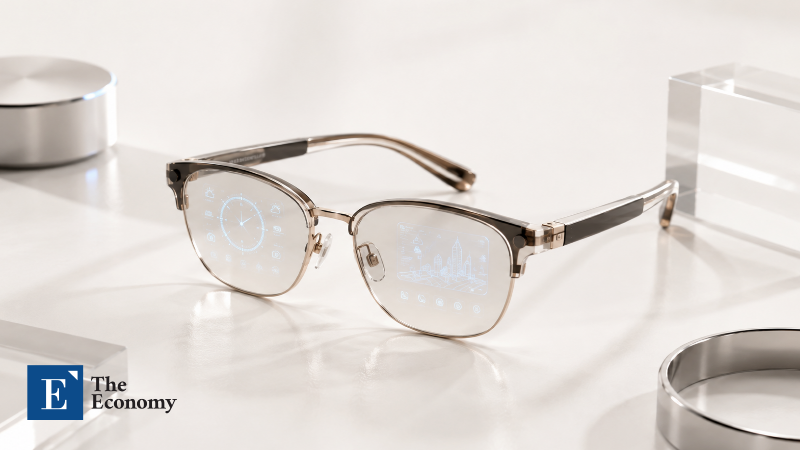
The race to define the post-smartphone platform era is accelerating. As forecasts emerge that artificial intelligence (AI) wearables could displace smartphones as the dominant personal device within the next decade, global big tech firms are rapidly reorienting their next-generation platform strategies around smart glasses. Yet major hurdles — including battery performance, heat dissipation, optical engineering, and privacy protection — remain unresolved, leaving the industry’s future dependent on whether companies can overcome technical constraints while establishing credible ethical standards.
Smart Glasses as the Core Device of the AI Agent Era
On May 18 local time, Cristiano Amon, chief executive officer of Qualcomm — one of the world’s five largest semiconductor companies — said in an interview with Fortune that “within 10 years, smartphones will hand over their position as the primary personal device to AI wearables.” Amon attributed the inevitable decline of smartphones in the AI era to the limitations of their underlying design philosophy. “Computers and smartphones were designed to respond to user commands, but the AI era is the opposite,” he said. “Devices must anticipate user needs first and act proactively.” The shift, in essence, is from a reactive paradigm to a predictive one.
Amon identified smart glasses as the physical embodiment of that transition. Because the device is directly connected to human vision and hearing, he argued that it represents the most suitable platform for AI to understand user context in real time. Smart glasses transform gaze itself into a command interface. Rather than merely overlaying visual information, the device tracks the user’s eyes to interpret surrounding context and relevant data. In museums, simply looking at a painting could trigger explanations about the artist, while foreign-language signs could be translated automatically. Compared with smartphones or smartwatches, the device functions as a far more intuitive proactive interface.
Amon also emphasized the possibility that smart glasses could absorb portions of the smartphone’s role. Comparing the coming AI device transition to the historical relationship between PCs and smartphones, he said, “The arrival of smartphones did not eliminate PCs, but some tasks migrated from PCs to smartphones. In the same way, some smartphone tasks could shift to new AI devices.” He added that “glasses can transmit exactly what users see and hear directly to AI,” arguing that contextual awareness will become the defining competitive edge in the AI agent era.
He also outlined a concrete timeline for the market transition. “2026 will mark the year AI agents enter the mainstream,” Amon said. “From 2027 to 2028, workflows will begin shifting from smartphones to AI agent devices, and within five years, the installed base of agentic AI devices could expand from hundreds of millions to as many as one billion units.” Qualcomm already supplies chipsets for Meta’s Ray-Ban smart glasses and Snap’s next-generation AR glasses project. Amon added that Qualcomm is “effectively collaborating with nearly every major AI company,” including OpenAI and Meta, on next-generation AI device semiconductors.
Escalation of the Smart Glasses War
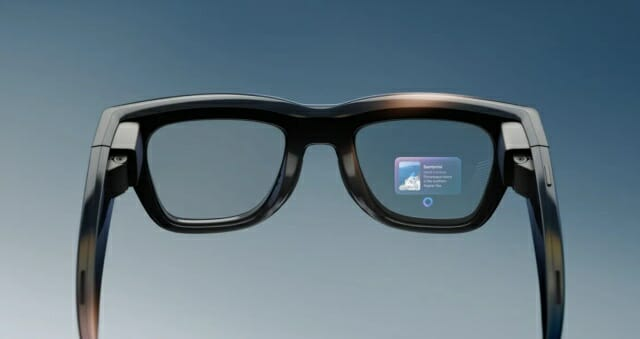
Competition among global big tech firms for leadership in the next-generation platform market is already migrating from smartphones to smart glasses. Meta, which commands 73% of the global smart glasses market, unveiled its second-generation Ray-Ban collaborative glasses at Mobile World Congress (MWC) 2026 in Barcelona on March 2. Saying, “Hey Meta, show me how to cook patatas bravas,” instantly generates step-by-step cooking instructions directly within the user’s field of vision without obstructing sight. The device also supports calls and camera functions.
Particularly notable is the “Neural Band,” a highly integrated technology that interprets user intent through electrical signals from wrist muscles. The technology enables discreet device control without touching the frame or issuing voice commands. Meta is reportedly reviewing plans to more than double annual production capacity this year to over 20 million units in preparation for competing product launches from Samsung Electronics and Apple.
Chinese challenger Alibaba has also drawn industry attention with its “Quark Glass,” emphasizing battery endurance and practicality. The Quark Glass differentiates itself through hardware durability and multiple control methods, with Alibaba highlighting its “battery replacement system” and “multi-control interface” as key competitive advantages. The device uses interchangeable dual batteries (272mAh) attached magnetically to the ends of the frame arms, directly addressing the chronic battery limitations of smart glasses through swappable hardware.
Samsung has also entered the battlefield. Samsung Electronics is expected to unveil its first smart glasses device, tentatively named “Galaxy Glass,” alongside its next-generation foldable smartphones Galaxy Z Fold8 and Flip8 at its Galaxy Unpacked event in London this July. Samsung collaborated with global eyewear brand Gentle Monster to strengthen design competitiveness and practicality while integrating “Android XR,” a dedicated operating system jointly developed with Google, alongside the generative AI service Gemini. The model, which is likely to launch officially in the third quarter, is expected to feature no dedicated display, relying instead on speakers, microphones, and a high-resolution camera. The device will function as an advanced AI assistant capable of capturing video based on the user’s gaze and delivering real-time voice information after Gemini analyzes the scene.
Samsung Electronics aims to position Galaxy Glass as the core edge device completing its AI ecosystem while entering full-scale competition with Meta, Xiaomi, and other global players. The company plans to deliver a differentiated user experience by integrating the device with Samsung’s AI smartphone and smart appliance ecosystem — SmartThings — which already spans 400 million devices globally and is projected to expand to 800 million units this year. Leveraging its worldwide semiconductor and appliance manufacturing infrastructure, Samsung also possesses the industrial foundation to extend smart glasses applications into business-to-business operations and manufacturing environments. The company is further expanding device connectivity into mobility through its “Car-to-Home” service developed in partnership with Hyundai Motor and Kia, which together sell more than 8 million vehicles annually.
Mounting Privacy and Commercialization Challenges
The outlook for smart glasses remains highly optimistic. Market research firm Counterpoint Research projects the smart glasses market will expand at a compound annual growth rate of 80.5% between 2024 and 2029. Grand View Research forecasts the market will reach $8.26 billion by 2030. “Smartphone adoption has already peaked, and touchscreen innovation has reached its limits,” one industry official said. “The three pillars of smart glasses — AI, augmented reality, and wearables — will determine the post-smartphone platform era.”
Yet formidable challenges remain unresolved. The largest bottleneck is technological maturity. Smart glasses must integrate displays, cameras, microphones, AI computing, wireless communications, and batteries entirely within a glasses frame. Industry analyses and foreign media reports identify battery life, heat generation, weight, comfort, viewing angle, brightness, and optical efficiency as the central obstacles to commercialization. AR glasses, in particular, must simultaneously satisfy outdoor visibility requirements and low-power operation, making their engineering complexity even greater than that of smartphones. Increasing device weight undermines wearability, while reducing power consumption weakens display quality and AI functionality, creating an unavoidable engineering tradeoff.
Another major variable is social acceptance. Because smart glasses capture users’ visual and audio surroundings in real time, they possess far stronger surveillance capabilities than existing wearables. That reality raises significant privacy concerns. Combined with cameras, GPS, and communication functions capable of continuously identifying users and their environments, the technology can record, store, digitize, and analyze virtually every aspect of daily life.
Research findings have reinforced those concerns. A Harvard University research team developed software capable of combining footage captured by Meta’s Ray-Ban smart glasses with facial recognition technology. The result demonstrated that simply identifying a passerby’s face could reveal names, addresses, phone numbers, and even family-related information.
Cases involving academic cheating have also surfaced. Because smart glasses can analyze captured information in real time and display results directly within the user’s field of vision, the devices are reportedly being used to project answers and hints during examinations. A representative from a smart glasses rental company explained that “students can secretly solve English and mathematics problems using a ring-shaped miniature controller.” China currently bans smart glasses in university entrance exams and civil service examinations, yet authorities continue to face difficulties distinguishing the devices from ordinary eyewear due to their nearly identical appearance.
- Previous U.S. Strategic Recalibration Around Greenland’s ‘Unsinkable Aircraft Carrier,’ Pivoting From Annexation to Expanded Military Footprint With Russia-China Containment at Core
- Next “AI-Driven Power Crisis Reshapes Market Landscape” NextEra Pursues Dominion Acquisition as M&A and Capital Spending Surge Across U.S. Power Sector
Similar Post