Korea and Japan Forge Energy Alliance Amid Iran War Shock, Expanding Toward Southeast Asia to Build Major Economic Bloc

Anne-Marie Nicholson is a fearless reporter covering international markets and global economic shifts. With a background in international relations, she provides a nuanced perspective on trade policies, foreign investments, and macroeconomic developments. Quick-witted and always on the move, she delivers hard-hitting stories that connect the dots in an ever-changing global economy.
Authored On
Modified
Strengthened Korea-Japan energy security coordination amid the prolonged Iran war
Push to counter China through expanded joint procurement and stockpiling systems across Southeast Asia
Korean and Japanese petrochemical sectors entering recovery phase as China’s low-cost supply chain weakens
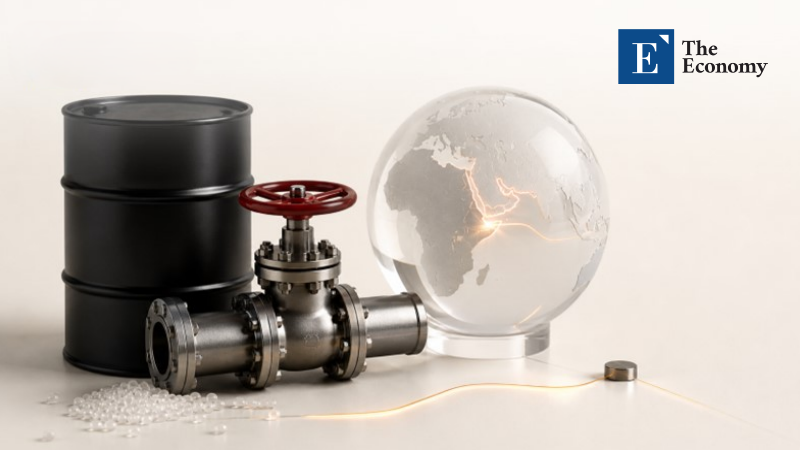
As the prolonged Iran war destabilizes East Asia’s energy supply chains, South Korea and Japan have moved to establish a joint defensive framework aimed at minimizing Middle East-driven disruptions. The latest bilateral coordination represents a short-term survival strategy designed to disperse resource procurement risks triggered by threats surrounding a potential closure of the Strait of Hormuz. At the same time, it is increasingly viewed as a broader geopolitical maneuver to construct a regional energy bloc capable of counterbalancing China’s expanding influence across Southeast Asia amid the conflict.
Crude Oil, Petroleum Product and LNG Swap Initiative
On May 19, South Korea’s Ministry of Trade, Industry and Energy announced that, on the sidelines of the Korea-Japan summit held in Andong, North Gyeongsang Province, the ministry and Japan’s Ministry of Economy, Trade and Industry had agreed on a joint cooperation framework aimed at strengthening energy security and supply-chain resilience. Under the agreement, the two countries will establish a swap mechanism allowing crude oil and petroleum products to be redirected between the two sides in the event of supply disruptions. Both governments also agreed to refrain from imposing unnecessary export restrictions during supply crises and to expand cooperation in crude procurement and transportation in order to enhance bargaining leverage with key resource-producing nations while stabilizing logistics networks. Japanese officials expect the arrangement to ensure stable access to Korean refined products such as jet fuel, where South Korea retains a competitive advantage in refining capacity.
Cooperation in the LNG sector will also be reinforced. South Korea and Japan, the world’s third- and second-largest LNG importers respectively, agreed to deepen supply stabilization cooperation based on the “Memorandum of Cooperation on LNG Supply Collaboration” signed on March 14 between Korea Gas Corp. and Japanese energy company JERA. The two governments also plan to refine response mechanisms for critical industrial supply chains. Building on the “Korea-Japan Supply Chain Partnership” signed in March by Trade Minister Kim Jung-kwan and Japanese Economy Minister Akazawa Ryosei, Seoul and Tokyo will broaden collaboration in supply-chain resilience initiatives.
The scope of cooperation is expected to expand across Asia. Through Japan’s proposed “Asia Energy and Resource Supply Chain Reinforcement Partnership,” the two countries will explore joint initiatives spanning stockpiling and other strategic sectors. To institutionalize the framework, the two ministries will launch the “Korea-Japan Industry and Trade Policy Dialogue,” a high-level consultative channel involving senior officials from both sides, with regularized intergovernmental discussions.
China Expanding Influence Across Southeast Asia Through Energy Cooperation
The expansion of Korea-Japan cooperation in crude oil and LNG is increasingly viewed as the most viable defensive mechanism available to both countries amid unprecedented external shocks driven by surging oil prices and supply imbalances. Their structural vulnerabilities are fundamentally similar. South Korea’s refining, petrochemical and manufacturing industries remain deeply dependent on stable crude imports, while Japan likewise relies heavily on imported fossil fuels to sustain its power generation and industrial base. Under separate procurement structures, suppliers and commodity traders retain significant pricing power. However, if Seoul and Tokyo consolidate demand and present long-term purchasing commitments together, alternative suppliers such as the United States gain access to more stable sales channels. Such an arrangement simultaneously reduces procurement risks for both buyers and suppliers while reshaping regional energy trade dynamics.
Another key factor accelerating bilateral cooperation lies in China’s increasingly proactive moves across Southeast Asia. Shortly after the Iran war erupted in February, Beijing partially restricted exports of petroleum products, prompting Southeast Asian economies heavily dependent on Chinese supplies of jet fuel, gasoline and diesel to repeatedly request exemptions and easing measures. Vietnam sought China’s cooperation in securing jet fuel supplies, while the Philippines requested that fertilizer export restrictions not be tightened further.
China subsequently held a series of high-level talks with the Philippines, Australia, Vietnam, Cambodia, Laos, Thailand, Myanmar and Bangladesh, emphasizing cooperation on energy security. During those discussions, Beijing also proposed renewable-energy technology and infrastructure partnerships, further strengthening the foundation for long-term regional influence. Although China remains the world’s largest crude importer, it possesses substantial strategic petroleum reserves and has aggressively invested in renewable-energy industries spanning solar power, wind energy, electric vehicles and smart-grid infrastructure.
Against this backdrop, Korea-Japan energy cooperation is increasingly evolving beyond bilateral security coordination into a broader regional support architecture. If Japan were to independently deepen engagement with Southeast Asia, it would face heightened risks of direct confrontation with China’s expanding influence. A joint response framework involving South Korea lowers political risk while simultaneously broadening the scope of supply-chain cooperation. Should a multilateral procurement system encompassing Southeast Asia materialize, its regional impact could become far more substantial. LNG purchasing consortiums would strengthen price negotiation leverage, while integrated crude oil stockpiling and transportation networks would accelerate crisis-response capabilities. Similar regional cooperation models could also emerge for strategic raw materials such as palm oil.
Accordingly, the leaders of South Korea and Japan agreed during the summit to support stockpiling-system development in Southeast Asian countries with limited petroleum reserve capacity. Under the arrangement, Asian corporations procuring crude oil from regions outside the Middle East will receive financing support through institutions such as the Japan Bank for International Cooperation (JBIC). In addition to financial assistance, the two countries will jointly provide technical support for the establishment of stockpiling infrastructure. Naphtha, a petroleum-derived feedstock used in medical supplies production, is also facing mounting global procurement concerns. By supporting crude supply flows to Southeast Asian countries that manufacture medical materials, Seoul and Tokyo are seeking to secure broader industrial supply stability as well. Both countries remain heavily dependent on imported Middle Eastern crude and face similar structural vulnerabilities. Supporting Southeast Asian economies struggling with the same procurement difficulties is therefore also viewed as part of a broader strategy to strengthen regional influence across Asia.
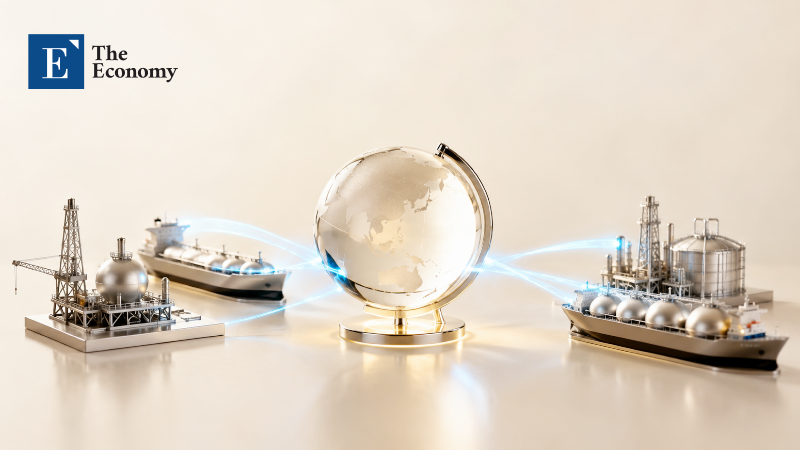
Weakening Advantage of China’s Discounted Crude, Signs of Recovery in Korean and Japanese Petrochemical Industries
The interests of both countries also converge in the petrochemical sector. Given South Korea and Japan’s overwhelming dependence on Middle Eastern crude, swap mechanisms alone are unlikely to fundamentally resolve supply shortages. In a scenario where both economies experience simultaneous supply shocks, the structural capacity for one side’s spare volumes to fully offset the other’s crisis remains inherently limited. Nevertheless, considering that China has effectively dominated pricing dynamics in Asia’s petrochemical market through access to low-cost Iranian crude, the latest energy cooperation could create an opening for Seoul and Tokyo to weaken a market structure that has increasingly tilted toward China.
China’s cost advantage is already becoming more difficult to sustain as the Iran war drags on and sanctions risks intensify. Beijing has long reduced import costs by purchasing large volumes of Iranian crude whose export channels were constrained by Western sanctions. Discounted Iranian oil became a critical pillar supporting the price competitiveness of independent refiners in Shandong Province as well as China’s broader petrochemical value chain. China remains the dominant buyer of Iranian seaborne crude exports, and access to discounted oil has been central to the ability of Chinese refiners and petrochemical producers to sustain aggressive low-price competition across Asian markets.
However, the prolonged Middle East conflict is beginning to fracture that structure. War-related premiums are simultaneously driving up crude prices, shipping costs and insurance expenses, rapidly squeezing margins at China’s independent refining companies. At the same time, intensified U.S. sanctions on Iran are adding additional payment, logistics and compliance costs to Iranian crude transactions. China’s low-cost supply model, which relied heavily on discounted crude, is increasingly being transformed into a system burdened by both rising prices and escalating sanctions risks. As a result, price pressures originating from China that had weighed on Korean and Japanese petrochemical firms for years are showing signs of partial easing.
Korean refiners and petrochemical companies are also benefiting from so-called lagging effects. The lagging effect refers to profit fluctuations caused by timing gaps between crude purchases and refined-product sales. When oil prices rise rapidly, companies can refine crude acquired at relatively lower prices and sell petroleum products at significantly higher prices, generating inventory valuation gains and improved refining margins. Should Middle East-driven supply instability continue to support elevated prices for jet fuel, diesel and naphtha, financial pressures weighing on Korean refiners and petrochemical producers — many of which had faced mounting restructuring concerns — are expected to ease in the short term.
Japan shares similar industrial incentives. The Japanese petrochemical sector has likewise suffered from Chinese capacity expansion, oversupply in commodity-grade products and volatile naphtha prices, resulting in weak utilization rates and deteriorating profitability. Behind the Korea-Japan push for Southeast Asian crude procurement support and joint purchasing systems lies not only a diplomatic calculation centered on expanding regional influence, but also a broader industrial strategy aimed at restoring pricing power and sales foundations for domestic petrochemical companies against China’s low-cost supply network.
Anne-Marie Nicholson is a fearless reporter covering international markets and global economic shifts. With a background in international relations, she provides a nuanced perspective on trade policies, foreign investments, and macroeconomic developments. Quick-witted and always on the move, she delivers hard-hitting stories that connect the dots in an ever-changing global economy.
Similar Post