“Beyond Smartphones to AI Servers” LPDDR Emerges as the Next Memory Battleground After HBM, With Prices Poised to Rise as China’s Catch-Up Effort Falters

As one of the youngest members of the team, Tyler Hansbrough is a rising star in financial journalism. His fresh perspective and analytical approach bring a modern edge to business reporting. Whether he’s covering stock market trends or dissecting corporate earnings, his sharp insights resonate with the new generation of investors.
Authored On
Modified
Nvidia’s LPDDR consumption by 2027 projected to surpass combined smartphone demand from Apple and Samsung
AI server market pivots toward LPDDR amid mounting power constraints, fueling expectations for continued commodity DRAM price increases
China accelerates LPDDR5 and LPDDR5X development, though yield instability and limited experience remain major obstacles
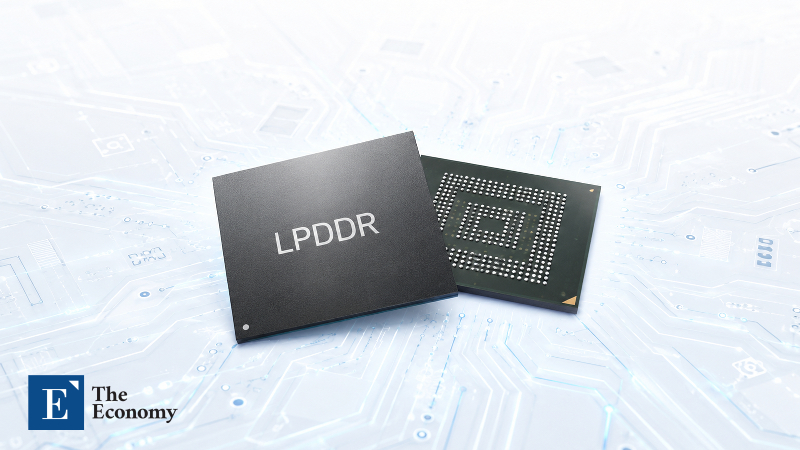
Demand for low-power double data rate (LPDDR) memory is surging across the artificial intelligence (AI) industry. As AI agents and on-device AI rapidly reshape the competitive landscape, mounting demand for power-efficient AI servers is propelling LPDDR beyond high-bandwidth memory (HBM) as a new centerpiece of the AI ecosystem. Markets are increasingly forecasting further increases in commodity DRAM prices amid tightening LPDDR supply conditions. Some analysts also point to Chinese memory manufacturers’ LPDDR production capabilities as a potential variable capable of reshaping the market balance.
Nvidia Absorbing LPDDR Supply
According to U.S. research firm Citron Research, cited by IT media outlet Wccftech on the 17th (local time), Nvidia’s next-generation AI platform “Vera Rubin” is expected to consume 6.041 billion gigabytes (GB) of LPDDR memory in 2027. The estimate, derived by combining LPDDR capacity per Vera Rubin platform with projected shipment volumes to major tech companies, exceeds the combined LPDDR demand generated by Apple smartphones (2.966 billion GB) and Samsung Electronics smartphones (2.724 billion GB), totaling 5.69 billion GB, by roughly 6%.
Such projections stem from Nvidia’s decision to adopt LPDDR as CPU memory for the platform, while the expanding AI agent market continues to elevate the role of CPUs. The Vera Rubin platform pairs ultra-fast HBM with Rubin GPUs responsible for AI computation, while Vera CPUs overseeing overall system control and data flow management utilize LPDDR. The Vera CPU, in particular, is expected to play an increasingly important role in the rapidly expanding AI agent market. AI agents rely heavily on real-time inference, command execution, and external system integration rather than simple training tasks, increasing dependence on CPUs optimized for data control and operating system processing. As a result, demand for CPU-mounted LPDDR is poised to rise further.
The spread of on-device AI is also reinforcing LPDDR’s strategic importance. On-device AI refers to technologies that perform AI-driven tasks such as real-time translation, photo editing, and voice assistance directly within smartphones or devices. Since these functions require significantly larger volumes of internal data processing, devices equipped with such capabilities increasingly depend on memory solutions like LPDDR that combine low power consumption with high-speed data handling.
LPDDR Penetrating AI Servers
The strategic importance of LPDDR is becoming increasingly evident within the AI server market as well. Global big tech companies have begun transitioning data center server architectures away from conventional DDR-based systems toward LPDDR-centric designs. Amazon Web Services (AWS), for instance, adopted LPDDR5X for its proprietary Arm-based server chip “Graviton4,” while Microsoft integrated LPDDR5X into its Arm-based server processor “Cobalt 100.” The shift reflects mounting data center power burdens as AI inference and agent services move toward commercialization. According to independent research firm Growth Research, LPDDR5X can reduce power consumption by 75% compared with DDR5 while delivering approximately 36% higher bandwidth.
Manufacturers of AI server chips are also intensifying competition for low-power AI infrastructure through LPDDR5X adoption. Intel, for example, equipped its next-generation AI inference GPU “Crescent Island” with 160GB of LPDDR5X memory, prioritizing power efficiency and cost reductions. Qualcomm likewise announced its entry into the AI inference market by deploying up to 768GB of LPDDR memory in its AI server accelerators “AI200” and “AI250.” The strategy reflects Qualcomm’s effort to extend LPDDR design expertise accumulated in smartphone chips into the AI server segment.
Market observers warn that broader LPDDR adoption across data centers could significantly tighten commodity DRAM supply conditions, amplifying upward pressure on memory prices. Major memory manufacturers including Samsung Electronics and SK hynix have recently concentrated resources on higher-margin HBM production. This has substantially reduced supply of commodity DRAM products including LPDDR, deepening supply-demand imbalances. Even outside the so-called “Big Three” memory manufacturers — Samsung Electronics, SK hynix, and Micron — companies capable of producing stable commodity memory supplies are seeing valuations surge rapidly. Against this backdrop, a sharp increase in LPDDR demand from AI servers could intensify competition for limited production capacity with existing demand sources such as smartphones and PCs, further exacerbating pricing pressures.
China’s LPDDR Competitiveness Still Lagging
China’s pace of LPDDR development is increasingly viewed as a critical variable that could reshape the competitive landscape. Chinese memory companies have already established meaningful influence in the low-end smartphone LPDDR4 and LPDDR4X markets. The leading player is China’s largest DRAM manufacturer, ChangXin Memory Technologies (CXMT). CXMT began mass production of LPDDR4 in 2020 and has steadily expanded supply to Chinese smartphone makers including Xiaomi, Oppo, Vivo, and Transsion. More recently, Samsung Electronics and Micron have reduced LPDDR4 production, accelerating CXMT’s market share gains. Market research firm TrendForce has also concluded that aggressive capacity expansion by Chinese suppliers has pushed the low- and mid-range smartphone LPDDR4X market into oversupply territory.
Chinese companies are now aggressively challenging the LPDDR5 market as well. Following its official commercialization announcement for LPDDR5 in 2023, CXMT unveiled its LPDDR5X product lineup at the IEEE ASICON semiconductor conference in October last year, stating that certain products had already entered mass production in May of the same year. NAND flash manufacturer YMTC is also seeking entry into the DRAM sector. Reuters reported in September last year that YMTC had initiated development of high-performance DRAM for AI chips and had begun supplying low-power memory samples, including LPDDR products, to customers. In February this year, DigiTimes further reported that YMTC had completed development and distribution of LPDDR5 engineering samples.
Nevertheless, Chinese firms are still widely regarded as struggling to overcome limitations in yields and process competitiveness. CXMT reportedly encountered thermal stability and yield issues during initial DDR5 production and continues to manufacture advanced products using older deep ultraviolet (DUV)-based processes without access to cutting-edge extreme ultraviolet (EUV) lithography equipment. LPDDR products are built on the same advanced DRAM process technologies as DDR5 while imposing even stricter requirements for power efficiency, thermal management, and packaging stability. This raises concerns that the same production problems seen in DDR5 could directly carry over into LPDDR manufacturing. In addition, the lack of long-term supply experience and limited trust from global customers remain critical weaknesses for Chinese memory manufacturers.
As one of the youngest members of the team, Tyler Hansbrough is a rising star in financial journalism. His fresh perspective and analytical approach bring a modern edge to business reporting. Whether he’s covering stock market trends or dissecting corporate earnings, his sharp insights resonate with the new generation of investors.
Similar Post