Trump Pressured More by Treasury Yields Than Stocks, War-End Calculus Accelerates Under Bond Market Strain

Matthew Reuter is a senior economic correspondent at The Economy, where he covers global financial markets, emerging technologies, and cross-border trade dynamics. With over a decade of experience reporting from major financial hubs—including London, New York, and Hong Kong—Matthew has developed a reputation for breaking complex economic stories into sharp, accessible narratives. Before joining The Economy, he worked at a leading European financial daily, where his investigative reporting on post-crisis banking reforms earned him recognition from the European Press Association. A graduate of the London School of Economics, Matthew holds dual degrees in economics and international relations. He is particularly interested in how data science and AI are reshaping market analysis and policymaking, often blending quantitative insights into his articles. Outside journalism, Matthew frequently moderates panels at global finance summits and guest lectures on financial journalism at top universities.
Authored On
Modified
Surging oil prices and yields amplify pressure on U.S. fiscal stability
Wolfe Research: “Rising bond yields could become the trigger for ending the war”
Trump previously retreated through tariff delays under Treasury market pressure

Analysts are increasingly arguing that Donald Trump, who has long demonstrated acute sensitivity to interest-rate movements, could accelerate efforts to end the Iran war as U.S. Treasury yields surge. The collapse in bond prices and the sharp rise in yields have emerged as decisive pressure points constraining the Trump administration’s war posture toward Iran. Each time hopes for a ceasefire gain traction, international oil prices and long-term Treasury yields tumble sharply. Conversely, whenever negotiations falter or fears of escalation intensify, the bond market immediately unleashes panic-driven selling pressure, tightening the screws on Trump.
War-End Scenario Accelerated by Yield Surge
According to Investing.com on the 20th (local time), Chris Senyek, chief investment strategist at U.S. research firm Wolfe Research, wrote in a report released on the 19th that rising bond yields, rather than falling stock prices, could prove to be the more powerful catalyst forcing the White House to intervene to end the war. Senyek said yields resumed climbing as hotter-than-expected inflation data revived doubts over the Federal Reserve’s willingness to maintain an easing stance, adding that “the Trump administration is far more likely to act to end the war when yields spiral uncontrollably higher than when equities decline.”
Trump, a former real-estate developer, has long been viewed as highly reactive to interest-rate conditions in policymaking. A notable example came on April 9 last year, when the 10-year U.S. Treasury yield surged to 4.51% following the implementation of reciprocal tariffs. Trump, who had remained unmoved even as equities collapsed after the tariff announcement on April 2, abruptly suspended tariff measures against most countries except China for 90 days just 14 hours after the tariffs took effect. Speaking to reporters afterward, Trump remarked, “The bond market is beautiful now,” adding that “people were getting a little queasy.”
This time as well, market pressure is materializing most visibly through the bond market. That backdrop helps explain Trump’s repeated references in recent days to the possibility of diplomatic negotiations with Iran. Senyek assessed that this week marked a turning point for the U.S. Treasury market, which has been steadily pricing in persistent inflation risks. He also warned that so-called “bond vigilantes” — investors who dump government bonds in protest against fiscal deficits or inflationary policies, thereby pushing yields higher — could drive rates even higher to pressure Washington into resolving the Iran issue swiftly.
Panic Across U.S., Japanese, British and German Bond Markets as Ceasefire Prospects Fade
The Trump administration’s broader macroeconomic strategy is structurally vulnerable to volatility in Treasury yields. As geopolitical tensions in the Middle East intensified recently, crude oil prices soared and fears of resurgent inflation spread rapidly, triggering violent convulsions across global bond markets. Treasury yields in the United States, Japan, Britain and Germany all spiked in tandem, underscoring growing panic throughout sovereign debt markets.
After the U.S.-China summit that concluded on the 15th failed to produce a breakthrough toward ending the conflict, the yield on the 30-year U.S. Treasury climbed as high as 5.197% on the 19th before closing at 5.183%, the highest level since 2007. The U.S. government also issued 30-year Treasuries this week at a 5% yield for the first time since 2007. The 10-year Treasury yield likewise surged roughly 0.75 percentage points following the outbreak of the Iran war, reaching 4.67%, its highest level since early 2025. On a weekly basis, the 10-year yield rose 12 basis points to 4.6%, marking the largest weekly increase since April last year, when markets descended into panic following Trump’s tariff shock.
Government bond yields across other advanced economies also climbed to multi-decade highs. Japan’s 30-year government bond yield rose to 4.13%, marking the first time since the bond’s introduction in 1999 that the yield surpassed 4%. Britain’s 30-year gilt yield climbed to 5.773%, the highest level in 28 years, while Germany’s 10-year Bund yield reached 3.17%, the highest since 2011.
America’s vulnerability is becoming increasingly evident through soaring interest costs. U.S. public finances are already burdened by massive debt-servicing obligations, and rising long-term yields are directly feeding into higher borrowing costs and mounting fiscal-deficit pressure. Against this backdrop, key economies have begun aggressively offloading U.S. Treasuries to defend their own currencies and manage risk exposure, further accelerating upward pressure on yields. Trump has attempted to bolster fiscal revenues through arms sales to allies and expanded tariff barriers, but the exponential rise in debt-servicing costs is overwhelming those efforts. The extreme volatility in U.S. financial markets — where ceasefire hopes trigger plunging yields and sharp equity rebounds — vividly illustrates the severity of the rate pressure now confronting the Trump administration.
Trump Says “End It Through Diplomacy” While Netanyahu Pushes for Further Strikes
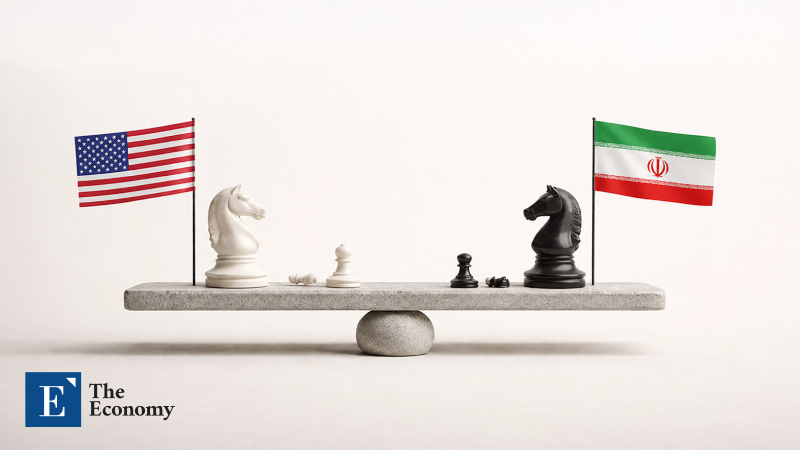
Ultimately, Trump’s available exit options are narrowing. Extending the war would further aggravate oil prices, inflation, interest rates and fiscal burdens in a cascading chain reaction. Yet moving too quickly toward a ceasefire risks backlash from hawkish factions within the United States and from Israel. At the same time, however, it could prevent further violent dislocations across financial markets. Indeed, on the 20th, after Trump signaled both willingness for additional strikes against Iran and optimism regarding a negotiated settlement, bond markets that had been convulsing under oil-driven inflation fears stabilized as yields declined. The 30-year U.S. Treasury yield fell 0.062 percentage points to 5.119%, while the 10-year yield plunged 0.089 percentage points to 4.58%. International crude prices, which had hovered near $110 per barrel, also retreated sharply. Brent crude fell 5.63% to $105.02 per barrel, while West Texas Intermediate (WTI) dropped 5.66% to $98.26 per barrel.
As anticipated, Israeli Prime Minister Benjamin Netanyahu reportedly reacted angrily to Washington’s apparent push toward ending the war. According to U.S. political outlet Axios, Trump told Netanyahu during a phone call on the 19th that mediators were preparing a “letter of intent” designed to secure signatures from both sides. The document would formally end the war while initiating a “30-day negotiation period” focused on key issues including Iran’s nuclear program and the reopening of the Strait of Hormuz. The objective is to extract more concrete commitments from Iran regarding its nuclear activities while establishing detailed mechanisms for the phased release of frozen Iranian funds by the United States. Washington reportedly presented Iran with a 14-point proposal earlier this month that included similar provisions, though the talks ultimately collapsed. At the time, the framework reportedly took the form of a memorandum of understanding (MOU), whereas the current effort is structured as a letter of intent.
After being briefed on the details of the proposed document, Netanyahu reportedly erupted in anger following the call with Trump. While Trump is seeking to end the war through diplomacy as quickly as possible, Netanyahu strongly opposed the initiative, arguing that Iran would never honor any agreement. Israel has long expressed skepticism that Tehran would uphold commitments related to dismantling nuclear activities or refraining from regional aggression. Netanyahu reportedly reiterated that position during both the latest call and a prior conversation on the 17th.
Yet Israel’s hardline posture is unsustainable without continued American military and financial backing. Should Washington begin scaling back or restricting support under the weight of surging Treasury yields and mounting fiscal stress, Israel could find itself isolated internationally and forced to shoulder the burden of a full-scale war alone. One diplomatic and security expert noted that “there is considerable dissatisfaction within Israel regarding Washington’s apparent shift toward ceasefire negotiations, but in reality sustaining a prolonged conflict without American support could impose a burden severe enough to exhaust the country’s strategic assets.” The expert added, “Global financial markets are already demanding an exit from the war, and President Trump himself appears increasingly inclined to view ceasefire negotiations as the most realistic solution under the pressure of soaring yields.”
Matthew Reuter is a senior economic correspondent at The Economy, where he covers global financial markets, emerging technologies, and cross-border trade dynamics. With over a decade of experience reporting from major financial hubs—including London, New York, and Hong Kong—Matthew has developed a reputation for breaking complex economic stories into sharp, accessible narratives. Before joining The Economy, he worked at a leading European financial daily, where his investigative reporting on post-crisis banking reforms earned him recognition from the European Press Association. A graduate of the London School of Economics, Matthew holds dual degrees in economics and international relations. He is particularly interested in how data science and AI are reshaping market analysis and policymaking, often blending quantitative insights into his articles. Outside journalism, Matthew frequently moderates panels at global finance summits and guest lectures on financial journalism at top universities.
Similar Post