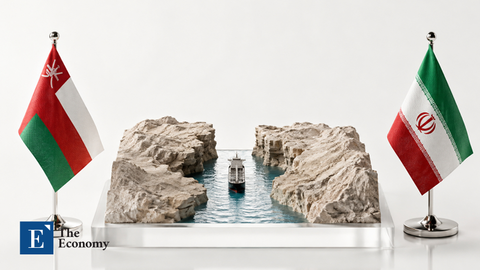
[U.S.-Iran Peace Talks] “Military Strike on Iran Put on Hold” U.S. Maintains Military Pressure Amid Nuclear Deadlock as Focus Shifts Toward ‘Economic Negotiations’ Before the Storm

Oliver Griffin is a policy and tech reporter at The Economy, focusing on the intersection of artificial intelligence, government regulation, and macroeconomic strategy. Based in Dublin, Oliver has reported extensively on European Union policy shifts and their ripple effects across global markets. Prior to joining The Economy, he covered technology policy for an international think tank, producing research cited by major institutions, including the OECD and IMF. Oliver studied political economy at Trinity College Dublin and later completed a master’s in data journalism at Columbia University. His reporting blends field interviews with rigorous statistical analysis, offering readers a nuanced understanding of how policy decisions shape industries and everyday lives. Beyond his newsroom work, Oliver contributes op-eds on ethics in AI and has been a guest commentator on BBC World and CNBC Europe.
Authored On
Modified
Trump delays anti-Iran military operation following mediation by Gulf states
Military tensions persist as divisions over nuclear program remain unresolved
“Priority for now is economic and security stability” as ceasefire talks shift in emphasis
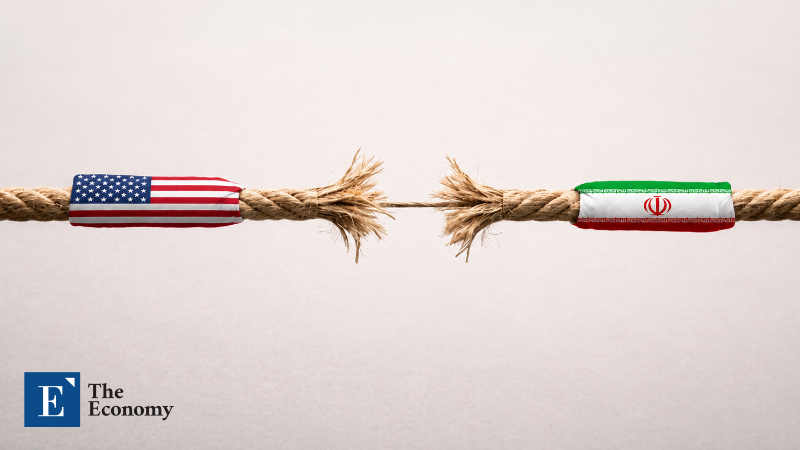
U.S. President Donald Trump announced that Washington would suspend military strikes against Iran for the time being. With military tensions between the two countries showing little sign of easing over the nuclear program, mediation efforts by Gulf states have barely sustained the current “calm before the storm” phase. Experts increasingly believe that future ceasefire negotiations will place greater emphasis on economic issues such as sanctions relief and compensation packages, rather than the nuclear program itself, as both sides focus on a temporary containment of the conflict.
U.S. Leaves Door Open for Additional Strikes
On June 18 local time, Trump stated on his social media platform Truth Social that “Qatar’s Emir Tamim bin Hamad Al Thani, Saudi Crown Prince Mohammed bin Salman, and UAE President Mohamed bin Zayed Al Nahyan requested that I postpone the military strike on Iran that had been scheduled for Tuesday (June 19).” It marked the first public disclosure that the United States had been preparing to resume military operations against Iran on June 19. Although Washington and Tehran halted direct hostilities after agreeing to a ceasefire on May 7, prolonged deadlock in negotiations over a permanent settlement had reignited concerns over renewed U.S. military action.
Preparatory measures for a renewed offensive had also been progressing steadily. One prominent example involved discussions over changing the operation’s codename. On June 12, NBC News reported that the U.S. government was reviewing plans to rename any renewed anti-Iran operation from “Grand Fury” to “Sledgehammer.” The move was reportedly aimed at circumventing congressional oversight. Under the U.S. War Powers Resolution, military operations conducted without congressional approval are limited to 60 days. The Trump administration had previously declared that the earlier operation had achieved its objectives and concluded after 40 days. By changing the operation’s name and relaunching the campaign, the 60-day countdown would effectively reset.
Trump also discussed military operations with Israel. According to Middle Eastern outlet Al Jazeera, Trump and Israeli Prime Minister Benjamin Netanyahu held an emergency phone call on June 17 regarding the possibility of renewed hostilities with Iran. Following the call, Israeli public broadcaster Kan, citing an anonymous security source, reported that “the Israeli military has completed preparations to join a new round of U.S. airstrikes on Iran” and that “Iranian energy infrastructure facilities would become primary targets if strikes commence.” Another major Israeli outlet, Channel 12, similarly reported that “the conversation between the two leaders took place under the shadow of urgent preparations for renewed combat with Iran,” adding that “a heightened state of alert has been imposed across the Israeli military.”
Parallel Lines Over the Nuclear Program
The Trump administration has used such military pressure to demand the permanent termination of Iran’s nuclear program. Washington insists that Iran must not be permitted to enrich uranium domestically, even for civilian purposes, and that the approximately 400–440 kilograms of 60%-enriched uranium currently held by Tehran must either be transferred overseas or destroyed. The United States has repeatedly warned that failure to comply could trigger military action. In March, foreign media outlets reported that Trump was considering a military operation aimed at directly seizing Iran’s highly enriched uranium. Last month, further reports suggested that U.S. Army units, including the 82nd Airborne Division, could be deployed to secure facilities storing highly enriched uranium.
Iran, however, continues to reject Washington’s demands, insisting that it cannot relinquish its right to uranium enrichment. Tehran views nuclear weapons capability as a critical pillar of regime survival. Iranian leadership effectively considers the nuclear program a form of “regime insurance,” drawing lessons from the collapse of governments such as Saddam Hussein’s Iraq and Muammar Gaddafi’s Libya after abandoning weapons of mass destruction programs. Nuclear capability also carries major strategic implications in regional power competition. Iran remains locked in strategic confrontation with both Saudi Arabia and Israel, with Israel widely regarded as a de facto nuclear power. From Tehran’s perspective, nuclear armament represents an essential bargaining chip for strengthening negotiating leverage.
For these reasons, Iran has reacted with extreme sensitivity to issues surrounding its nuclear program. A representative example came last month, when Tehran claimed that a U.S. military operation may have been intended to seize Iranian uranium. At the time, after an F-15E fighter jet was struck and its onboard weapons systems officer went missing, the United States reportedly launched a rescue operation involving aircraft and special forces personnel deployed into Iran. Iranian Foreign Ministry spokesman Esmaeil Baghaei later stated, “The United States claimed that the pilot had been hiding in Kohgiluyeh and Boyer-Ahmad Province in southwestern Iran, but the actual landing site of the U.S. aircraft was far from there, south of Isfahan,” adding that “there is a possibility that this operation was a deceptive mission aimed at stealing Iran’s uranium.” Isfahan is home to three of Iran’s major nuclear facilities, including Fordow and Natanz.
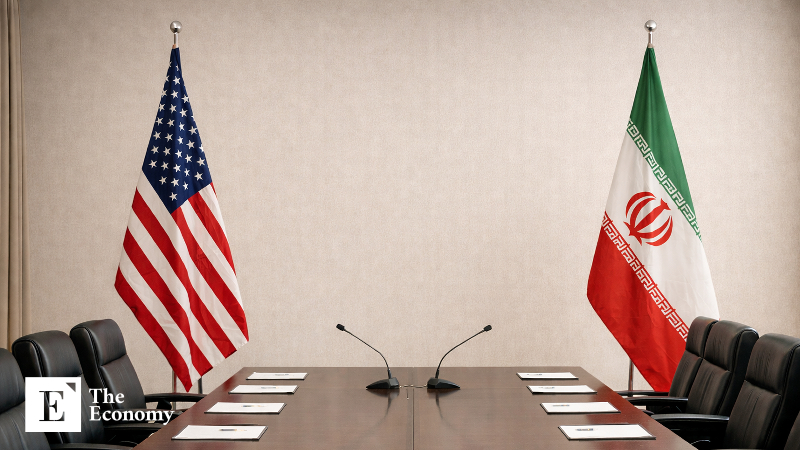
Ceasefire Negotiations Shift Toward Economic Issues
With the gap between the two sides over the nuclear program showing little sign of narrowing, experts increasingly believe that economic matters will ultimately become the central issue in ceasefire negotiations. Analysts argue that sanctions relief and economic reconstruction support from the United States could determine the initial outcome of talks. In fact, the two countries have recently exchanged ceasefire proposals focused heavily on economic issues in search of compromise. On June 18, Iran’s semi-official Tasnim News Agency, citing a source close to Tehran’s negotiating team, reported that Iran had delivered a new 14-point ceasefire proposal to Washington through mediator Pakistan. The source explained that the proposal focused on “confidence-building measures” the United States would need to undertake.
Tasnim separately reported the same day, citing another source close to the negotiating team, that “unlike previous drafts, the new U.S. proposal accepts a temporary suspension of sanctions on Iranian oil during the negotiation period.” While Iran insists that any ceasefire agreement must include the complete lifting of all anti-Iran sanctions, the United States has reportedly proposed temporary sanctions relief until a final agreement is reached. However, no official confirmation from Washington regarding the matter has been presented.
Baghaei also confirmed the media reports during a press conference that same day, stating, “After we delivered the 14-point proposal, the U.S. side presented its own priorities to us.” He added, “In response, we conveyed our position once again. Although the United States publicly rejected the proposal last week, the following day we received Washington’s revised views and priorities through Pakistan.” He continued, “These U.S. proposals have been reviewed over the past several days, and as announced yesterday (June 17), our response has now been delivered back to the United States,” adding that “the negotiation process through Pakistani mediators is continuing.”
Oliver Griffin is a policy and tech reporter at The Economy, focusing on the intersection of artificial intelligence, government regulation, and macroeconomic strategy. Based in Dublin, Oliver has reported extensively on European Union policy shifts and their ripple effects across global markets. Prior to joining The Economy, he covered technology policy for an international think tank, producing research cited by major institutions, including the OECD and IMF. Oliver studied political economy at Trinity College Dublin and later completed a master’s in data journalism at Columbia University. His reporting blends field interviews with rigorous statistical analysis, offering readers a nuanced understanding of how policy decisions shape industries and everyday lives. Beyond his newsroom work, Oliver contributes op-eds on ethics in AI and has been a guest commentator on BBC World and CNBC Europe.
Similar Post