Counting the Price of Upheaval: The Economic Cost of Political Upheaval

Erik Van der Meer examines how scientific knowledge is produced, validated, and institutionalized across disciplines. His writing explores the structure of modern science, the evolution of research norms, and the interaction between technology and scientific epistemology. He contributes reflective essays on science itself—bridging hard research and meta-level analysis.
Authored On
Modified
Political upheaval has lasting economic costs
Institutional instability weakens growth and human capital
Protecting governance and education reduces long-term damage
The ripple impacts of a single event can reshape national discourse. The government of Nepal estimates that the Gen-Z protests in September 2025 resulted in $586 million in losses. This is a considerable sum, accounting for roughly 1.4% of Nepal’s gross domestic product. The stated number includes damaged buildings, but also reflects past physical damage, broken contracts, suspended initiatives, and a broad decline in public faith. Businesses put investments on hold, and banks tightened their lending practices. Families delayed considerable expenditures and future plans, while young people explored opportunities to leave the country. Austerity happened in learning institutions and training programs. These less obvious impacts are part of the total cost. There's a decrease in future earnings and in the total years of education people receive. The economic effects of political instability are tangible, impacting both public finances and individual plans and curtailing investment in skill development. PoAuthorities mustonsider tthose financialconsequences and take immediate steps to reduce long-term negative trends.
The Financial Consequences ofolitical Turmoil: Immediate DDisturbances andProlonged Consequences
The immediate aftermath of unrest often brings swift repercussions such as property damage and the closure of public institutions. Restrictions in transportation and trade are common. Tourism suffers from cancelled reservations and reduced flight activity. The workforce finds it hard to get to factories. Shops shut down, resulting in sharp declines in sales. Insurance claims rise, putting pressure on budgets and compelling governments to spend on urgent repairs. Nepal’s $586 million loss shows these immediate costs, including damages to both public and private holdings. Financial markets are also quick to respond: stock prices drop amid heightened uncertainty, credit spreads widen, and lenders impose harsher lending conditions. Foreign investors ofrequently delaynew projects, which affects jobs and economic output. Studies show that these initial shocks can have long-term effects. The International Monetary Fund (IMF) found that large-scale unrest can lower a country's GDP by around one percentage point within six quarters. An immediate budget cut would be to spend less on education. Training programs and school repairs would then be put off. This slows the recovery process and makes it more costly.
The prolonged effects of unrest are seen in the slower channels of economic recovery. Companies postpone capital expenditure because regulatory uncertainty and the likelihood of renewed unrest increase the expected return threshold for new projects. Households, facing job insecurity, delay big purchases. Lending to the private sector lags, even amid increased deposits and central bank liquidity, as banks seek less risky investments. After the unrest, Nepal experienced a paradox in which rising deposits coincided with weak private credit growth. For education systems, this is important. When governments are pressured to carry out reconstruction, budgets constrict, and non-essential programs like vocational training, school repairs, and digital upgrades are often cut. The IMF's international analysis finds that major disturbances are followed by a one percentage-point decrease in GDP six quarters after the event. This suggests that short-term shocks can have long-term economic outcomes. This situation makes it harder to plan school-related activities and distorts public spending, transferring resources away from investments that would yield returns over the long term.
Expectations strongly guide economic choices. When people expect instability, they become cautious in their financial plans. Parents might decide to take their children out of school early. This decreases the future earning potential of an entire age group. Young people may seek work in stable economies in other countries. Despite remittances benefiting individual households, they do not create local jobs. Over time, long-term migration decreases the number of skilled workers in the country. Companies then face higher wages when trying to find qualified staff. According to a 2023 article by Hernandez Moreno and colleagues, although there has been ongoing research and progress in automation for industrial assembly, the widespread and extensive adoption of technologies across the industry remains limited. Nepal's experience, characterized by strong remittances but weak private investment, shows how the domestic job market can deteriorate even when overall economic indicators remain stable. Schools can worsen inequality if they receive less money. Decreased spending can lead to larger class sizes and fewer resources. Teachers may face delayed payments and hiring freezes. The quality of teaching can decline rapidly after shocks. Repairing buildings does not automatically correct lost learning opportunities. A full recovery requires both time and additional funding and resources, which are often scarce in the aftermath of a crisis. This is why prioritvaluing humanl is key. It lowers the long-term costs that are associated with political unrest.
Three International Examples of Fiscal and Human Costs
Different countries show that there are different forms of harm. Yemen clearly illustrates the issue that involves food prices. During the Arab Spring, food prices rose by about 10% in many areas. A 10% price increase quickly affects poor households. Families reduce spending on other needs just to buy essential food products. Children may be forced to work or stop going to school. As nutrition declines, child development also suffers. The costs of health and education rise when food costs rise. The food shock in Yemen was made worse by currency fluctuations and trade interruptions, making food more expensive. International aid was helpful, but it was not enough to reverse all the damage. The lesson is clear: a political crisis can become a food crisis. It changes nutrition, then it affects classrooms and training facilities. If learning is negatively affected, it can lead to a less skilled workforce. These numbers from price shifts show how widespread the distress is. In already fragile countries, the costs become higher and longer-lasting.
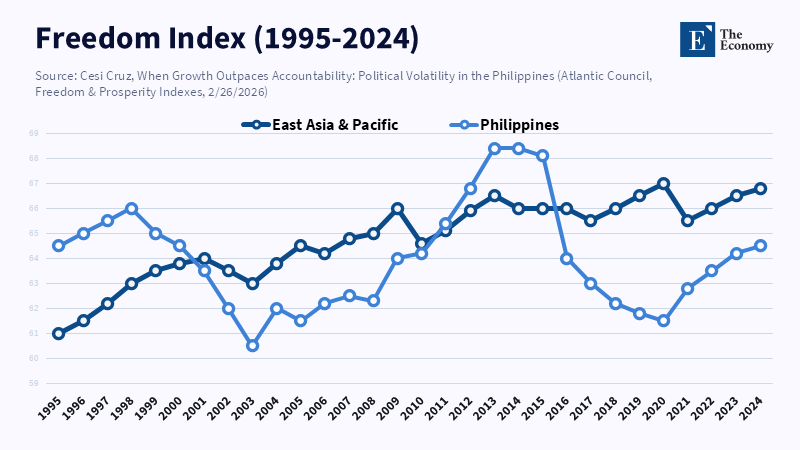
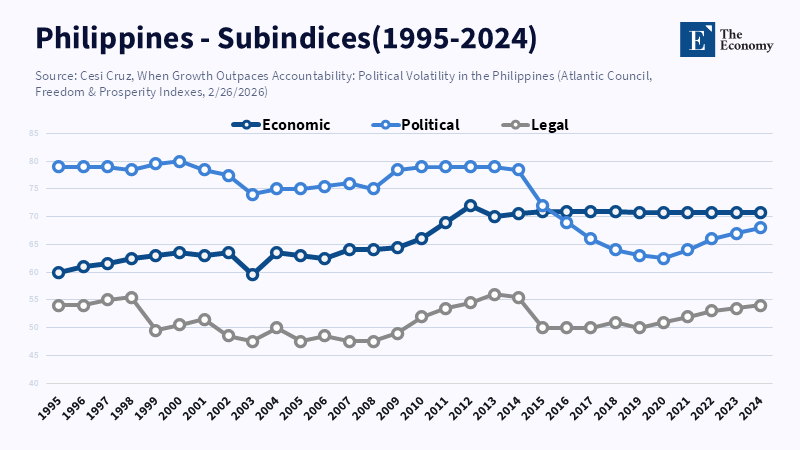
The Philippines provides a more nuanced view. The damage can be subtle and expensive. Rapid policy changes can cause uncertainty for companies. When leadership styles change, rules can change just as fast. Investors might hold off on building large infrastructure and manufacturing projects. This lowers long-term job creation and lowers demand for training. Contracts might change public tenders, making them less reliable. This, therefore, means there will be fewer incentives for private training and apprenticeships. The impact is fewer formal jobs. Governments might increase spending on short-term fixes rather than on long-term schooling. Money shifts away from long-lasting investments, such as classrooms. The hidden tax of volatility is slow and persistent. The tax is difficult to measure buyet clearo see in large data sets. Education suffers when there is a lack of direction from those in charge. Therefore, policymakers have to protect long-term programs from political cycles.
These case studies have a common lesson. The route of action might change, but the result is the same. Disruption and volatility reduce output and harm human capital. Financial markets are reacting to public unrest. Studies show an average 1.4 percentage-point drop after big events. The fall is larger in unstable locations with weak establishments. This market dip reflects reduced expected profits and more risk. If market values fall, household wealth will be cut and future tax revenue will be reduced. Across countries, evidence shows a medium-term drag on growth. This is the financial face of the economic cost of political disorder. It explains why a single event can slow down prosperity for years. Having the ability to view these associations can help inform policy aimed at protecting people and jobs.
What Government Officials and Teachers Should Do About the Economic Costs of Political Upheaval
First, planners have to consider political risk like a budget item. Funds have to be set aside for teacher pay and school repairs. These funds must be secured to preserve human capital. A set-aside fund prevents the school budgets from being completely used up in rebuilding. Automatic actions can release funds when unrest levels rise. The actions keep teachers paid and programs in motion. Budgeting for possible events is cheaper than rebuilding lost human capital later. This saves the cost of a singular event. This would be a priority for aid programming with donors. Receiving small, stable funding is better than large, one-time grants. Schools have to plan for continuity, not just recovery. This saves lessons and reduces dropout rates. This also maintains teacher morale and enrollment during the event. Stable schooling also helps families avoid early work for children. This helps protect growth.
Second, putting resources into short, employer-related program skills. When companies delay hiring, courses keep people ready. Micro certificates and quick learning programs help workers attach to employers. These programs are more affordable than long college pathways and scale quickly. Public and private groups can find positions and on-the-job training. Donors and governments can support vouchers for the most vulnerable. This keeps labor markets active even during uncertainty. It reduces the push to migrate and the loss of skilled work. Programs have to be able to turn short courses into diplomas for people. Finding a local need can help firms put people to work with less risk and search costs. This allows for skill to continue during distress.
Third, reduce the risk to the private sector by strengthening transparent regulations and short, quick court times, which cut uncertainty for investors. Obvious spending during campaigns and open bids reduces sudden policy reversals. When the rules are obvious, investors have less chance of losing revenue. This lowers costs and increases time spent on long-term jobs. More long-trequirement for skilled demand for skilled workers. This helps with learning programs and private sector training. Greater predictability also makes it easier for donors to fund resources. It is cheaper to keep schools open than to rebuild human capital. Governments should speed up the decision-making process for investors. This prevents jobs from being lost and businesses keep going. Local changes that can increase trust can be made quickly. Such small steps have little cost and can improve how investors feel. The cost of risk pays for itself.
Some might argue that protest is political, and that financial costs should not drive how it is responded to. It can also be argued that some changes require disruption to address deep-rooted problems. Both sides have substance, but both might miss the importance of having learning protected during change. Keeping track of costs does not mean voices should not be heard. This means there should be planning in place to ensure services remain available during times of change. People also worry that low growth might cause disturbance or vice versa. International evidence supports the claim that protests often lower growth in locations. Evidence from Yemen and Nepal shows specific channels from unrest to schooling. Practical methods accept trade-offs and try to keeA fair perspective. A balanced view protects rights and learning simultaneously.
In conclusion, Nepal’s total of $586 million is a clear warning. It shows the payment of protests and long-run costs. Yemen and the Philippines show how volatility can lower human capital. Price levels, changes in policy and loss of revenue all lower human capital. People who give education have to protect people and learning. Budgets have to be guarded, skills have to be developed fast, and rules prevent damage. These moves do not stop politics or protests but ensure the system in place still functions. Treat the financial cost of possible chaos as a key. Do not hope for everything to return without preparing to keep learning without risk. Saving years of learning and income is making a smart and fair move.
The views expressed in this article are those of the author(s) and do not necessarily reflect the official position of The Economy or its affiliates.
References
Bari, M.A., 2025. From revolution to inflation: the economic consequences of the Arab Spring on Yemen’s food prices. Humanities and Social Sciences Communications.
Barrett, P. and Chen, S., 2021. The Economics of Social Unrest. Finance & Development, International Monetary Fund, August 2021.
Barrett, P., Bondar, M., Chen, S., Chivakul, M. and Igan, D., 2021. Pricing protest: the response of financial markets to social unrest. IMF Working Paper 21/079.
Cruz, C., 2026. When growth outpaces accountability: political volatility in the Philippines. Atlantic Council.
Dhungel, N., 2026. Nepal’s economy after the Gen Z protest. East Asia Forum.
Hadzi-Vaskov, M., Pienknagura, S. and Ricci, L.A., 2021. The Macroeconomic Impact of Social Unrest. IMF Working Paper 21/135.
Hernandez Moreno, V., Jansing, S., Polikarpov, M., Carmichael, M. G. & Deuse, J., 2023. Obstacles and Opportunities for Learning from Demonstration in Practical Industrial Assembly: A Systematic Literature Review. arXiv preprint arXiv:2310.00276.
Sharma, G., 2025. Nepal says economy suffered $586 million hit from 'Gen Z' protests. Reuters, 12 December 2025.
World Bank, 2025. Nepal Development Update. World Bank, 13 November 2025.
Erik Van der Meer examines how scientific knowledge is produced, validated, and institutionalized across disciplines. His writing explores the structure of modern science, the evolution of research norms, and the interaction between technology and scientific epistemology. He contributes reflective essays on science itself—bridging hard research and meta-level analysis.