The summer deadline: why aiming to end the war by summer risks a fragile peace — and what to do instead

Working across research, policy, and data-driven analysis, the Editorial Board ensures that published pieces reflect a consistent institutional perspective grounded in quantitative reasoning and long-term structural assessment.
Authored On
Modified
A summer deal may meet deadlines but risk a fragile peace
Costs, casualties, and public opinion demand sequencing, not spectacle
Durable peace needs verification and guarantees—not a rushed signature

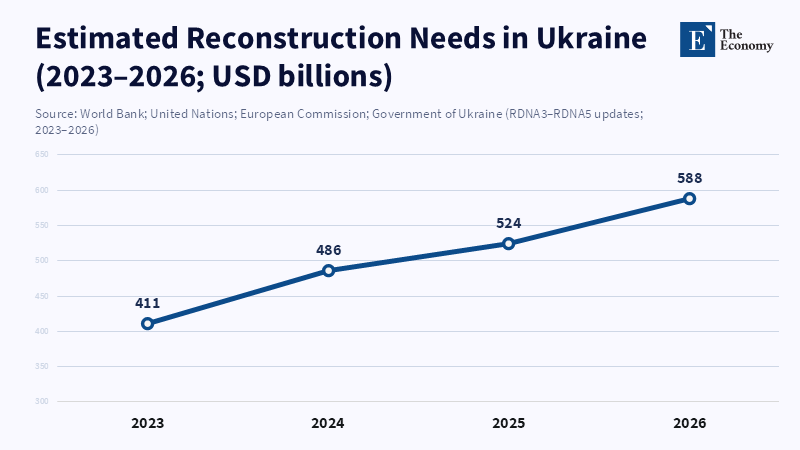
The staggering cost of rebuilding Ukraine, now over $588 billion and still rising, needs to be addressed if policymakers move beyond mere gestures (World Bank / United Nations / European Commission / Government of Ukraine, 2026). This number is a clear illustration of the war's impact on housing, power and the people directly affected. Attempting to end the war by summer pushes too many steps—ceasefire, verification, security measures, troop movements, and funding for rebuilding—into a short timeframe (Reuters – Dysa & Harmash, 2026). While deadlines might increase focus, they may also lead to overlooking problems with the rules. A quick agreement before the season ends could create uncertainties that will make rebuilding and accountability harder for years to come. The real question is whether we can create a plan that Ukraine, Russia, and other supporting countries can manage to achieve lasting peace, rather than pushing for a signature by July.
Why trying to end the war by summer complicates diplomacy
Using a political schedule focused on one summit can cause issues. Governments are responsible to their voters and elected bodies. Elections and meetings create firm deadlines for decisions and resources, affecting bargaining strategies. When the United States and its allies announce that they expect results by a certain time, negotiations may shift from careful designs to quick fixes (Financial Times, 2026; Reuters – Dysa & Harmash, 2026). This pressure can give importance to measures that are only temporary, such as short ceasefires, unclear land agreements, and unclear rules. These are easier to agree to than put into practice. This situation makes a dealmaker’s performance more likely than actual stable plans.
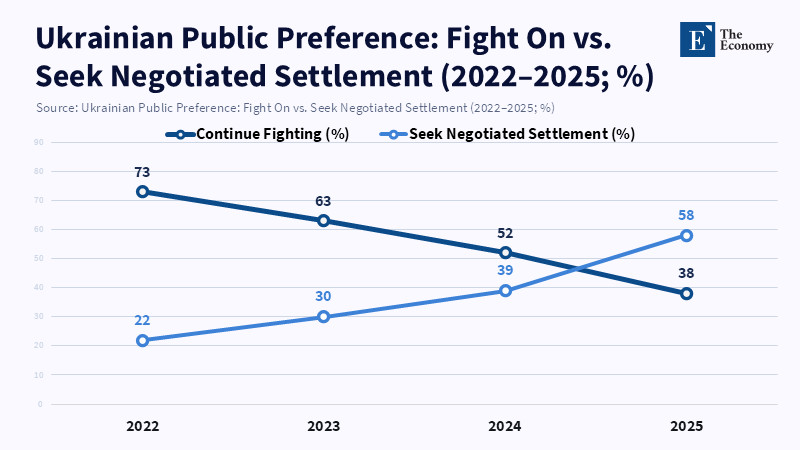
Pressing for time also limits Ukraine’s options. Kyiv’s strength in discussions stems from its will to fight and from the West's support for its military and finances (NATO, 2025). As the conflict continues, pressure is growing inside Ukraine for talks to end the fighting. Polls show a shift toward seeking a quick agreement rather than pushing for total victory (Gallup, 2025). This tiredness, though, does not come without political costs. Any agreement made under a deadline risks trading long-term strong promises for short-term comfort. The outcome could be a shaky agreement that fits schedules but does not meet the needs of the people, leaving those in important jobs to rebuild while dealing with issues of who controls the land and gaps in safety.
What the numbers tell us about costs, deaths, and public opinion
The human and economic costs should be the focus of diplomatic planning. Independent studies estimate that Ukraine will need about $588 billion to rebuild over the next 10 years (World Bank / United Nations / European Commission / Government of Ukraine, 2026). This includes direct damage and economic losses from destroyed infrastructure. This amount sets the minimum for any agreement, if devastated areas are not be left to suffer for good. A fast push for a ceasefire without real plans to rebuild risks giving Russia power in negotiations: they might offer a short break in the fighting, but no real way to recover, which would make any agreement unstable.
The war involves large numbers and big differences. Latest expert studies calculate the combined military losses of Russia and Ukraine in the hundreds of thousands, possibly near two million when deaths or missing civilians are also taken into account (CSIS – Jones, 2026; AP News, 2026). These numbers are not just figures. They change the political environment in both Moscow and Kyiv, the available trained forces, and whether societies want revenge or peace. Policymakers should see casualty counts as more than numbers; they drive what is politically doable. Any diplomatic plan must address severe trauma and a limited chance of significant demobilization.
Finally, resources from allies count. NATO members have pledged substantial extra help over the next few years, but sustaining these funds depends on public views and perceptions of the returns (NATO, 2025). Allies have promised new help with safety, but these promises have limits and depend on political conditions (Le Monde – Bekmezian, 2026). If a summer deal seems to end the need for support too soon, resources could be relocated before approval procedures are set up, thereby weakening the very promises that should keep the agreement in place.
How summit pressure and displays complicate enforcement
Diplomacy related to big meetings brings attention—also pressure—to deliver results quickly. The NATO leaders' gathering is a focus for this pressure (Financial Times, 2026). Leaders who attend will be expected to show progress. A signed agreement would be a good political image for governments. However, images do not equal application. Enforcement teams must do the slow after the attention has faded. This includes looking at front lines, monitoring departures, and counting weapon supplies. This work takes more time than a weekend. If a deal has to be completed in time for a meeting, it will postpone hard choices. Who will watch the demilitarized zones, how withdrawals will happen, and how to check weapon storage are issues that are likely to be left to unclear processes. Ambiguity causes problems.
Safety promises are very important. Kyiv will want guarantees that its land territory and its population are safe. Moscow will want assurances that it will keep its gains or receive rewards that support its idea of victory. Allies will want strong monitoring and the power to punish those who break the rules (Aydıntaşbaş et al., 2026). All three needs are possible, but only if the steps are clear and monitoring has enough resources. Summit deals with unclear safety assurances, which encourage reversal. Also, leaders being present does not answer questions like who provides peacekeepers, secures the main transportation points, and monitors the airspace. These are political choices that require time to negotiate.
A useful plan: steps, verification, and paths to peace
The goal should be a lasting stop to fighting, not media attention. Therefore, the plan must be created in separate steps with funding. First, an active cease-fire: clear guidelines, maps showing borders, GPS-based monitoring, and a joint plan managed by trusted parties to address problems. Second, a verification system that combines ground-based monitors with open reporting and fast dispute resolution. Third, safety protections that happen in stages: temporary UN or international security forces for sensitive areas, with cuts to external supplies tied to proven compliance. Fourth, a rebuilding agreement with legally binding payments spread over years, contingent on verified demilitarization. These are the things that make an agreement strong and lasting (Aydıntaşbaş et al., 2026).
Where will the resources come from? It will not come from just one place. The United States can act as a broker and supply funds, allies can offer verification tools, and groups in the area can run coordination centers. Neutral countries and international groups can provide independent monitors and judges. The rebuilding fund, which connects money incentives to security goals, provides strong motivation. According to Conciliation Resources, donors are encouraged to make aid payments conditional on demonstrated progress instead of immediately shifting funds at the first signs of progress (Griffiths & Barnes, 2008). This approach may help prevent rushed agreements that leave key issues unresolved. It also gives Ukraine a clear path to move from fighting to recovery, allowing the people to see a shift from war to rebuilding rather than from fighting to an uncertain situation.
Other helpful measures: Every agreement should include the monitoring tools and the effects of violation. Vague safety assurances are not guarantees. Clear measures—number of weapons removed, verified disposal of listed munitions, qualified demobilization of units—are applicable. Equally critical is ordering political actions like local votes or changes to the constitution ought to followould follow verified demilitarization and rebuilding goals, not go before them. Order matters because it protects community fairness and reduces the capability of spoilers (Griffiths & Barnes, 2008).
A strategy to sign it by summer is appealing because it feeds the need for closure and creates a photo moment for leaders. However, the numbers and past occurrences suggest a different way. The large amount of destruction—roughly hundreds of billions of dollars in rebuilding costs and casualty counts among the highest since World War II—makes quick fixes dangerous and costly (World Bank / United Nations / European Commission / Government of Ukraine, 2026; CSIS – Jones, 2026). A lasting finish needs careful planning, not just empty promises. Officials must replace summit deadlines with verifiable steps: ceasefires, robust monitoring, safety assurances, and a rebuilding agreement that ties money to action (Aydıntaşbaş et al., 2026). If those pieces are made now and resources are secured later, any signature can start a real recovery rather than be paused and fall apart later. The alternative is a short-term break in fighting that leaves those in jobs like teachers and hospital managers to suffer in a peace that does not truly exist. Focus on order. Fund verification. Focus on making peace that lasts, not just a snapshot.
References
Aydıntaşbaş, A., Baev, P.K., Budjeryn, M., Gordon, P.H., Grzymała-Busse, A., Hamilton, D.S., Karlin, M., Pifer, S., Sisson, M.W., Stelzenmüller, C. & Wright, T., 2026. What price for peace in Ukraine? Brookings Institution, 17 Feb 2026.
CSIS (Jones, S.G.), 2026. Russia’s Grinding War in Ukraine. Center for Strategic and International Studies (CSIS), February 2026.
Gallup, 2025. Ukrainian support for war effort collapses. Gallup Poll, 7 Aug 2025.
Le Monde (Bekmezian, H.), 2026. Ukraine's Western allies push to drag the war out. Le Monde, 23 Feb 2026.
Griffiths, A. & Barnes, C., 2008. Incentives and sanctions in peace processes. Accord Issue 19, Conciliation Resources, London.
NATO, 2025. NATO’s support for Ukraine. North Atlantic Treaty Organization public reporting, 2025–2026.
Reuters (Dysa, Y. & Harmash, O.), 2026. US pushes Russia and Ukraine to end war by summer, Zelenskiy says. Reuters, 7 Feb 2026.
Reuters (staff), 2026. US, Ukraine discuss post-war reconstruction as Russia pummels grid. Reuters, 26 Feb 2026.
World Bank / United Nations / European Commission / Government of Ukraine, 2026. Fifth Rapid Damage and Needs Assessment (RDNA5): Ukraine 2022–2025. World Bank Group, 23 Feb 2026.
AP News (staff), 2026. Ukraine says Russia launched a major aerial attack ahead of Geneva talks with US. Associated Press, 26 Feb 2026.
Financial Times, 2026. [Article cited by user — FT coverage on summit pressure]. Financial Times, 2026.
ADN / AP (staff), 2026. After 4 years of war by Russia in Ukraine, peace is still elusive despite a US push for a settlement. Anchorage Daily News / Associated Press, 22 Feb 2026.
Working across research, policy, and data-driven analysis, the Editorial Board ensures that published pieces reflect a consistent institutional perspective grounded in quantitative reasoning and long-term structural assessment.