[U.S.-Iran War] "Trump’s Five-Day Strike Delay on Iran" Strategic Gambit—Weighing Global Economic Pressure and Gulf State Fallout

Aoife Brennan is a contributing writer for The Economy, with a focus on education, youth, and societal change. Based in Limerick, she holds a degree in political communication from Queen’s University Belfast. Aoife’s work draws connections between cultural narratives and public discourse in Europe and Asia.
Authored On
Modified
U.S. Secures Negotiation Leverage by Delaying Strike on Iran’s Energy Facilities
Soaring Oil Prices Amid Prolonged Conflict Trigger Global Economic Strain
Gulf States’ Civilian and Energy Infrastructure Hit, Escalation Risks Mount
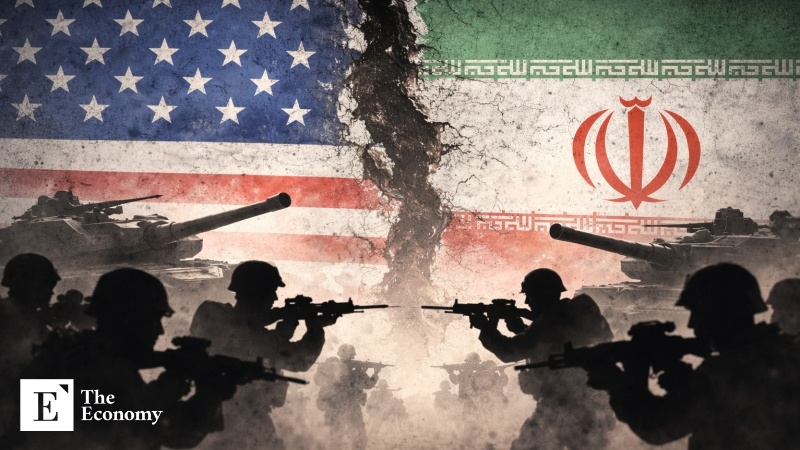
U.S. President Donald Trump has postponed an attack on Iran’s energy facilities. As the confrontation with Iran extends beyond initial expectations, the move appears aimed at securing room for negotiations as part of an exit strategy. Experts suggest that mounting economic disruption driven by rising global oil prices, along with Iran’s attacks on Gulf states, likely intensified pressure on Washington to bring the conflict to a close.
Policy Reversal After Hardline Posture
According to major foreign media reports on the 23rd (local time), President Trump stated via social media that “the United States and Iran have engaged in highly productive discussions to fully and comprehensively resolve hostilities in the Middle East,” adding that he had instructed the Department of Defense to delay military strikes on Iran’s power plants and energy facilities for five days. Just two days earlier, the U.S. had warned that it would strike power plants if the Strait of Hormuz was not reopened within 48 hours, marking an abrupt shift in its response posture.
Iran, however, while partially acknowledging U.S. outreach attempts, maintains that no meaningful negotiations have taken place. Iran’s Foreign Ministry asserted that “there have been no talks with the United States following the airstrikes,” while media outlets linked to the Islamic Revolutionary Guard Corps (IRGC) denied both direct and indirect contacts, rejecting President Trump’s claims. Iran’s parliamentary leadership also dismissed reports of negotiations as “fake news,” criticizing them as psychological warfare aimed at destabilizing financial and oil markets.
With uncertainty surrounding the bilateral conflict persisting, the trajectory of the dispute is expected to hinge on the outcome of high-level talks between the United States and Iran over the next five days. According to Fox News, Washington has already conveyed its demands to Tehran via Oman. These reportedly include a five-year suspension of missile programs, a halt to uranium enrichment, dismantling of nuclear facilities in Natanz, Fordow, and Isfahan, cessation of support for pro-Iran armed groups in the region, external monitoring of nuclear-related equipment, and a cap of 100 missiles. Iran’s Mehr News Agency reported that Tehran has set six conditions: compensation payments, closure of U.S. military bases in the Middle East, guarantees against renewed conflict, termination of hostilities across all fronts, establishment of a new legal framework for the Strait of Hormuz, and prosecution and extradition of Iran-linked journalists in the United States involved in anti-Iran activities.
Given the severity of the conditions presented, reaching a substantive agreement within five days appears unlikely. Some observers note that President Trump’s unpredictable approach throughout the conflict leaves the war’s trajectory highly uncertain. Should both sides fail to reach consensus after the talks, the possibility remains that Trump could proceed with strikes on Iran’s power plants and deploy ground forces, triggering a broader escalation.
Global Economy Under Strain Amid Prolonged Conflict
Trump’s decision to delay the strike, despite the absence of guaranteed agreement, is widely interpreted as a strategic maneuver to explore an exit from the conflict. Initially, the United States had expected a swift resolution. On the 9th, Trump remarked that “this war will be a short operation,” adding that “they should have surrendered two days ago,” suggesting that Iran’s missile capabilities had largely been neutralized and that the war was effectively over.
Contrary to U.S. expectations, Iran has maintained its resistance, pushing the conflict into a protracted phase. This has sharply elevated risks across global energy supply chains. International oil prices have been climbing steeply. On the 20th, West Texas Intermediate (WTI) rose 2.27% to $98.32 per barrel, while Brent crude jumped 3.26% to $112.19. Although prices briefly eased on the 23rd following the U.S. announcement of the delay, the potential for renewed spikes remains, depending on how the situation unfolds.
This surge in energy prices has triggered widespread disruption across global financial markets. Exchange rate volatility among non-reserve currencies has intensified, inflationary pressures have mounted worldwide, and sovereign bond yields in major economies have begun to rise sharply. Industrial sectors are also facing mounting strain. Disruptions in maritime transport near the Gulf have created bottlenecks in raw material supply across multiple industries. In addition, rising freight costs and oil prices are exerting further pressure on corporate profitability.
Escalating Damage Across Gulf States
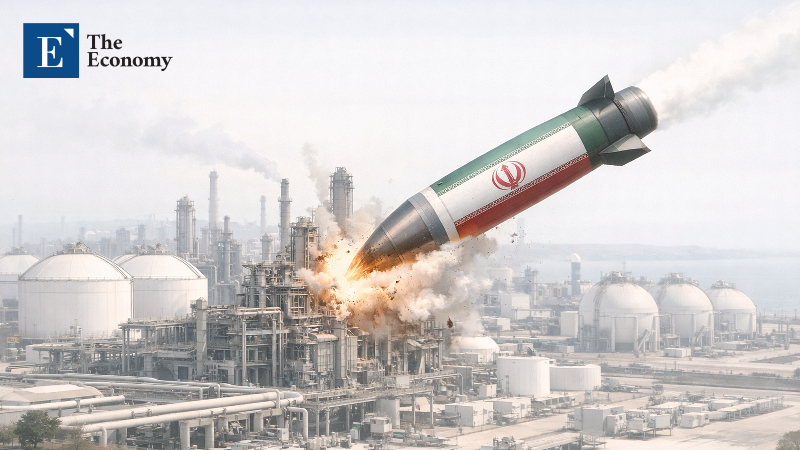
Gulf states are also suffering severe economic consequences. Following U.S. and Israeli airstrikes on Iran, Iranian authorities have launched multiple missile attacks against Gulf countries aligned with Washington. Targets have included Bahrain, Kuwait, Saudi Arabia, Qatar, Oman, and the United Arab Emirates (UAE). Iran has struck not only U.S. military bases in these countries but also civilian infrastructure such as airports, hotels, residential areas, and energy facilities.
Despite these attacks, Gulf states have refrained from retaliatory action against Iran. Sina Toossi, a senior nonresident fellow at the Center for International Policy (CIP), noted that “from the Gulf states’ perspective, this is not their war,” adding that retaliation would risk turning them from vulnerable bystanders into primary targets. Rob Geist Pinfold, a professor of international security at King’s College London, explained that “there is reluctance among Gulf states to align with Israel and its regional objectives,” noting a perception that Israel has drawn the United States into the conflict.
However, there is also speculation that the situation could shift if large-scale attacks on energy facilities in these countries persist. In addition, if Iran’s regional proxy forces, including Houthi rebels, directly target Gulf states, those nations may begin to view the conflict as directly implicating their own security and consider intervention. In this regard, Dr. H. A. Hellyer, a senior fellow at the Royal United Services Institute (RUSI), emphasized that “while Gulf states are currently exercising restraint, political calculations can shift rapidly.”
Aoife Brennan is a contributing writer for The Economy, with a focus on education, youth, and societal change. Based in Limerick, she holds a degree in political communication from Queen’s University Belfast. Aoife’s work draws connections between cultural narratives and public discourse in Europe and Asia.
Similar Post