"Human Roles Disappearing" — AI Upends Labor Market as Optimism and Pessimism Diverge

Oliver Griffin is a policy and tech reporter at The Economy, focusing on the intersection of artificial intelligence, government regulation, and macroeconomic strategy. Based in Dublin, Oliver has reported extensively on European Union policy shifts and their ripple effects across global markets. Prior to joining The Economy, he covered technology policy for an international think tank, producing research cited by major institutions, including the OECD and IMF. Oliver studied political economy at Trinity College Dublin and later completed a master’s in data journalism at Columbia University. His reporting blends field interviews with rigorous statistical analysis, offering readers a nuanced understanding of how policy decisions shape industries and everyday lives. Beyond his newsroom work, Oliver contributes op-eds on ethics in AI and has been a guest commentator on BBC World and CNBC Europe.
Authored On
Modified
"AI Will Replace a Significant Share of Human Labor," Says Uber CEO
Impact Expands Beyond White-Collar Jobs to Manual Labor and Professional Roles
Potential for Positive Shifts Including Productivity Gains and New Industry Creation

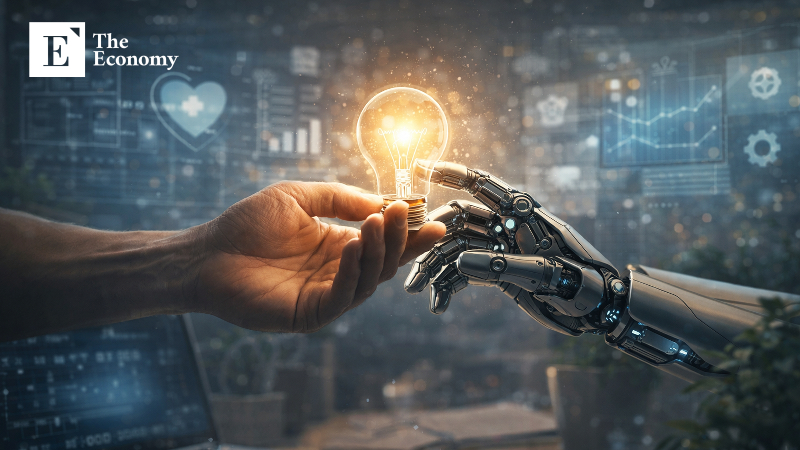
Advancements in artificial intelligence (AI) have fueled projections that human employment could decline substantially. Beyond white-collar roles already within AI’s sphere of influence, jobs involving manual labor—such as manufacturing, driving, and logistics—are increasingly viewed as vulnerable. At the same time, a counterargument has emerged suggesting that AI could instead elevate human productivity and influence, ultimately generating broader societal benefits and prosperity.
AI-Driven Employment Shock
According to a Yahoo News report on March 23 (local time), Dara Khosrowshahi, CEO of Uber, stated in a recent podcast interview that “after hearing discussions among executives about the massive changes AI will bring, I’ve seen those same individuals make optimistic remarks on CNBC and at the Davos Forum,” adding that “overly candid statements could negatively affect investors or fundraising, which makes such behavior understandable.” His remarks suggest that while corporate leaders publicly promote optimism around AI, their private outlooks may diverge significantly.
Khosrowshahi anticipates that AI will eventually replace a substantial portion of human labor. He estimates that AI could perform 70–80% of tasks currently carried out by humans, with knowledge-based work affected within the next decade and manual labor sectors such as driving and logistics impacted within 15 to 20 years. He further noted that a significant portion of the approximately 9.5 million drivers and delivery workers active on Uber’s platform could ultimately be replaced by autonomous driving technologies, adding that he is uncertain about what roles they may transition into afterward.
Within Uber itself, AI-driven transformation is already visibly underway. Pravin Neppalli Naga, Uber’s Chief Technology Officer (CTO), recently disclosed in a LinkedIn post that the company has made substantial investments in AI-based coding, with 95% of Uber engineers now using AI tools on a monthly basis. According to Naga, Uber’s internal AI coding agent independently generates approximately 1,800 code changes each week. Engineers primarily review and approve the output, while the actual coding process is largely handled by AI agents.
Rising Concerns Across Sectors
Khosrowshahi is not alone in issuing warnings about potential job displacement. In January, Roman Yampolskiy, a computer science professor at the University of Louisville, stated in an interview with Business Insider that “AI usage is evolving from a tool-based stage to one involving agents with human-like capabilities, which effectively represents true ‘free labor,’ encompassing both cognitive and physical work.” His assessment implies that AI could extend beyond white-collar tasks such as programming, accounting, tax filing, and web design to include functional manual labor, particularly when considering advancements in robotics.
The McKinsey Global Institute (MGI), part of global consulting firm McKinsey & Company, has presented similar findings. In an analysis of 2,000 occupations in the United States, MGI estimated that AI could theoretically automate approximately 57% of total working hours. Occupations ranking in the top 25% of the ‘Skills Change Index (SCI)’—which measures automation potential—include document processing, inventory management, and certain programming skills. In contrast, the bottom 25% consists of roles centered on human interaction, such as leadership and communication capabilities.
Domestic institutions have also raised concerns regarding job contraction. According to data presented by Professor Seo Yong-seok of KAIST’s Moon Soul Graduate School of Future Strategy at the “2025 Future Strategy Conference” last December, the proportion of jobs in South Korea that could be replaced by AI ranges from 12.9% (3.51 million jobs) under a low-impact scenario, to 24% (6.51 million jobs) under a moderate scenario, and up to 73.8% (20.05 million jobs) under a high-impact scenario. Seo warned that “initially, young people, women, and office and sales workers will face the greatest impact, but as the shock spreads, it will extend to male-dominated sectors such as manufacturing and professional occupations,” adding that “an unprecedented level of unemployment at the national scale could emerge.” He further cautioned that “job creation in the AI era may become a symbol of inequality rather than opportunity,” with “a small minority monopolizing valuable employment while the majority confront unemployment and widening inequality.”
Executive Perspectives Favoring AI
Contrasting sharply with such pessimism, a more optimistic perspective has also gained traction. Some argue that as AI advances, the influence of human labor could become more powerful than ever. Travis Kalanick, Uber co-founder and current CEO of CloudKitchens, stated in a recent TBPN podcast that “until superintelligent AGI (Artificial General Intelligence) emerges, humans will remain valuable—and increasingly so—because they will ultimately serve as the ‘long pole in the tent’ driving progress.” He illustrated that if all tasks were automated and plumbing remained the sole human occupation, plumbers would become “extraordinarily valuable.” In a scenario where efficiency rises dramatically across all other sectors, demand for such roles could surge, potentially requiring millions more workers. While acknowledging the possibility that superintelligent AGI could eventually replace all human labor, he maintained that new solutions would inevitably emerge and that concerns about total job extinction are premature.
Demis Hassabis, CEO of DeepMind, expressed similar optimism in a Wired interview last year, stating that “if everything proceeds well, AI could usher in a ‘golden age’ of radical abundance within the next decade.” He argued that AGI will not be a force that eliminates jobs, but rather one that benefits society as a whole, with transformative changes—such as disease treatment, life extension, and the discovery of new energy sources—beginning in earnest around 2030. Hassabis added that “if all of that materializes, we could enter an era of maximized human prosperity,” envisioning possibilities such as interstellar travel and the exploration of galaxies. He emphasized that “AI will be an extraordinary tool that dramatically enhances our productivity and could make us almost superhuman.”
Sam Altman, CEO of OpenAI, echoed a comparable outlook in an interview last year with journalist Cleo Abram, stating that “by 2035, assuming people still attend university, graduates could embark on missions exploring the solar system in spacecraft for entirely new, exciting, and well-compensated careers.” Jensen Huang, CEO of Nvidia, has likewise described AI as providing his colleagues with “wings,” framing it as an empowering force rather than a threat, particularly in industries such as semiconductors where technological advancement proceeds at an exceptionally rapid pace.
Oliver Griffin is a policy and tech reporter at The Economy, focusing on the intersection of artificial intelligence, government regulation, and macroeconomic strategy. Based in Dublin, Oliver has reported extensively on European Union policy shifts and their ripple effects across global markets. Prior to joining The Economy, he covered technology policy for an international think tank, producing research cited by major institutions, including the OECD and IMF. Oliver studied political economy at Trinity College Dublin and later completed a master’s in data journalism at Columbia University. His reporting blends field interviews with rigorous statistical analysis, offering readers a nuanced understanding of how policy decisions shape industries and everyday lives. Beyond his newsroom work, Oliver contributes op-eds on ethics in AI and has been a guest commentator on BBC World and CNBC Europe.
Similar Post