India Signals Entry into Sixth-Generation Fighter Race with “European Collaboration for Force Restructuring”

Authored On
Modified
Domestic limits drive need for external partnerships
European defense ties build contract-based trust
China’s next-gen pressure raises capability gap concerns
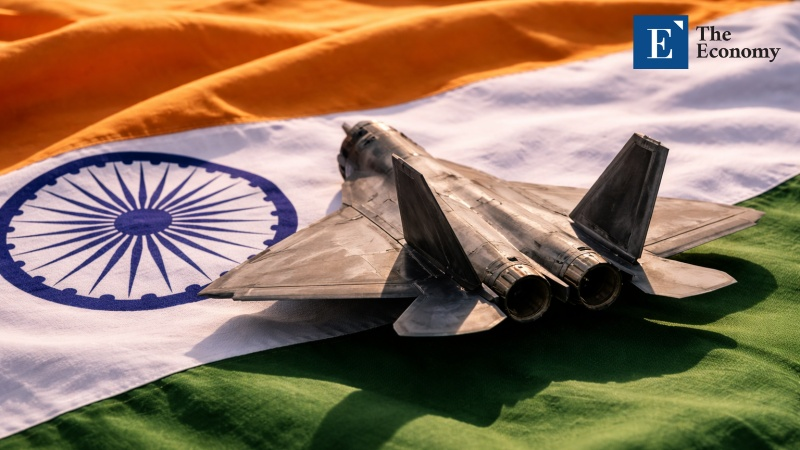
India is accelerating efforts to secure its air force capabilities by formally reviewing participation in Europe’s sixth-generation fighter development programs. By opting to join multinational co-development frameworks instead of acquiring existing fifth-generation fighters, the move is expected to introduce shifts in the global aerial power competition landscape. Accumulated operational experience from large-scale defense contracts and repeated joint exercises with European partners has reinforced India’s strategic pivot, while ongoing military tensions with neighboring countries such as China and Pakistan appear to have influenced the decision.
Uncertainty surrounds actual participation prospects
On the 23rd, aerospace outlet Aviation Week reported that India’s Ministry of Defense stated in its “2026 Defense Budget Report,” submitted to the parliamentary standing committee on defense on the 18th, that “to avoid falling behind in achieving advanced aircraft capabilities, India will join forces with one of the two European consortia currently pursuing sixth-generation fighter development programs.” The two consortia referenced are the Global Combat Air Programme (GCAP), led by the United Kingdom, Japan, and Italy, and the Future Combat Air System (FCAS), involving France, Germany, and Spain. Through next-generation aircraft development and acquisition processes, the Indian government and parliament aim to strengthen capabilities in modern warfare, where air power plays a central role.
Industry observers have focused on India’s apparent decision to bypass not only its domestically developed AMCA fighter but also existing fifth-generation platforms such as the U.S.-made F-35 and Russia’s Su-57, instead moving directly toward sixth-generation systems. Defense outlet The War Zone assessed that “India has chosen to leapfrog technological gaps in one step rather than sequentially adopting existing platforms,” adding that “this approach resembles a strategy aimed at generational advancement.” It further explained that “sixth-generation fighters integrate stealth capabilities with network-centric operations and unmanned collaboration systems,” noting that India appears to be evaluating this option to respond to future changes in aerial combat environments.
However, constraints remain on the likelihood of actual participation. Within GCAP, roles among member states have already been defined, and the cooperation framework remains highly sensitive, as evidenced by Italy’s public criticism of insufficient technology sharing by the United Kingdom. The addition of a new member would inevitably disrupt existing agreements. Japan, for instance, has strictly managed development timelines to align with the early-2030s replacement of its Mitsubishi F-2 fleet and has expressed reluctance toward Saudi Arabia’s participation due to concerns over delays. Under these conditions, India’s entry into the joint development framework is not expected to be straightforward.
FCAS is also grappling with internal conflict. A prolonged dispute between France’s Dassault Aviation and Germany’s Airbus over leadership in next-generation fighter design has pushed the program into a stalemate. Dassault CEO Éric Trappier warned that “the program will collapse if governance structures are not respected,” and tensions escalated further after reports emerged that Germany was considering joining GCAP. Against this backdrop, India’s review of participation in sixth-generation fighter development is viewed as a potential variable that could influence Europe’s broader fighter development landscape.
Shift toward operational deployment based on proven systems
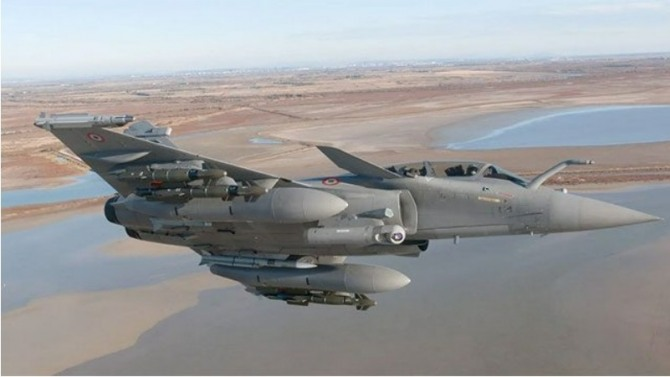
Despite these constraints, India’s push for closer cooperation with Europe is rooted in operational experience accumulated through joint exercises and real-world force deployment. According to India’s Times of India (TOI), the country is pursuing four defense contracts with France worth a combined $17 billion. These include Rafale Marine fighter jets, Scorpène-class submarines, Prachand light combat helicopters, and advanced towed artillery. This simultaneous procurement across air, naval, and ground forces signals a broader intent to overhaul India’s entire military structure.
Examining the details reveals a clear pattern of combining European technology with India’s operational and production frameworks. India plans to deploy 26 Rafale Marine fighters in conjunction with its aircraft carrier INS Vikrant. Meanwhile, three Scorpène-class submarines will be built at Mazagon Docks, a state-owned shipyard in Mumbai. India expects that this cooperative structure will allow it to commission one submarine per year starting in 2031. Similarly, the production of 156 Prachand light combat helicopters and 307 artillery systems is expected to follow a model that integrates European technology with India’s domestic manufacturing capabilities.
This cooperation has also extended into joint operational experience. In 2024, the air forces of France, Germany, and Spain deployed significant aerial assets to participate in Indo-Pacific defense exercises. The deployment included eight German Eurofighters, four Spanish Eurofighters, 12 German Tornado aircraft, and six French Rafale jets, supported by four Airbus A400M transport aircraft from each country and A330 MRTT aerial refueling and transport aircraft. Some of these assets later participated in RIMPAC exercises and joint operations with Japan before continuing on to India’s largest air force exercise, Tarang Shakti. These activities served to validate interoperability in multinational operational environments.
Such experience has contributed to a shift in India’s arms import strategy. Data from the Stockholm International Peace Research Institute (SIPRI) shows that India spent $60 billion on Russian weapons over the past two decades, but the share of Russian imports declined from 76% in 2009–2013 to 36% over the most recent five-year period. This shift reflects a combination of factors, including concerns over the quality of Russian equipment, Western sanctions, and delays in transactions. At the same time, imports from Europe, including France, have increased significantly. Limitations in existing supply chains have driven a transition toward proven systems, ultimately laying the groundwork for India’s interest in participating in sixth-generation fighter co-development.
Rising need to counter neighboring countries
Underlying this shift are persistent military tensions with neighboring countries such as China and Pakistan. Siemon Wezeman, a senior researcher at SIPRI, stated that “concerns over China’s expanding military capabilities are driving regional arms buildups,” adding that “India’s increased arms imports reflect both its perception of China as a threat and its long-standing conflict with Pakistan, which is the largest importer of Chinese weapons.” In fact, India and Pakistan engaged in military clashes as recently as last year, and missile exchanges were reported following a shooting attack in Indian-administered Kashmir that killed 26 tourists.
Tensions between India and China have accumulated over a longer period. Since their 1962 war, the two countries have failed to settle their border dispute and have repeatedly clashed along the Line of Actual Control (LAC). As recently as 2020, a confrontation involving around 600 troops occurred in the Galwan Valley, resulting in dozens of casualties. These ongoing border disputes not only sustain a constant state of military tension but also reinforce the need for enhanced air power capabilities. Rising tensions along the LAC, in particular, require advanced aerial surveillance and rapid response capabilities, elevating the acquisition of next-generation fighters from a strategic consideration to an immediate operational necessity.
Developments related to China’s sixth-generation fighter program have exerted more direct pressure on India. Earlier this year, the South China Morning Post (SCMP) reported that “a tailless, triangular-shaped new fighter aircraft was spotted over Chengdu in Sichuan Province,” adding that “the aircraft is believed to be equipped with three engines, enabling long-range flight without aerial refueling and deeper penetration capabilities than existing fighters.” The report fueled concerns that the balance of military power between India and China could be disrupted. The War Zone commented that “China’s new fighter could place targets at risk in regions unprepared for threats from advanced manned aircraft.”
Similar Post