‘Iran War–Driven Oil Shock’ Rekindles EV Demand, Is the ‘Chasm’ Ending Sooner Than Expected

Matthew Reuter is a senior economic correspondent at The Economy, where he covers global financial markets, emerging technologies, and cross-border trade dynamics. With over a decade of experience reporting from major financial hubs—including London, New York, and Hong Kong—Matthew has developed a reputation for breaking complex economic stories into sharp, accessible narratives. Before joining The Economy, he worked at a leading European financial daily, where his investigative reporting on post-crisis banking reforms earned him recognition from the European Press Association. A graduate of the London School of Economics, Matthew holds dual degrees in economics and international relations. He is particularly interested in how data science and AI are reshaping market analysis and policymaking, often blending quantitative insights into his articles. Outside journalism, Matthew frequently moderates panels at global finance summits and guest lectures on financial journalism at top universities.
Authored On
Modified
Oil prices surge in the aftermath of the Middle East conflict
Demand shifts toward electric vehicles with lower operating costs
Potential transition toward a structural shift in the market
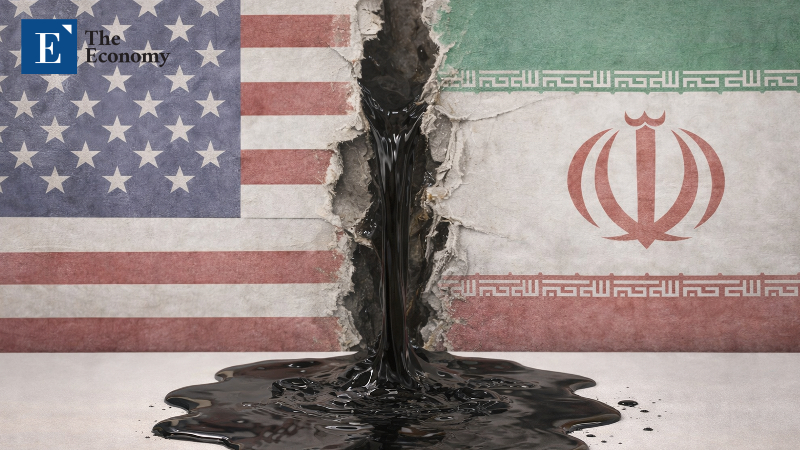
An energy crisis triggered by the U.S.–Iran war could act as a catalyst accelerating a reconfiguration of the electric vehicle (EV) market, according to recent analysis. The sharp rise in global oil prices is increasing the cost burden of internal combustion engine vehicles, thereby reigniting demand for EVs that had previously shown signs of stagnation. Coupled with renewed subsidy initiatives by governments seeking to counter high oil prices, the EV market appears to be exiting the so-called “chasm” — a temporary demand plateau — and entering a new growth trajectory.
Iran War Accelerates Global EV Transition
According to the South China Morning Post (SCMP) on March 25, energy consultancy Wood Mackenzie stated in a recent report that the potential closure of the Strait of Hormuz could serve as a “game changer” for the EV market. David Brown, head of energy transition research, noted in the report that “a 50% surge in oil prices since March is likely to push consumers toward electric vehicles.” The spike in oil prices could thus become a decisive trigger for a global shift toward EV adoption.
Data from the Intercontinental Exchange (ICE) in London showed that Brent crude futures for May delivery settled at $104.49 per barrel on March 24, up 4.6% from the previous session. Prices had plunged 10.9% to $99.94 per barrel a day earlier following remarks by President Donald Trump indicating ongoing negotiations with Iran to end hostilities, but rebounded above the $100 mark within a day. Meanwhile, West Texas Intermediate (WTI) crude futures for May delivery on the New York Mercantile Exchange also rose 4.8% to settle at $92.35 per barrel, climbing back above $90 within a day.
UK-based energy think tank Ember presented a similar assessment. In its March 18 report titled “The Energy Security Fall-out: From Fossil Fuel Fragility to Electric Independence,” Ember argued that disruptions in the global oil market triggered by the Iran conflict are accelerating EV adoption. According to its analysis, EVs replaced approximately 1.7 million barrels of oil consumption per day globally last year. Over the same period, Iran exported around 2.4 million barrels of oil per day through the Strait of Hormuz, meaning that the reduction in oil demand driven by EVs equates to roughly 70% of Iran’s export volume.
Chinese EVs Overtake Japanese Internal Combustion Vehicles
Chinese EV manufacturers, leveraging strong price competitiveness, are likely to be key beneficiaries of this trend. China’s influence in the global automotive industry is expanding rapidly. According to market research firm MarkLines, China surpassed Japan to become the world’s largest new car seller for the first time last year, marking the first time since 2000 that Japan relinquished the top position.
China’s BYD and Geely have overtaken Japan’s Nissan and Honda in sales volume. Among the world’s top 20 automakers by global sales, six are Chinese firms compared with five from Japan. Data from the China Automobile Dealers Association shows that China exported 8.32 million vehicles last year, up 30% year-on-year, with EV exports reaching 2.32 million units, a 38% increase. Europe remains the largest export market for Chinese EVs, followed by Southeast Asia, Latin America, and the Middle East.
In Australia, which has been directly impacted by surging oil prices following the conflict, Chinese EV brands are experiencing unprecedented demand. A BYD sales executive in Melbourne stated that “since early March, immediately after the U.S. strike on Iran, EV sales have surged across major dealerships, prompting a shift to round-the-clock operations to meet incoming orders.” Sales at BYD’s Melbourne outlets rose approximately 50% year-on-year over the three weeks following the outbreak of the conflict on February 28. Similar trends are evident in Southeast Asia. A Singapore dealership for Chinese EV maker XPeng reported a 30% increase in foot traffic week-on-week, while a BYD dealership in Manila received orders nearing an entire month’s volume within just two weeks.
The momentum of EV adoption in China’s domestic market is intensifying further. According to data from the China Passenger Car Association (CPCA), retail sales of new energy vehicle (NEV) passenger cars in China reached 285,000 units between March 1 and 15, up 36% from the previous month. Notably, the NEV penetration rate hit 50.7%, surpassing gasoline-powered vehicles for the first time on record.
Mounting Pressure to Reshape the EV Market Landscape
The expansion of EV demand is emerging as a global trend. Bloomberg reported that EV orders have surged across South Asia, Latin America, and Europe following the Iran conflict, while market research firm Edmunds noted a significant increase in the share of U.S. consumers searching for EVs in early March compared with pre-war levels. According to Ember, EV sales accounted for more than 10% of total vehicle sales in 39 countries this month, a sharp increase from just four countries in 2019. Emerging markets such as Vietnam (38%), Thailand (21%), and Indonesia (15%) recorded higher EV penetration rates than the United States (10%), drawing particular attention.
Regions with high EV adoption rates are already witnessing tangible economic benefits. China, where EVs accounted for more than half of new car sales last year, is estimated to be saving over $28 billion annually in oil import costs, based on an oil price assumption of $80 per barrel. In Europe, where EVs comprised 26% of car sales last year, annual savings are projected to reach $8 billion. India is also estimated to reduce oil import costs by approximately $600 million per year.
The expansion of EV demand is expected to gain further momentum in tandem with subsidy policies. Several European countries are rapidly moving to introduce new EV subsidy schemes. According to German daily Bild, the German government plans to provide subsidies ranging from $1,600 to $6,500 for households purchasing electric vehicles.
Industry observers expect the EV market to enter a recovery phase starting this year. With subsidy policies showing signs of revival and intensifying price competition among automakers improving consumer accessibility, market conditions are becoming increasingly favorable. Additional momentum is anticipated as global automakers continue to launch new EV models. An industry official noted that “the recent uptick in EV sales signals a turning point in market dynamics,” adding that “the combination of subsidy support, price reductions, and sustained high oil prices could accelerate the recovery in EV demand beyond initial expectations.”
Matthew Reuter is a senior economic correspondent at The Economy, where he covers global financial markets, emerging technologies, and cross-border trade dynamics. With over a decade of experience reporting from major financial hubs—including London, New York, and Hong Kong—Matthew has developed a reputation for breaking complex economic stories into sharp, accessible narratives. Before joining The Economy, he worked at a leading European financial daily, where his investigative reporting on post-crisis banking reforms earned him recognition from the European Press Association. A graduate of the London School of Economics, Matthew holds dual degrees in economics and international relations. He is particularly interested in how data science and AI are reshaping market analysis and policymaking, often blending quantitative insights into his articles. Outside journalism, Matthew frequently moderates panels at global finance summits and guest lectures on financial journalism at top universities.
Similar Post