“AI Has Seized Both Attention and Role” — Freezing Metaverse Market, Future Trajectory Points to ‘Smart Glasses’

Oliver Griffin is a policy and tech reporter at The Economy, focusing on the intersection of artificial intelligence, government regulation, and macroeconomic strategy. Based in Dublin, Oliver has reported extensively on European Union policy shifts and their ripple effects across global markets. Prior to joining The Economy, he covered technology policy for an international think tank, producing research cited by major institutions, including the OECD and IMF. Oliver studied political economy at Trinity College Dublin and later completed a master’s in data journalism at Columbia University. His reporting blends field interviews with rigorous statistical analysis, offering readers a nuanced understanding of how policy decisions shape industries and everyday lives. Beyond his newsroom work, Oliver contributes op-eds on ethics in AI and has been a guest commentator on BBC World and CNBC Europe.
Authored On
Modified
Metaverse Market Rapidly Cools, Companies Retreat from Related Businesses
Unclear Revenue Models and Vision Drive Market Focus Toward Generative AI
“Metaverse Must Enhance Accessibility,” Proven Success Case of Smart Glasses

A chill has swept through the global metaverse market. As the surge of interest that peaked during the COVID-19 pandemic has largely dissipated, the rapid advancement of economically viable and highly applicable generative artificial intelligence (AI) has markedly narrowed the metaverse’s foothold. Market observers argue that for metaverse-related businesses to regain competitiveness, they must adopt wearable device formats such as smart glasses to enhance user convenience and accessibility.
Collapse of Metaverse Businesses
According to the IT industry on the 25th, Lotte Group has initiated conditional operations of its metaverse subsidiary Caliverse. The company plans to determine the continuation of the business based on performance through the third quarter of this year. Caliverse, acquired by Lotte Innovate in 2021 to enter the metaverse sector, currently provides shopping and virtual concert content through a metaverse platform launched in August 2024. The core issue lies in Caliverse’s prolonged struggle to secure users and stabilize its revenue structure. Consequently, Lotte is undertaking efforts to improve cost efficiency and restructure the business.
Lotte is not alone in expressing reservations about metaverse ventures. Meta, for instance, announced on the 17th (local time) that it would remove all content except Horizon Worlds from the Quest Store—an open marketplace for digital content designed for its Meta Quest VR headset series—by the end of the month, and fully delete Horizon Worlds from VR headsets by June 15. Horizon Worlds, a metaverse service accessible via the Meta Quest series, has faced persistent weak demand since 2023. Reality Labs, the division overseeing the project, has accumulated losses totaling $73 billion from early 2021 through the end of last year due to the failure of Horizon Worlds and broader metaverse initiatives.
However, the decision to terminate Horizon Worlds has since been reversed. On the 18th, Meta Chief Technology Officer Andrew Bosworth stated via Instagram, “We have decided to continue operating Horizon Worlds in response to user requests to support VR environments for existing games.” He added that going forward, worlds developed with the Horizon Unity engine, including Horizon Worlds, will be accessible exclusively in VR, while no new games will be added to the VR social network. Meanwhile, worlds and features built with the new “Meta Horizon” engine will be launched exclusively in mobile environments rather than VR.
Deteriorating Market Competitiveness
The absence of a viable business model is widely cited as the primary factor behind the metaverse market’s decline. The metaverse gained traction during the COVID-19 pandemic, when restrictions on in-person interaction drove demand. At the time, numerous companies poured substantial capital into metaverse ventures, driven largely by perceived potential rather than established revenue frameworks. As the endemic phase took hold in 2023, demand for metaverse services rapidly contracted, leaving most entrants unable to identify alternative growth pathways and burdened with significant losses.
The emergence of generative AI has further eroded the metaverse’s influence. Investor attention, once concentrated on the metaverse during the pandemic, has shifted decisively toward generative AI. Unlike metaverse initiatives, which were underpinned by uncertain visions, AI businesses have demonstrated immediate economic benefits, including productivity gains and cost reductions. As a result, capital investment, talent allocation, and development resources have been reoriented toward AI, pushing the metaverse down the priority ladder.
Another critical challenge lies in the fact that generative AI’s image and video generation capabilities have dramatically lowered barriers to creating virtual content. Previously, producing avatars, backgrounds, and objects within virtual environments required specialized graphic expertise and significant time investment. With the advancement of AI, similar visual content can now be generated rapidly through text-based commands. Consumers increasingly generate and consume desired virtual scenes via AI without engaging with high-friction VR environments. This shift has significantly weakened the metaverse’s core differentiation, which had been rooted in immersive 3D graphical environments.
More recently, even AI companies that have effectively supplanted the metaverse’s role are encountering difficulties in sustaining related businesses. OpenAI, for example, announced on the 24th that it would discontinue its AI video generation tool “Sora.” Although Sora initially gained traction, ranking high on the U.S. App Store upon its launch in December 2024, it failed to maintain momentum. According to app analytics firm Appfigures, new downloads of Sora declined by 32% month-over-month in December, with the contraction widening to 45% in January. Consumer spending on the platform also fell by 32%. This trend underscores the reality that the provision of virtual content alone struggles to serve as a sustainable differentiating factor.

Potential Embedded in Smart Glasses
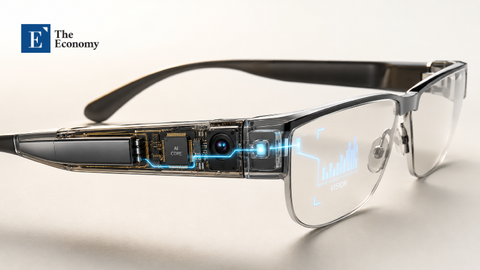
Market consensus suggests that overcoming the metaverse’s fundamental limitations requires a decisive improvement in accessibility. Instead of VR headsets, which impose a significant burden on users, the adoption of wearable devices suitable for everyday use is viewed as essential. Smart glasses represent a leading example of such evolution. Positioned as AI-powered wearable devices for the “post-smartphone” era, smart glasses initially offered limited functionalities—such as music playback and photo or video sharing—when first introduced in the second half of 2021. However, advancements in AI have enabled integrated processing of audiovisual information, significantly boosting consumer interest.
The most compelling advantage of smart glasses lies in their seamless integration into daily life, in contrast to traditional VR headsets primarily confined to entertainment use in limited environments. Users can view maps in real time through the lenses, capture photos and videos via built-in cameras, and utilize convenience features such as real-time translation through external speakers. They can also share their field of vision with AI in real time to receive assistance—asking what a building is or requesting information searches during meetings.
Meta currently stands as the dominant player in the smart glasses market. Its Ray-Ban smart glasses series commands approximately 80% of the global market, with particularly strong traction in the United States. Unprecedented demand surges and inventory shortages have even led to the suspension of new model sales outside the U.S. In January, Meta announced the halt of overseas sales for its “Meta Ray-Ban Display” model, stating, “Even if orders are placed now, it is difficult to guarantee delivery within this year,” adding that it would “temporarily suspend international sales to focus on fulfilling U.S. orders.” As of now, no official announcement has been made regarding the resumption of overseas sales, and no timeline has been provided.
Oliver Griffin is a policy and tech reporter at The Economy, focusing on the intersection of artificial intelligence, government regulation, and macroeconomic strategy. Based in Dublin, Oliver has reported extensively on European Union policy shifts and their ripple effects across global markets. Prior to joining The Economy, he covered technology policy for an international think tank, producing research cited by major institutions, including the OECD and IMF. Oliver studied political economy at Trinity College Dublin and later completed a master’s in data journalism at Columbia University. His reporting blends field interviews with rigorous statistical analysis, offering readers a nuanced understanding of how policy decisions shape industries and everyday lives. Beyond his newsroom work, Oliver contributes op-eds on ethics in AI and has been a guest commentator on BBC World and CNBC Europe.
Similar Post