[U.S.-Iran War] Iran Counters U.S. ‘15-Point End-of-War Proposal’ With Reverse Conditions, High-Stakes Maneuvering Intensifies on Both Sides

Authored On
Modified
Iran Rejects U.S. End-of-War Proposal, Counters With Five Conditions
U.S. Says “Talks Continue, Greater Blow Ahead if Defeat Is Not Accepted”
Both Sides Sustain Full-Spectrum Airstrikes Even Amid Negotiations, in a Textbook Two-Track Pressure Campaign
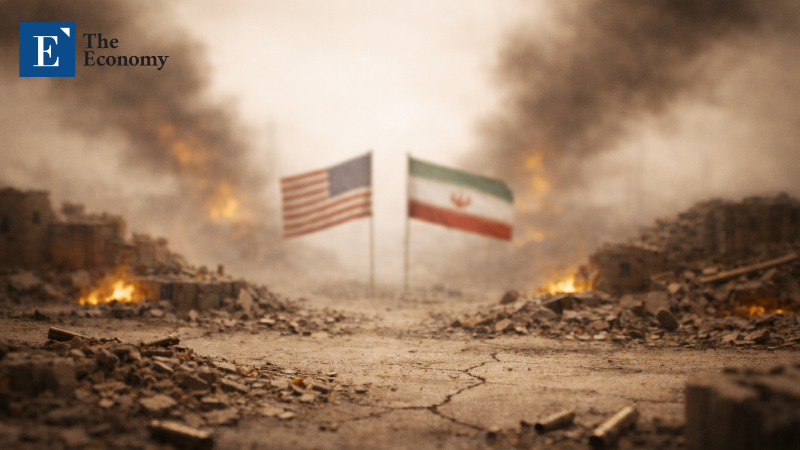
The United States is exerting intense pressure on Iran to bring the war to an end, but Tehran is pushing back by rejecting Washington’s proposed settlement terms and widening the theater of conflict across the Middle East. With Washington invoking even “hell” as it signals further military punishment, Iran is escalating the confrontation by attaching its own demands, leaving the prospects for a diplomatic breakthrough increasingly remote.
Iran Imposes ‘Unacceptable-to-U.S.’ Demands in Response to Trump’s ‘15-Point End-of-War Proposal’
According to the Associated Press and CNBC on March 25 local time, Iran has refused to accept the 15-point end-of-war proposal put forward by the United States, instead presenting its own conditions while pressing ahead with military operations. Washington is simultaneously pursuing a ceasefire and indirect negotiations, but Iran is effectively rejecting that framework. Iranian Foreign Minister Abbas Araghchi said in an interview with Iranian state media, “There have been no negotiations with the enemy so far, and there are no plans for negotiations going forward.” He did, however, acknowledge that messages were being exchanged through mediators, while drawing a firm distinction by saying, “That does not mean negotiations with the United States.”
At present, the United States appears to believe Iran has reached its military limits and is pressing for an end to the war on terms approaching capitulation. The previous day, the Donald Trump administration, through Pakistan, demanded that Iran accept 11 conditions, with one item undisclosed, including: dismantlement of nuclear capabilities; a pledge to abandon nuclear weapons; a total ban on domestic uranium enrichment; transfer of 450 kilograms of 60%-enriched uranium to the International Atomic Energy Agency (IAEA); dismantlement of the Natanz, Isfahan, and Fordow nuclear facilities; full access and inspection authority for the IAEA; abandonment of its regional proxy strategy; termination of support for proxy forces; freedom of navigation through the Strait of Hormuz; limits on missile range and scale; and missile operations confined strictly to self-defense. In return, Washington is said to have promised three forms of compensation: full removal of international sanctions; U.S. support for civilian nuclear programs including power generation at the Bushehr nuclear plant; and abolition of the snapback provision that would automatically restore sanctions in the event of an Iranian breach.
In response, Iran presented a five-point counterproposal through state broadcaster Press TV. Tehran’s conditions include: a complete halt to aggression and assassination attempts by hostile forces; establishment of a robust mechanism to prevent the recurrence of war; clear compensation for war damage; termination of hostile acts against all fronts and resistance organizations across the Middle East; and guarantees of Iran’s lawful exercise of sovereignty over the Strait of Hormuz. The move is widely viewed as a strategy aimed at preserving a hard-line posture while extracting practical gains behind the scenes.
In its counterproposal, Iran defined control over the Strait of Hormuz as its “natural and legal right” and made that a condition for ending the war, a demand Washington is unlikely to accept. Iran has argued that it should be allowed to impose transit fees, as with the Suez Canal, but unlike the Suez—which is man-made—the Strait of Hormuz is a naturally formed waterway, and the levying of passage fees on such a strait is not permitted under international law. Moreover, the Strait of Hormuz is a critical artery for global crude shipments, meaning any Iranian push to close it or tighten control would carry major repercussions for global energy markets.
A senior Iranian official said, “We are aware of the details of the U.S. proposal,” but warned that “Iran will not allow President Trump to unilaterally determine when this war ends.” The official added, “Iran will end the war at a time of its own choosing, when the conditions we have set are met,” and said Tehran would maintain a defensive posture and deliver powerful blows to the enemy until its demands were enforced. The official further criticized Washington, saying, “The United States is attempting negotiations through multiple diplomatic channels, but its proposals are excessively overreaching,” adding that “they do not reflect at all the reality of America’s failures on the battlefield.”
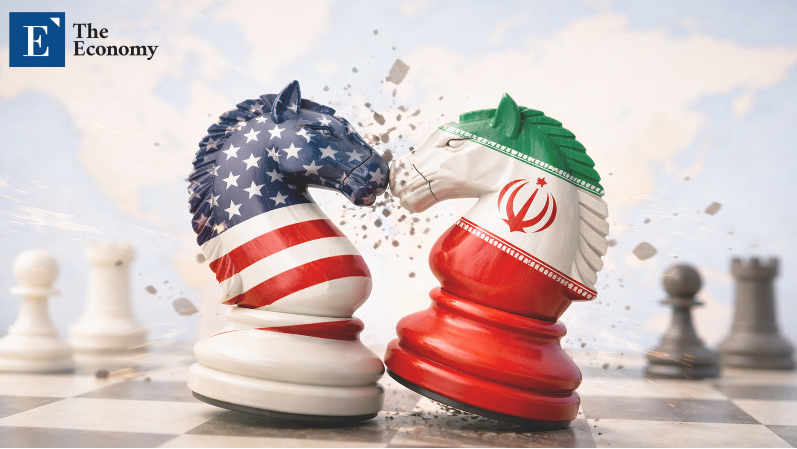
White House Warns ‘Hell’ if Iran Rejects End-of-War Proposal
Although Iran has formally declared its intention to reject an end-of-war settlement, the White House is countering that negotiations are still continuing. White House Press Secretary Karoline Leavitt said at a press briefing on March 25, “The United States has engaged in productive talks over the past three days,” adding that “there are signs that Iran’s leadership is gradually beginning to consider an exit strategy.” Asked about the possibility of face-to-face negotiations between U.S. and Iranian delegations, Leavitt said, “There has been a range of speculation and reporting about the possibility of talks later this week, but nothing can be regarded as finalized until there is an official announcement from the White House.”
She went on to say that “the core objectives set by Operation Epic Fury are now coming into view,” adding, “Our military operation is accumulating results with each passing day and continues to degrade Iran’s capacity to threaten commercial shipping.” She further stated that since the operation began on the 28th of last month, more than 9,000 targets had been struck, over 140 naval vessels had been neutralized, and Iran’s ballistic missile and drone capabilities had been reduced by roughly 90% from their initial levels.
The White House also issued a chilling warning that Iran would face hell if it ultimately refused negotiations. Leavitt said, “President Trump has consistently sought peace and does not want further conflict and destruction,” but stressed that “if Iran fails to face reality and refuses to accept its military inferiority and future trajectory, it will be subjected to military strikes on an unprecedented scale.” She added, “President Trump does not bluff and is prepared to unleash hell if necessary,” warning that “Iran must not miscalculate again.”
Trump’s Dual-Track Hard-and-Soft Strategy, Emphasis on Productive Dialogue Amid Large-Scale Troop Deployment
Experts say the conflicting messages from both sides amount to a highly calibrated psychological contest aimed at securing domestic political advantage and leverage at the negotiating table. Washington, they argue, needs an early end-of-war outcome to ease rising oil-price pressure and the political burden associated with a protracted conflict, while Iran is seeking to showcase military strength to reinforce regime stability at home and abroad, even as it attempts to secure more favorable terms in negotiations. The New York Times assessed that “President Trump is trying to highlight negotiating gains to appeal to voters who want the war to end, while Iran’s leadership needs to project resolve to preserve its hold on power.”
The United States has already moved into operational deployment, sending several thousand additional troops, including elements of the 82nd Airborne Division. The deployment was drawn from the Immediate Response Force (IRF), a core combat component of the 82nd Airborne, and the units moving to the Middle East consist of dozens of staff personnel and two battalions of roughly 800 troops each. The IRF, totaling about 3,000 personnel under the 82nd Airborne, can be deployed anywhere in the world within 18 hours. The division participated in the 2020 operation targeting Iranian commander Qasem Soleimani, the August 2021 Afghanistan withdrawal, and the 2022 deployment to Eastern Europe in support of Ukraine. This time, it is expected to be positioned within operational range of Iran and could be tasked with seizing Kharg Island, a key crude export hub, securing coastlines to ensure the safety of the Strait of Hormuz, or conducting operations to recover highly enriched uranium.
In addition to airborne forces, several thousand Marines are also expected to be deployed to the Middle East. CNN reported that the deployment schedule of the 11th Marine Expeditionary Unit had been accelerated after being redirected from the Indo-Pacific to the Middle East. It added that the 31st Marine Expeditionary Unit, headquartered in Okinawa, Japan, as well as the amphibious assault ship Tripoli, are also expected to be sent to the region. The move is being interpreted as a dual-track strategy combining negotiations with Iran and preparations for the insertion of large-scale ground forces.
Against this backdrop, diplomatic circles are focusing on the possibility that high-level contact between the two sides could take place soon in Islamabad, Pakistan. Mediating countries including Türkiye, Egypt, and Pakistan are reportedly coordinating to arrange talks between U.S. and Iranian officials within 48 hours. The United States and the mediators are waiting for Iran’s final response, but whether the talks proceed is said to depend on approval from Iran’s new supreme leader, Mojtaba Khamenei.
Initial backchannel contacts are also said to have already taken place. Israeli outlet Ynet reported that Minister Araghchi, in a recent phone call with Steve Witkoff, the U.S. special envoy for the Middle East, indicated readiness for a settlement by saying that “new Supreme Leader Mojtaba Khamenei has approved a swift resolution to the crisis, provided the conditions are met.” The New York Times projected that “both sides have ample incentive to end the war in order to minimize damage, but regardless of whether they acknowledge it publicly, backchannel negotiations are likely to intensify further.”
Similar Post