[U.S.-Iran War] Russia Moves Beyond Intelligence Support Toward Drone Supplies to Iran, Opening New Phase in Military Cooperation

Authored On
Modified
Aid scope shifts from medicine to weapons
Debate grows over whether U.S. sanctions relief boosted Russia’s financial capacity
Non-dollar settlement approval raises signs of strain in the dollar-based system
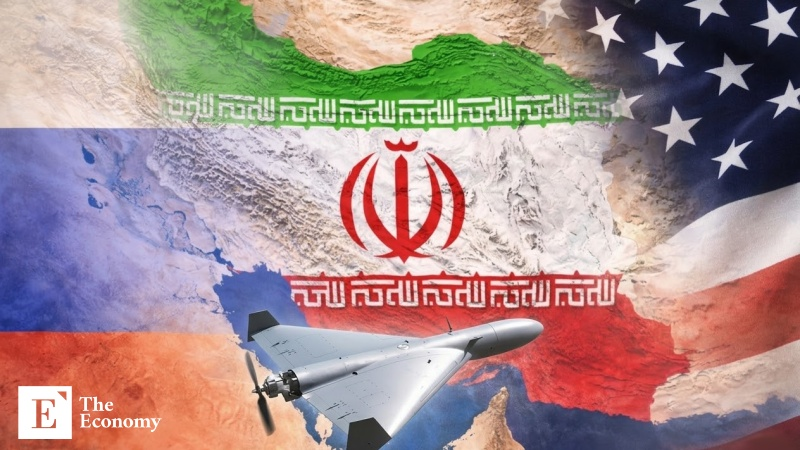
Reports have emerged that Russia is moving to supply Iran with military equipment including drones. Until now, support had centered on satellite imagery and targeting intelligence, but if drone deliveries materialize, the structure would shift for the first time since the outbreak of the Middle East war to one in which physical military hardware is transferred directly. The change is drawing varied interpretations because it suggests that the way non-belligerent states intervene in the conflict could itself be changing.
Shift toward tangible involvement
On the 25th (local time), the Financial Times (FT), citing Western intelligence authorities, reported that Russia is moving to complete deliveries of drones and other supplies to Iran by the end of this month. The FT said that “senior officials from both countries began informally discussing drone provision immediately after the United States and Israel attacked Tehran on the 28th of last month,” adding that “the actual supply procedures appear to have begun earlier this month.” Russia had previously supported Iran by providing satellite imagery and targeting intelligence, but if drone transfers proceed, that would mark the first case since the war began in which physical military equipment is delivered directly.
The exact model of drones Russia plans to send to Iran has not been confirmed. At present, the most likely candidate is believed to be the Geran-2 series, developed from Iran’s Shahed-136. Antonio Giustozzi, a senior research fellow at the Royal United Services Institute (RUSI), citing a source inside Iran’s Islamic Revolutionary Guard Corps (IRGC), said, “They do not need more drones, they need better drones, and they want more advanced capabilities.” Since 2023, Russia has produced one-way attack drones based on Iranian designs for use on the battlefield in Ukraine and has continued parallel upgrades aimed at improving air defense evasion and increasing payload capacity.
Russia also appears to be involved not only in strengthening Iran’s combat capabilities but in supporting regime stability. Since the outbreak of the war, Russia has delivered more than 13 tons of medical supplies to Iran through Azerbaijan and has said additional shipments will follow. At the same time, it has stepped up criticism of the United States and Israel over their attacks on Iran. Russian Foreign Minister Sergei Lavrov said at a briefing on the 24th, “Experts have begun describing this incident as the start of World War III,” adding that “a small number of Western countries were trying to preserve their dominance through force.”
At the same time, the role of countries aligned with the United States has also become more pronounced. Europe has denied direct participation in the war while taking on functions related to U.S. operational command and logistics support. The Souda Bay naval base on the Greek island of Crete is being used for U.S. aircraft carrier repairs and reconnaissance activities, and signals intelligence collection is also conducted there. In Germany, production of equipment for Israel’s Iron Dome air defense system is under review through the Osnabrück plant. Yet skepticism about the war itself remains widespread. German President Frank-Walter Steinmeier described the U.S. attack on Iran as “a mistake close to a political disaster,” while Italy and France have continued to maintain that “our role is limited to logistical support.”
Broader channels for securing war financing
Some critics have argued that the U.S. decision to temporarily ease sanctions on Russian oil may have strengthened Russia’s ability to finance the war. On the 12th, the Office of Foreign Assets Control (OFAC) at the U.S. Treasury issued a new general license authorizing sales through April 11 of Russian crude oil and petroleum products loaded onto vessels before 12:01 a.m. that day. OFAC said the measure was “an exception intended to soften market shocks from a surge in global oil prices while maintaining the principle of existing sanctions.”
Following the issuance of the license, negotiations continued over cargoes already at sea, creating conditions under which Russian oil could move into actual distribution channels. According to energy analytics firm Kpler, about 130 million barrels of Russian crude are currently floating at sea, with roughly 54 million barrels positioned in key zones between the Suez Canal and Singapore. Those volumes had previously been constrained by sanctions, but under the U.S. measure they were reclassified as cargoes already loaded and in transit.
The effect was swift. The International Energy Agency (IEA) found that Russia’s crude and petroleum product exports fell to 6.6 million barrels per day in February, the lowest since 2022, but then rebounded immediately. On the demand side, India, which had cut back purchases of Russian crude after tariff talks with the Trump administration, expanded imports to 1.8 million barrels per day. As of the 11th of this month, India’s imports of Russian crude stood at 1.5 million barrels per day, nearly 50% higher than in early February. At the same time, Chinese state-owned oil companies such as Sinopec and PetroChina began contacting suppliers to buy additional Russian crude for the first time since November last year.
Asked in an interview with NBC on the 22nd whether the temporary easing of sanctions on Russian oil exports could allow Russia to earn as much as $150 million per day in revenue, Treasury Secretary Scott Bessent responded, “Russian oil is always sold to China at a discount,” adding that “preventing oil prices from surging to an uncontrollable level through sanctions relief could reduce the overall revenues of both Russia and Iran.” He argued that expanding supply is more effective in limiting revenue growth than allowing prices to spike. He added, based on Treasury analysis, that “the maximum additional revenue Russia could gain would be only about $2 billion.”
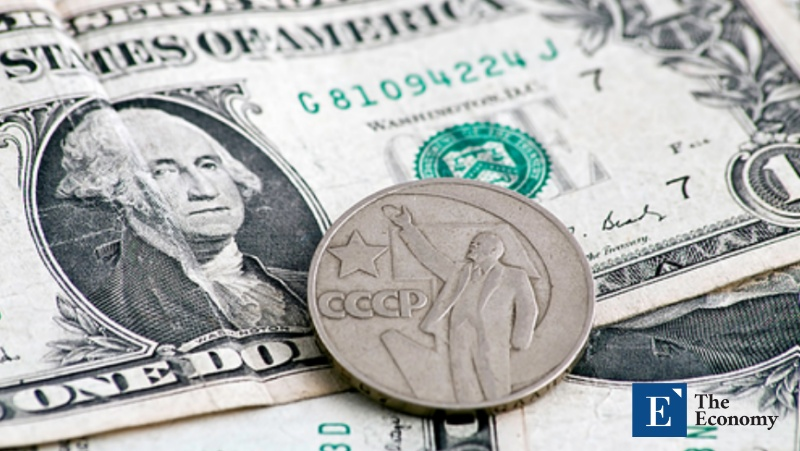
Policy cracks emerge in phase of war management
Even so, markets remain watchful over the possibility that the fallout from the Iran war could feed back into the U.S. burden. That is because signs are emerging that Washington’s simultaneous use of sanctions relief and military pressure is leading to changes in the way allies procure energy and settle payments. On the 25th, the South Korean government said, “After consultations with the U.S. Treasury, we were informed that under the temporary sanctions relief on Russian crude oil, payments may be made in currencies other than the dollar, and secondary sanctions will not be applied to importing companies.” A measure presented as an exception in response to the war is thus expanding the boundaries of established payment rules.
Industry responded immediately. Refining and petrochemical companies interpreted the permission for non-dollar settlement and the exemption from secondary sanctions as an opportunity to improve supply conditions. One industry official said, “It is welcome news in that alternative imports have become possible,” adding, “Even if just one cargo of Russian naphtha comes in, it would be a major help to supply and demand.” The industry had long been concerned about the possibility of Western secondary sanctions, because products containing Russian crude in the refining process could have faced export restrictions. But under the latest measure, expectations have grown that purchases of crude oil and naphtha from Russian and Iranian import channels, including “shadow fleet” cargoes, may now be possible.
The case of Libya in 2011 is being cited as a point of comparison in terms of payment order. At the time, many in the market viewed U.S. intervention in the Libyan civil war as driven not only by oil resources but by the goal of preserving the dollar-based settlement system. That interpretation gained weight from the fact that the United States froze $30 billion in assets related to Libya’s government and central bank, a move seen as linking payment structures with military intervention. Compared with that precedent, the current permission for ruble- and yuan-based settlement and the exemption from secondary sanctions is being read as an expansion of exceptions in settlement practices. That, in turn, carries the possibility that both the energy market and the global payments order could be reshaped at the same time.
Similar Post