Deployment of 50,000 U.S. Troops to the Middle East, Including the 82nd Airborne Division, Falls Short of Full-Scale War with Iran

Matthew Reuter is a senior economic correspondent at The Economy, where he covers global financial markets, emerging technologies, and cross-border trade dynamics. With over a decade of experience reporting from major financial hubs—including London, New York, and Hong Kong—Matthew has developed a reputation for breaking complex economic stories into sharp, accessible narratives. Before joining The Economy, he worked at a leading European financial daily, where his investigative reporting on post-crisis banking reforms earned him recognition from the European Press Association. A graduate of the London School of Economics, Matthew holds dual degrees in economics and international relations. He is particularly interested in how data science and AI are reshaping market analysis and policymaking, often blending quantitative insights into his articles. Outside journalism, Matthew frequently moderates panels at global finance summits and guest lectures on financial journalism at top universities.
Authored On
Modified
Ground War Preparations Intensify Amid Rising Tensions in the Strait of Hormuz
Current U.S. Force Levels at 20% of Iraq War Deployment, Insufficient for Occupying Iran
Iran Signals Resolve for Total Resistance: “We Will Burn Them If U.S. Troops Enter”
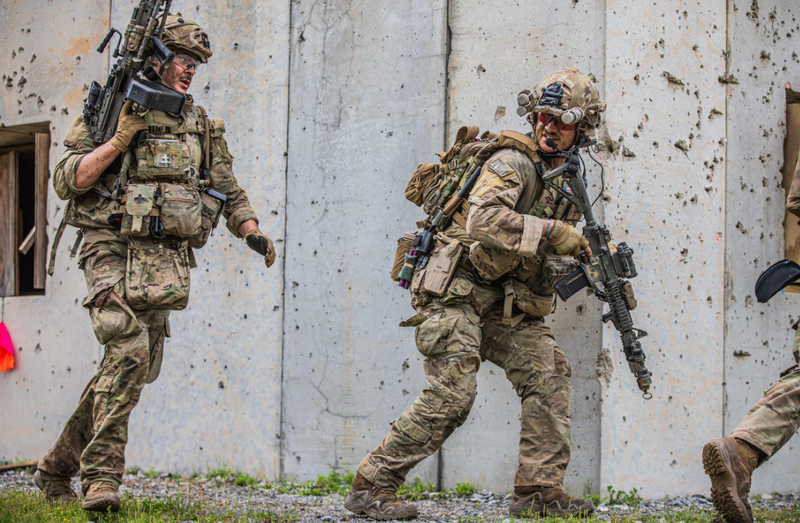
As the United States reinforces its military presence in the Middle East with the possibility of a ground war against Iran under consideration, the number of deployed U.S. troops in the region has surpassed 50,000. The deployment of the U.S. Army’s elite 82nd Airborne Division is further escalating pressure on Iran. However, military experts assess that such force levels remain insufficient for a full-scale invasion or prolonged occupation of Iran.
50,000 U.S. Troops Massed in the Middle East, Trump Weighs ‘Ground Operation Card’
According to The New York Times (NYT) on the 29th (local time), the number of U.S. troops stationed in the Middle East has exceeded 50,000. This represents an increase of 10,000 troops compared to pre-conflict levels. Typically, around 40,000 U.S. troops are deployed across bases and naval assets in Saudi Arabia, Bahrain, Iraq, Syria, Jordan, Qatar, the United Arab Emirates (UAE), and Kuwait. However, as President Trump escalates the conflict with Iran, troop levels have risen beyond 50,000.
U.S. forces stationed at regional bases include 13,500 in Kuwait, 10,000 in Qatar, 9,000 in Bahrain, 3,800 in Jordan, and 2,700 in Saudi Arabia. Additionally, 2,500 personnel from the 31st Marine Expeditionary Unit and 1,000 Navy personnel arrived in the region aboard amphibious assault ships on the 29th, while approximately 2,000 troops from the 82nd Airborne Division were deployed last week. On the 24th of last month, the U.S. Department of Defense issued a written order to deploy roughly 3,000 troops from the 82nd Airborne Division to the Middle East within hours.
The Pentagon is reportedly preparing for several weeks of ground combat operations in Iran. A combined assault involving special forces and conventional infantry units is widely considered the most plausible scenario. Military experts suggest that these forces could be tasked with securing Kharg Island, a critical hub for Iran’s oil exports in the Persian Gulf. Experts have identified seven key islands—Abu Musa, Greater Tunb, Lesser Tunb, Hengam, Qeshm, Larak, and Hormuz—as strategic strongholds, referring to them as Iran’s “arched defensive line.” Iranian officials have likewise described these islands as “unsinkable aircraft carriers.”
Any U.S. attempt to land on Kharg Island would require passage through these islands. Amphibious and airborne operations represent the two primary methods of landing forces, but naval vessels must approach close to shore to offload troops and equipment. While paratroopers can be deployed from high-altitude aircraft, their capacity to transport heavy equipment is significantly limited compared to maritime operations. As such, U.S. forces would first need to neutralize Iranian positions stationed on these islands before initiating ground operations.
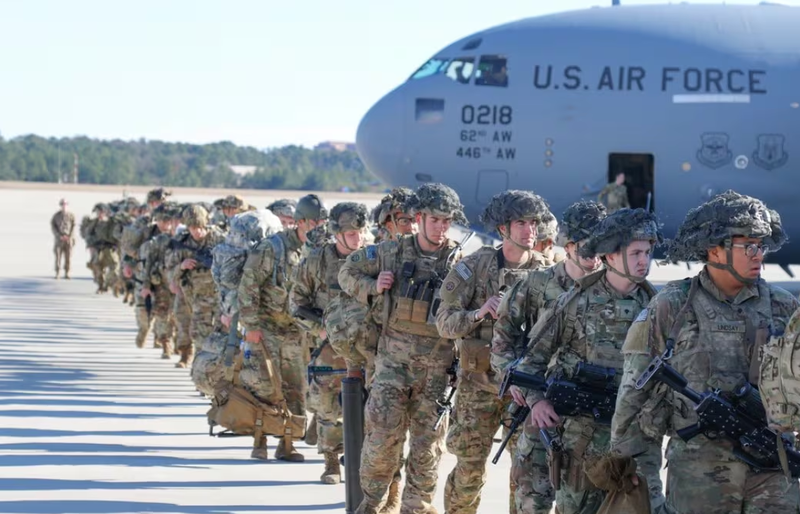
The 82nd Airborne Division: The U.S. Army’s Most Lightweight Rapid Deployment Force
Military analysts are placing particular emphasis on the deployment of the 82nd Airborne Division by the Trump administration. The decision to deploy one of the most capable rapid-response units available underscores a firm strategic resolve to address the escalating crisis. It also signals readiness to transition swiftly to military action should negotiations fail, while maximizing pressure on Iran.
Established in 1917 during World War I, the 82nd Airborne Division is classified as a “Global Response Force” and represents one of the most agile and formidable maneuver units within the U.S. Army. As a division under the XVIII Airborne Corps, it conducts both ground combat and special operations missions. Alongside the 101st Airborne Division, it is regarded as a premier rapid-response force. The division can deploy all personnel and equipment via transport aircraft and execute airborne insertions, enabling the rapid deployment of advance units anywhere in the world within 18 hours of receiving orders. Consequently, the 82nd Airborne Division does not operate heavy equipment such as tanks, armored vehicles, or self-propelled artillery.
The division is widely regarded as one of the most decorated and prestigious elite units in U.S. Army history. It is often considered even more elite than the 101st Airborne Division, made famous by the American television series “Band of Brothers.” While infantry units, including the 101st Airborne Division, are generally referred to as “infantry,” members of the 82nd Airborne Division are specifically designated as “paratroopers.” In practice, the 101st Airborne Division primarily deploys via helicopters, whereas the 82nd conducts traditional parachute insertions from transport aircraft.
The division’s symbolic legacy was solidified during World War II. During the Normandy landings in 1944, the 82nd Airborne Division was deployed behind enemy lines ahead of the amphibious assault, securing bridges and roads and paving the way for the Allied advance. Despite the challenge of dispersed troop deployments, its operations effectively disrupted German forces in small-unit engagements, demonstrating the strategic value of airborne troops. The division also engaged German forces under Erwin Rommel, known as the “Desert Fox,” in North Africa, and continued to display formidable combat capability as it advanced through Sicily into mainland Italy.
Its role remained consistent during the Cold War and subsequent conflicts. In the 1990 Gulf War, it served as a defensive shield for Saudi Arabia, while in Middle Eastern conflicts it functioned as a forward-deployed rapid-response force. In more recent years, it has been deployed at the forefront of major crises, including following the killing of former IRGC commander Qassem Soleimani in 2020, during the U.S. withdrawal from Afghanistan in 2021, and ahead of Russia’s invasion of Ukraine in 2022.
Iran’s ‘Natural Fortress’ Terrain: Current U.S. Force Levels Insufficient for Ground War
Despite the deployment of the 82nd Airborne Division, experts unanimously agree that the current U.S. troop presence in the Middle East is insufficient to occupy or sustain control over a country of Iran’s scale. During the 2003 Iraq invasion, the U.S.-led coalition mobilized approximately 250,000 troops, while Israel deployed over 300,000 personnel in the Gaza conflict. By comparison, current U.S. force levels are significantly lower.
Iran, with a population of approximately 93 million and a landmass roughly one-third the size of the continental United States, is surrounded by rugged mountainous terrain, making it a highly defensible stronghold. Military experts emphasize that the 50,000 figure includes naval forces and remains inadequate for conducting a full-scale ground war against Iran’s complex terrain and advanced weapons systems.
Amid renewed discussion of a potential ground war, Iranian domestic propaganda has intensified. One military source claimed that more than one million personnel have been mobilized for ground operations, with a surge of volunteers seeking to join the fight. Iranian media has also released footage of drone and missile launches, showcasing military strength.
Warnings from Iran’s leadership have also escalated. Brigadier General Ebrahim Zolfaqari, spokesperson for the IRGC’s Khatam al-Anbia Central Headquarters, dismissed U.S. ambitions to seize strategic islands as “nothing more than a pipe dream,” asserting that Iranian forces are awaiting the commencement of ground operations as a countdown to annihilation. He further labeled President Trump as “the biggest liar among world leaders” and “completely untrustworthy,” accusing him of leading American soldiers into a “quagmire of death.”
Mohammad Bagher Ghalibaf, Speaker of the Iranian Parliament (Majlis) and a former IRGC commander, also criticized the U.S., stating that “the enemy publicly sends messages of negotiation while secretly preparing for a ground attack,” and declared Iran’s determination to resist. “Our soldiers are waiting for U.S. troops to arrive on the ground, ready to burn their lives away,” he said. “As long as the United States seeks Iran’s surrender, we will never accept humiliation.”
Matthew Reuter is a senior economic correspondent at The Economy, where he covers global financial markets, emerging technologies, and cross-border trade dynamics. With over a decade of experience reporting from major financial hubs—including London, New York, and Hong Kong—Matthew has developed a reputation for breaking complex economic stories into sharp, accessible narratives. Before joining The Economy, he worked at a leading European financial daily, where his investigative reporting on post-crisis banking reforms earned him recognition from the European Press Association. A graduate of the London School of Economics, Matthew holds dual degrees in economics and international relations. He is particularly interested in how data science and AI are reshaping market analysis and policymaking, often blending quantitative insights into his articles. Outside journalism, Matthew frequently moderates panels at global finance summits and guest lectures on financial journalism at top universities.
Similar Post
















