The War Redraws the Energy Map: Solar and EVs Rise While Coal Makes a Comeback

Niamh O’Sullivan is an Irish editor at The Economy, covering global policy and institutional reform. She studied sociology and European studies at Trinity College Dublin, and brings experience in translating academic and policy content for wider audiences. Her editorial work supports multilingual accessibility and contextual reporting.
Authored On
Modified
Rising oil prices accelerate a shift toward electricity-based consumption
Some countries opt for a temporary pause in decarbonization policies
Supply chain instability forces a restructuring of national energy strategies
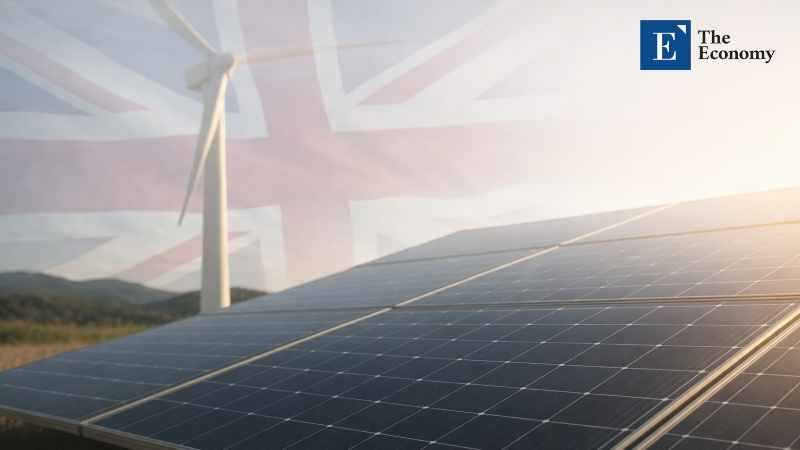
As oil and gas supplies are disrupted by the Iran war, countries are rapidly reshaping their energy responses. In Europe, surging electricity prices and supply instability have driven a shift at the household level toward solar power and electric vehicles, with demand reacting ahead of government-led policy implementation. In contrast, Asian countries have turned back to coal and existing fossil fuel infrastructure to stabilize power supply and ensure immediate response capacity. At the same time, as supply chain disruptions enter a prolonged phase, strategies to expand domestic power generation bases—including renewables and nuclear energy—are emerging in parallel.
European households accelerate “post-oil transition”
The U.K. government on the 24th introduced the “Future Homes Standard,” mandating the installation of heat pumps and solar panels in all new homes. The measure, designed as a national response to energy shocks, is set to take effect in 2028. However, inquiries to major providers such as Octopus Energy have already reached record highs. Rebecca Dibb-Simkin, chief product officer at Octopus, said, “Many households in the U.K. are fatigued by being exposed to global energy price swings,” adding that “price shocks are already driving consumer behavior even before policy implementation.”
The shift is unfolding more rapidly in certain regions. East Anglia in eastern England has been identified as the fastest-growing area for solar and heat pump installations. In response, Octopus launched a “rapid installation program” that allows households using oil boilers to switch within as little as 10 days. This shortening of installation timelines is seen as a direct effort to accelerate real-world adoption. The industry notes that consumers have historically moved away from fossil fuel dependence whenever energy prices spike, suggesting that the current trend is likely to extend beyond temporary demand and develop into a sustained transition.
Global supply shocks are accelerating this shift. French Industry Minister Roland Lescure stated that “30–40% of refining capacity in the Gulf region has been damaged or destroyed by Iranian retaliatory strikes,” adding that “a supply shortfall of 11 million barrels per day in the global crude market is sustaining upward pressure on prices.” He also noted that recovery could take up to three years, with even currently halted facilities requiring several months to resume operations. As it becomes clear that supply recovery will not occur in the short term, consumer choices are increasingly shifting from fossil fuels toward electricity-based alternatives.
Demand for electric vehicles is expanding within the same context. According to automotive research firm Edmunds, global interest in EVs accounted for 23.8% of all shopping activity between the 9th and 15th of this month, marking the highest weekly level in 2026. Data from CarEdge also showed that EV searches rose 20% in the first week after the Iran strikes, with Australia recording a surge of 278%. Interest in used EVs is also increasing. In the United States, used EV sales reached approximately 31,000 units in February, up 29% from a year earlier.
Asia increases reliance on coal power
In contrast, some countries are reverting to fossil fuels. South Korea is a representative case. On the 16th, the Democratic Party’s Middle East economic response task force proposed lifting caps on coal-fired power generation and raising nuclear plant utilization rates from the 60% range to around 80% to address supply instability stemming from the Middle East. At the same time, measures such as expanded export transport subsidies and energy vouchers, logistics support, increased renewable energy investment, and the reintroduction of Russian crude oil and naphtha were discussed. These moves emphasize maintaining power supply through all available means.
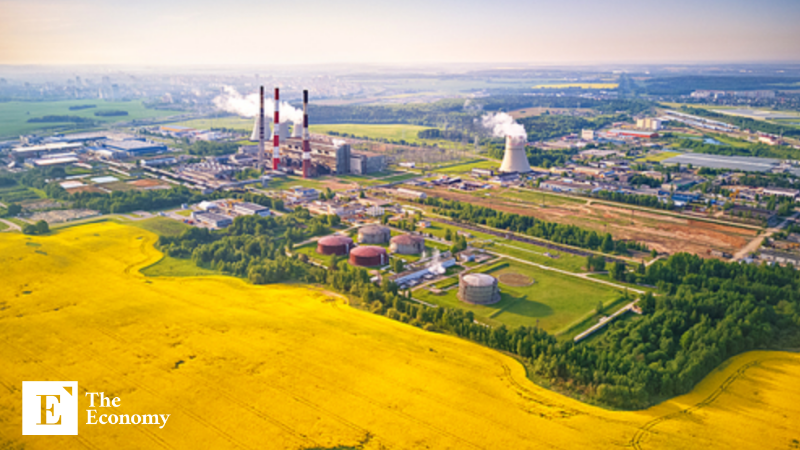
The expansion of coal-fired power reflects a prioritization of fuels that can be deployed immediately using existing infrastructure. According to the International Energy Agency, coal accounted for about 33% of South Korea’s electricity generation in 2024, maintaining a consistent share within the overall power mix. Unlike renewable energy, which requires new infrastructure, or liquefied natural gas (LNG), which is sensitive to international prices and transportation conditions, coal allows for rapid output adjustments using existing plants. This characteristic makes it a preferred option for policymakers during crises.
Similar trends are evident across Asia, including Japan. Beginning in April, Japan plans to lift operating restrictions on aging coal-fired plants for one year and run them at maximum capacity. This measure is expected to reduce LNG consumption by approximately 530,000 tons annually, equivalent to about 13% of Japan’s roughly 4 million tons of LNG imports through the Strait of Hormuz. The Philippines has also declared a “national energy emergency,” while Thailand and Bangladesh are moving to expand coal generation. As demand surges, Asia’s spot coal price rose to $135 per ton at Australia’s Newcastle port on the 29th, up 16% from pre-war levels.
Rising need for long-term supply security strategies
This shock is being interpreted as a decisive turning point for Asia’s dependence on energy imports—an “Ukraine moment.” Energy publication OilPrice reported that “following Russia’s invasion of Ukraine four years ago, this is the second major energy shock in a decade, once again exposing the vulnerabilities of countries reliant on imported fuels,” adding that “governments are now beginning to consider energy security strategies focused on increasing power sources they can directly produce or control.” This reflects a growing recognition that expanding reserves alone is insufficient to shield national economies from surging global prices.
In this context, renewable energy and transport electrification are increasingly viewed not merely as climate measures but as tools to reduce supply chain risk. Ulrik Fugmann, chief strategist at BNP Paribas Asset Management, said, “The best solution for energy security is to localize and internalize the energy system within national borders,” emphasizing that the cost of transitioning to renewables is far lower than the long-term costs of external shocks. Daan Walter, head of the green energy think tank Ember, also noted, “Unlike during the oil shocks of the 1970s, we now have better alternatives,” adding that “for countries seeking to shield themselves from fuel price volatility, electric vehicles have become a rational choice.”
However, the limitations of such long-term solutions are also evident. Building sufficient renewable capacity takes time, during which exposure to rising fossil fuel prices remains unavoidable. This, in turn, increases inflationary pressures and interest rates, driving up the costs of manufacturing and installing clean energy infrastructure such as solar panels, wind turbines, and batteries. Additional strain comes from supply chains. China currently dominates key renewable energy components, raising concerns that reducing dependence on Middle Eastern oil could simply shift reliance toward Chinese clean energy supply chains.
This is why major European and Asian economies are pursuing long-term portfolio adjustments that combine renewables with nuclear energy. The concern is that strategies aimed at strengthening energy security could ultimately morph into new forms of external dependence. European Commission President Ursula von der Leyen acknowledged earlier this month at a nuclear summit in France that “it was a mistake for Europe to move away from nuclear energy, a stable and affordable low-carbon power source,” announcing an investment of €200 million, equivalent to $230 million, in new nuclear technologies. Japan has restarted five reactors this year alone, adding 4.6 gigawatts of capacity, while South Korea is pursuing life extensions for 7.8 gigawatts of capacity scheduled for retirement by 2030.
Niamh O’Sullivan is an Irish editor at The Economy, covering global policy and institutional reform. She studied sociology and European studies at Trinity College Dublin, and brings experience in translating academic and policy content for wider audiences. Her editorial work supports multilingual accessibility and contextual reporting.
Similar Post