[AI Bubble] Private Credit Fuels AI Boom as Profitability Debate Intensifies and China’s Self-Reliance Adds Uncertainty

Authored On
Modified
Private credit tied to AI flagged as a financial system risk
Debate over returns on data center investment gains traction
China’s push for self-reliance raises uncertainty in AI infrastructure market

As global investment in artificial intelligence (AI) infrastructure surges, the private credit market financing it is expanding rapidly, emerging as a new variable for the broader financial system. Concerns are growing that problems at specific companies or projects could spill over into banks and financial markets. Additional factors—including debates over data center profitability, depreciation burdens, and China’s accelerating semiconductor self-sufficiency—are compounding uncertainty surrounding AI investment.
AI Private Credit Expands from $3 Billion to $200 Billion
According to the Financial Times, global investment in AI data centers is projected to reach $9 trillion over the five years through 2030. The FT noted that while major tech companies may not fully recover their investments, a total collapse of the business is unlikely. However, it warned that if AI demand fails to grow as expected, the $9 trillion bet could become evidence of a “bubble.” Whether this unprecedented peacetime investment translates into returns or ends in large-scale losses similar to the dot-com bubble is expected to be determined within the next five years.
This massive investment wave is increasingly linked to the expansion of the private credit market, raising risk concerns. In January, the UK House of Lords Financial Services Regulation Committee (FSRC), in its “Unknown Unknowns” report, stated that there is insufficient data to determine whether private credit poses systemic risk. It added that even national finance ministries lack a clear understanding of the risks. The core issue lies in the market’s rapid expansion despite regulators’ limited visibility into its structure and scale. The FSRC also warned that, as before the global financial crisis, risks could accumulate unnoticed and only be recognized too late.
AI sits at the center of this growth. According to the Bank for International Settlements (BIS), AI-related private credit outstanding expanded from $3 billion in 2015 to about $200 billion at the end of last year. Egemen Eren, a senior economist at the BIS, explained that big tech companies often establish special-purpose entities to acquire and develop data center assets, with these entities raising funds through private credit. This structure strengthens the link between banks and big tech firms while increasing the likelihood that risks could spread across the financial system.
Signs of strain are already emerging. Blackstone redeemed $3.8 billion—equivalent to 7.9% of its private credit fund BCRED—this year, while quarterly net outflows reached a record $1.7 billion. Blue Owl halted redemptions for its Blue Owl Capital Corp II fund and sold $1.4 billion in assets. As rapid growth in private credit converges with concerns over AI-related defaults, the potential for localized problems to spread across the financial system is increasing.
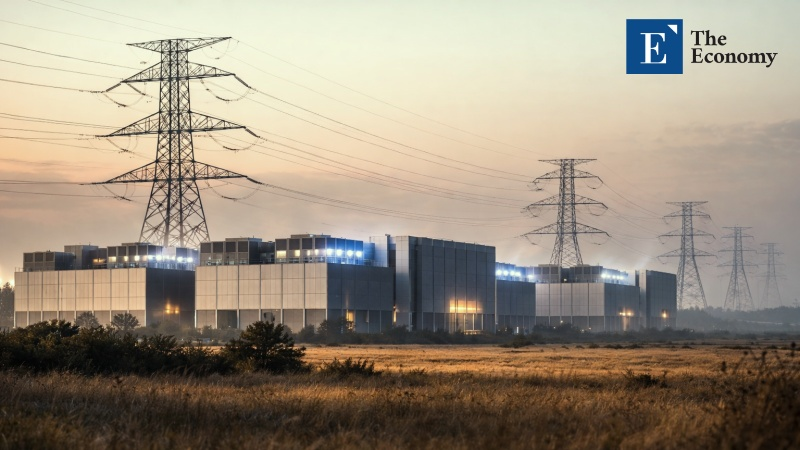
Rising Concerns Over Data Center Profitability
As market anxiety grows, debate over the profitability of AI infrastructure is intensifying. Proponents point to a GPU-as-a-service (GPUaaS) model based on Nvidia’s H100 chips, estimating that a single server requires an investment of $320,000 and generates $400,000 in annual revenue with $240,000 in operating profit, allowing payback in roughly 16 months. With GPUs accounting for $210,000 of the cost and servers, networking, and power infrastructure adding another $110,000, maintaining a 70% utilization rate and charging around $65 per hour could sustain these returns.
However, opposing analyses argue that such profitability assumptions do not hold. Harris Kupperman, chief investment officer at Praetorian Capital, estimates that data centers built this year will face annual depreciation of $40 billion while generating only half that amount in revenue. He argues that achieving breakeven would require revenues to increase at least tenfold, with U.S. data centers needing to generate $480 billion annually to sustain such profitability levels.
Cost structures further constrain returns. Data centers combine high-cost GPUs with relatively short lifespans, networking equipment replaced roughly every decade, and long-lived buildings. GPUs, typically depreciated over five years, face rapid technological obsolescence, forcing additional investment before initial costs are fully recovered. Operating expenses—including electricity, cooling, and labor—account for about 40% of revenue, suggesting actual net profits could fall well below theoretical estimates.
Corporate executives are also skeptical. IBM CEO Arvind Krishna noted that building a 1-gigawatt data center could cost up to $80 billion, and that large firms pursuing 20–30 gigawatts of capacity could face capital expenditures of up to $1.5 trillion. He added that constructing 100 gigawatts of data center capacity globally—requiring roughly $8 trillion in investment—would demand annual profits of $800 billion, a level he argued is unrealistic.
Supply Chain Shifts and Intensifying Competition
China’s accelerating push for technological self-reliance is another key variable. The country has set a goal of raising its semiconductor self-sufficiency rate to 80% by 2030, up from roughly 33% today, backed by a state-led strategy. A consortium of 13 semiconductor firms, including YMTC and SMIC, has outlined plans to stabilize 14nm production and establish 7nm manufacturing lines using entirely domestic equipment. Policies mandating that at least 50% of equipment in new semiconductor fabs be locally sourced are further reinforcing supply chain localization.
Concrete progress is also visible. At the SEMICON China exhibition held from March 25 to 27, AMEC announced plans to raise its self-sufficiency rate in high-end equipment to over 60% within a decade, while Naura unveiled its HPD30 hybrid bonding tool for 12-inch wafers. However, constraints remain in securing extreme ultraviolet (EUV) lithography equipment, and analysts generally expect difficulties in achieving high yields in advanced processes. Reuters reported that while prototype testing involving former ASML engineers is underway, mass production has not yet been achieved.
To address these limitations, China is focusing on mature-node production, where barriers to entry are lower. The strategy aims to secure revenue by capturing market share in general-purpose chips used in automobiles and home appliances while gradually improving self-sufficiency across equipment, materials, and processes. SEMI forecasts that China’s share of global mature-node semiconductor production will rise from 25% in 2024 to 42% by 2028.
Government investment is also significant. Through the National People’s Congress, China announced plans to issue 1.3 trillion yuan in ultra-long-term special government bonds, with 7 trillion yuan allocated to power grids and AI computing infrastructure. Supported by aggressive state funding, China’s AI computing capacity surpassed 1,590 exaflops at the end of last year, while the core AI industry exceeded 1.2 trillion yuan in value. The combination of massive capital investment and supply chain localization is set to reshape demand, pricing, and technological competition in the global AI infrastructure market.
Similar Post