[U.S.–Iran War] “Hormuz Blockade Intolerable” UAE Draws a Hard Line Against Iran as Gulf States Face Escalating Damage and Rising Risk of Wider Conflict

Aoife Brennan is a contributing writer for The Economy, with a focus on education, youth, and societal change. Based in Limerick, she holds a degree in political communication from Queen’s University Belfast. Aoife’s work draws connections between cultural narratives and public discourse in Europe and Asia.
Authored On
Modified
“Global Economic Extortion by Iran” UAE Signals Strong Backlash
Iranian Attacks Inflict Severe Damage Across Gulf States, Critical Infrastructure Hit
Houthi Entry Complicates War Dynamics, Heightening Escalation Risks
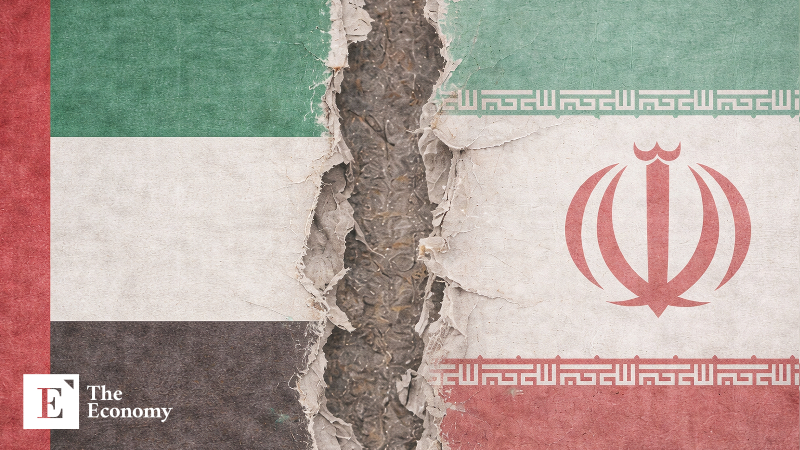
Anti-Iran sentiment is rapidly intensifying across the Middle East. As Iranian attacks targeting Gulf states persist following the outbreak of war, the United Arab Emirates (UAE) and others are moving to significantly tighten sanctions against Tehran. Some analysts warn that if the crisis drags on, Gulf nations could move toward direct involvement in the conflict, accelerating a broader regional escalation.
UAE Escalates Anti-Iran Sanctions
On April 1 (local time), Sultan Al Jaber, CEO of Abu Dhabi National Oil Company (ADNOC), wrote on LinkedIn that “Iran’s actions in the 33-kilometer-wide Strait of Hormuz are not a regional issue,” adding that “this constitutes global economic extortion and an unacceptable threat to the world.” Earlier, on March 30, Iran’s parliamentary National Security and Foreign Policy Committee approved a new management plan imposing transit fees on vessels passing through the Strait of Hormuz.
Al Jaber emphasized that “Asian economies have already been the first to feel the impact of the blockade, through reduced working hours, fuel rationing, flight cutbacks, and air conditioning shutdowns,” warning that “these effects are now spreading westward, driving up food and fuel prices across Europe and fueling inflation.” He added that “if Hormuz is disrupted, everyone will bear the cost,” urging that “the international community must act collectively to protect the free flow of energy and safeguard economic stability, and ensure freedom of navigation in accordance with UN Security Council Resolution 2817.” Adopted on March 11, the resolution condemns Iran’s attacks targeting Middle Eastern countries and vessels in the Strait of Hormuz.
This hostility toward Iran is also evident in the UAE government’s actions. According to The Wall Street Journal (WSJ), the UAE is implementing sweeping sanctions in response to Iranian drone and missile strikes. Iranian hospitals, social clubs, and certain Iranian-affiliated schools have been shut down, while entry and transit for Iranian passport holders have been comprehensively restricted. Sheikh Mohammed bin Zayed Al Nahyan, ruler of Abu Dhabi and President of the UAE, also labeled Iran’s attacks as “terrorism” during a meeting on March 31 with Sheikh Tamim bin Hamad Al Thani, Emir of Qatar.
Iranian Attacks Target Gulf States
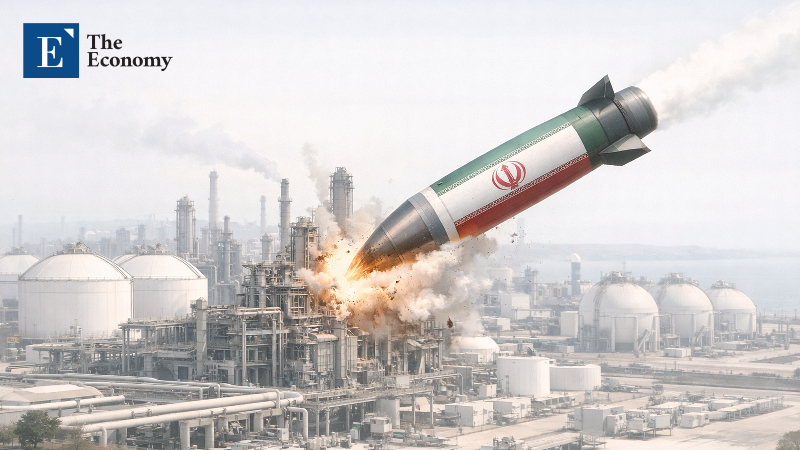
Prior to the war, the UAE had been regarded as one of the most Iran-friendly countries in the Middle East, serving as a key conduit for sanctions evasion and maintaining close economic ties. The outbreak of war, however, has sharply altered this dynamic. Following U.S. and Israeli airstrikes, Iran launched drone and missile attacks against the UAE, damaging a wide range of infrastructure including Dubai International Airport, the International Financial Centre, the U.S. consulate in Dubai, and oil storage facilities at Fujairah Port. On March 30, a large Kuwaiti oil tanker, Al Salmi, docked at Dubai Port, was directly struck by Iranian forces.
The damage extends beyond the UAE to the broader Gulf region. On March 26, The Telegraph, citing analysis from the Center for Strategic and International Studies (CSIS), reported that Iranian airstrikes have inflicted at least $800 million in damage on U.S. military bases across the Middle East. The most heavily targeted site was Kuwait’s Ali Al Salem Air Base, which endured 23 separate strikes. Camp Arifjan and Buehring Base were hit 17 and 6 times, respectively. At Al Udeid Air Base in Qatar, the largest U.S. military installation in the region, Iranian strikes destroyed antenna and satellite systems, while THAAD radar equipment at a Jordanian air base was also damaged.
Iranian attacks have not been confined to military facilities. On April 1, Kuwait’s Directorate General of Civil Aviation reported that drones launched by Iran and its affiliated armed groups struck fuel storage tanks belonging to the Kuwait Aviation Fueling Company at Kuwait International Airport, triggering a major fire. On the same day, Qatar’s Ministry of Defense announced that Iran launched three cruise missiles, one of which hit a fuel tanker chartered by QatarEnergy in Qatari territorial waters approximately 17 nautical miles north of Ras Laffan. On March 28, Aluminum Bahrain, one of the world’s leading aluminum producers, reported that two workers sustained minor injuries following an Iranian strike on its production facilities.
Potential Gulf Intervention in the Conflict
Amid sustained instability, the Middle East is poised to incur substantial economic losses. The United Nations Development Programme (UNDP) estimates that the Iran war and related military clashes could inflict up to $194 billion in economic losses across the region, with GDP projected to decline by 3.7% to 6%. The agency also forecasts that up to 4 million people could fall into poverty, while as many as 3.64 million jobs may be lost, pushing unemployment rates up by 4 percentage points. These projections are based on the assumption that intense conflict in Iran persists for four weeks. With the war now entering its fifth week and the prospect of prolonged hostilities increasing, the economic toll is likely to escalate further.
Some analysts suggest that if the conflict continues, Gulf states bearing significant losses may be compelled to intervene directly. The Financial Times (FT) reported on March 27, citing multiple sources, that the UAE has signaled to the United States and other Western nations its willingness to join a multinational coalition aimed at reopening the Strait of Hormuz. One source told the FT that “the focus is on assembling the broadest possible multinational coalition,” adding that “Iran has effectively declared war on the global economy, and it must be confronted.”
The entry of Yemen’s Iran-aligned Houthi rebels, part of the so-called “Axis of Resistance,” is also cited as a key factor amplifying escalation risks. On March 28, Houthi spokesperson Yahya Saree officially confirmed their involvement, stating that “the first military operation, including missile strikes, targeting key military objectives of the Israeli enemy has been carried out.” Should the Houthis escalate threats to Red Sea navigation, Gulf states such as Saudi Arabia, which have thus far exercised restraint, may be drawn into the conflict. Saudi Arabia has been engaged in hostilities with the Houthis since 2015 and continues to maintain a fragile ceasefire.
Aoife Brennan is a contributing writer for The Economy, with a focus on education, youth, and societal change. Based in Limerick, she holds a degree in political communication from Queen’s University Belfast. Aoife’s work draws connections between cultural narratives and public discourse in Europe and Asia.
Similar Post