"Imposing Transit Fees" Iran’s Hormuz Strait Blockade Intensifies Gulf Disruption, U.S. Signals Potential ‘Forceful Strike’

As one of the youngest members of the team, Tyler Hansbrough is a rising star in financial journalism. His fresh perspective and analytical approach bring a modern edge to business reporting. Whether he’s covering stock market trends or dissecting corporate earnings, his sharp insights resonate with the new generation of investors.
Authored On
Modified
Iran plans to levy multimillion-dollar transit fees on vessels passing through the Strait of Hormuz
Gulf producers accelerate crude export diversification via pipelines and alternative routes
“No deal, forceful strike” — U.S. signals direct confrontation, escalating Middle East tensions
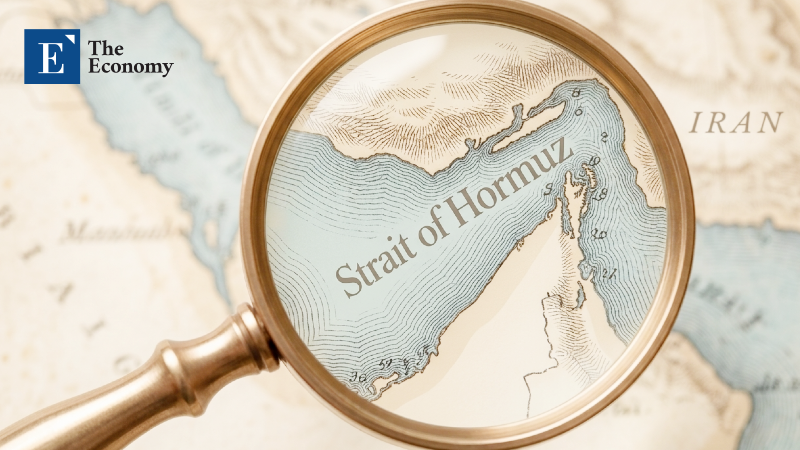
Iran has devised a plan to impose transit fees amounting to millions of dollars on oil tankers passing through the Strait of Hormuz. The strategy is designed to impose substantial financial burdens on vessels linked to the United States and Israel, thereby intensifying economic pressure on adversaries. As Tehran strengthens its control over the strait, disruption across the Gulf region is deepening, while Washington is amplifying uncertainty by maintaining its stance that additional strikes will follow if negotiations collapse.
Iran’s Strait Control Strategy
On April 1 (local time), Bloomberg, citing multiple sources, reported that Iran has formulated a plan to charge approximately $1 per barrel in transit fees for tankers passing through the Strait of Hormuz, to be collected in yuan or stablecoins. The report indicates that detailed implementation guidelines have been established for a new management plan approved by Iran’s parliamentary security committee on March 30. The proposal includes banning vessels affiliated with the United States and Israel from transiting the strait and restricting access for countries enforcing unilateral economic sanctions against Iran. Additional measures outlined include enhanced security protocols within the strait, the establishment of detailed operational procedures to ensure safe navigation for Iranian naval vessels, and an expanded role for Iranian military forces in managing the waterway.
According to sources, shipping operators seeking passage through the Strait of Hormuz must contact intermediary firms linked to Iran’s Islamic Revolutionary Guard Corps (IRGC) and submit documentation including vessel ownership structures, cargo manifests, destinations, crew lists, and Automatic Identification System (AIS) data. These intermediaries relay the information to the IRGC Navy’s Hormozgan command, which verifies whether the vessel has any association with countries Iran designates as hostile, including the United States and Israel. Transit fee negotiations commence only after vessels clear this screening process.
A Very Large Crude Carrier (VLCC) typically has a capacity of around 2 million barrels. If the plan is implemented, Iran would collect approximately $2 million in transit fees each time a VLCC passes through the strait. Iran’s semi-official Tasnim News Agency has projected that such fees could generate annual revenues exceeding $100 billion, equivalent to more than 20% of Iran’s 2024 gross domestic product (GDP).
Alternative Export Routes for Gulf Producers
As Iran shows no sign of relenting in its blockade posture, Gulf oil producers such as Saudi Arabia and the United Arab Emirates (UAE) are intensifying efforts to reroute crude exports through alternative channels. The UAE has recently begun transporting crude from fields near Abu Dhabi to the port of Fujairah via pipeline. Located on the Gulf of Oman, outside the Strait of Hormuz, Fujairah serves as a strategic bypass route.
Saudi Arabia is also operating pipelines that transport crude to the Red Sea port of Yanbu on the western coast of the Arabian Peninsula. According to Bloomberg, these pipelines have a maximum daily capacity of 7 million barrels. Oil shipped from Yanbu is exported to Asia and other markets via the Bab el-Mandeb Strait. While this route was previously underutilized, daily shipping volumes have doubled compared to pre-war levels following the blockade of the Strait of Hormuz.
The critical question remains how long this situation can persist. The United States and the broader international community argue that Iran’s control over the Strait of Hormuz constitutes a clear violation of international law. Although the narrowest sections of the strait fall within the territorial waters of Iran and Oman, it is legally recognized as an international waterway guaranteeing passage for commercial vessels. U.S. Secretary of State Marco Rubio stated on March 30 that Iran’s attempt to impose transit fees is “unacceptable not only to us but to the entire world,” warning that it would set a precedent for individual nations to claim and control international waters.
Criticism has also emerged regarding the scale of Iran’s proposed fees. Suezmax tankers, the largest vessels capable of transiting the Suez Canal, pay up to $600,000 per passage, while transit fees through the Bosphorus Strait are approximately $5.83 per net ton. Applying the Bosphorus fee structure to VLCCs transiting the Strait of Hormuz—typically with net tonnage ranging from 80,000 to 110,000 tons—yields an estimated “appropriate” fee of $460,000 to $640,000, significantly below Iran’s proposed charges.
U.S. Renewed Warning to Iran
The possibility of additional U.S. military action remains a key variable. Expectations for an end to the Iran war have recently gained traction, as leaders from both the United States and Iran, along with foreign ministers and even the Israeli prime minister, have issued statements suggesting a potential cessation of hostilities. However, intensifying military tensions amid a standoff over negotiating leverage complicate the outlook. Should talks collapse following Iran’s rejection of U.S. demands, Washington could proceed with previously signaled plans to destroy key Iranian energy infrastructure and launch a comprehensive offensive aimed at dismantling its nuclear program.
President Donald Trump, speaking at the White House on April 1, declared that the United States would deliver “very powerful strikes within the next two to three weeks,” adding that such action would effectively “return Iran to the Stone Age.” He further warned, “If no agreement is reached, we are prepared to strike all major targets,” specifically highlighting the potential for coordinated attacks on power generation facilities. On March 31, U.S. Secretary of War Pete Hegseth also emphasized that “we hope an agreement can be reached, but if not, we are prepared to continue.”
U.S. forces are already assembling across the Middle East. On March 28, the United States deployed an additional 3,500 Marines and naval personnel to the region. Including the already stationed elite 82nd Airborne Division, approximately 7,000 troops are now awaiting deployment orders. On March 31, the Nimitz-class aircraft carrier USS George H.W. Bush departed from Naval Station Norfolk in Virginia, bringing the total number of U.S. aircraft carriers in the region to three. The carrier strike group includes more than 6,000 personnel.
Should negotiations fail and the conflict persist, the possibility of direct intervention by Middle Eastern states cannot be ruled out. The Wall Street Journal reported on March 31, citing Arab officials, that the UAE is actively considering assuming a military role—including mine-clearing operations—to secure safe passage through the Strait of Hormuz. The UAE is also urging the formation of a multinational military coalition involving the United States, Europe, and major Asian powers to reopen the strait, while applying diplomatic pressure to secure a United Nations Security Council resolution. Meanwhile, with Iran-backed groups—including Hezbollah in Lebanon, Shiite militias in Iraq, and the Houthi rebels in Yemen—formally declaring participation, there is growing concern that Gulf states such as Saudi Arabia, which had previously refrained from direct military action, may enter the conflict, potentially expanding the scope of the war.
As one of the youngest members of the team, Tyler Hansbrough is a rising star in financial journalism. His fresh perspective and analytical approach bring a modern edge to business reporting. Whether he’s covering stock market trends or dissecting corporate earnings, his sharp insights resonate with the new generation of investors.
Similar Post