D-RAM Prices Enter a Pause, Checked by the TurboQuant Variable and the Aftershocks of China’s Memory Stockpiling

Authored On
Modified
Spot D-RAM prices, which had been soaring, lose upward momentum
Chinese distributors that rushed into memory hoarding take a direct hit: “We’re ruined”
Google’s TurboQuant fuels concern over a decline in memory demand
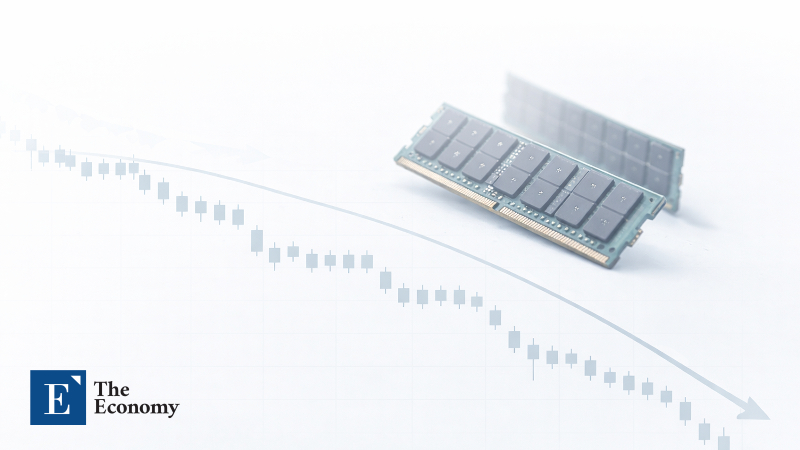
Spot D-RAM prices, which had been tracing an upward curve since late last year, have entered a period of consolidation. With market fatigue accumulating amid the prolonged price surge, downside pressure appears to have intensified as the Middle East conflict dampened consumer sentiment among ordinary shoppers. Some analysts also suggest that Google’s newly unveiled TurboQuant algorithm and a pullback in demand following China-led selloffs have influenced price volatility.
D-RAM Price Rally Stalls
According to data released by market research firm DRAMeXchange on July 2, the average spot price of 16-gigabit (Gb) DDR5 D-RAM, a cutting-edge product, stood at $37.458 as of June 30. After reaching $39.833 on June 19, the price continued to decline for 10 days. Spot prices are short-term market quotations for D-RAM traded in distribution markets. Although trading volumes are smaller than fixed contract prices used in large-scale business-to-business transactions, spot prices are known for reflecting semiconductor market conditions more quickly.
Some semiconductor experts interpret the stalling D-RAM rally as a signal that the chip cycle has passed its peak. Their diagnosis is that memory prices have risen too far, prompting smartphone and PC manufacturers to delay purchases and cooling market momentum. In this regard, semiconductor industry expert Dan Nystedt said in his newsletter, “D-RAM and NAND prices have become too high, and some smartphone makers plan to scale back or halt production of low- to mid-end 2026 models,” adding, “These manufacturers rejected the elevated DDR4 prices.”
There is also analysis that weakened consumer sentiment stemming from the protracted conflict in the Middle East has affected D-RAM prices. Spot memory transactions immediately reflect retail demand, including that for assembled PCs. In other words, when ordinary consumers close their wallets, overall trading freezes. Indeed, since the outbreak of the Middle East war, selloffs of consumer D-RAM have spread across distribution channels in various countries. According to a synthesis of foreign media reports, DDR5 prices in Shenzhen’s Huaqiangbei, China’s largest electronics market, fell about 30% in just one week, while D-RAM prices sold on Amazon in the United States also dropped 15% to 30% from their peaks.
China Faces the Aftershocks of Memory Speculation
The market is raising the possibility that D-RAM prices will continue to decline in the short term. That is because suspicions are deepening that recent D-RAM prices were distorted by large-scale speculative stockpiling by Chinese distributors. According to a July 2 report by U.S. IT media outlet Wccftech, Chinese distributors that had amassed large D-RAM inventories in anticipation of an artificial intelligence (AI) boom are now suffering from acute inventory pressure. D-RAM, which until recently had effectively been priced at whatever sellers asked, has abruptly become a burden.
In fact, a video recently went viral on social media showing a Chinese memory supplier lamenting his plight in front of a warehouse stacked full of D-RAM chips and components. In the video, the seller said, “Memory prices have collapsed,” and added, “Inventory is piled up, and we’re completely ruined.” The industry view is that China-led speculative demand fueled the short-term spike in prices, and as market demand paused and momentum faded, the resulting aftershocks further intensified downside pressure. In effect, D-RAM prices are now behaving much like a financial asset.
Distributors that used leverage to accumulate inventory at elevated prices in pursuit of arbitrage during the rally are bound to shoulder enormous burdens even when product prices wobble only slightly. In particular, companies that aggressively built inventory by relying on external funding are more likely to be forced into rapid cash conversion than to hold stock and wait. If they move into forced liquidation while accepting losses, supply could surge in a short span, amplifying downward pressure on prices.
Investment Sentiment Shaken After TurboQuant Unveiling
This trend appears to have begun with Google’s disclosure of the TurboQuant algorithm. TurboQuant is a technology that compresses the memory required in AI model inference, thereby reducing usage. Its core lies in lowering data storage capacity from the conventional 16- to 32-bit range to the 3- to 4-bit range while preserving accuracy. Google said that applying the technology can cut memory usage by as much as one-sixth and raise computing speed by up to eightfold on Nvidia’s H100.
TurboQuant is applied to the key-value (KV) cache used by AI to preserve conversational context. The KV cache is a temporary storage space for AI, and the longer and more complex a conversation becomes, the faster the required memory capacity grows. By compressing this cache, AI can process longer contexts and more requests with the same resources. That is why, after the technology was disclosed, the interpretation rapidly spread through the market that “less memory may be needed going forward.” Amid such concern, investment sentiment toward memory temporarily deteriorated, and the confusion was immediately reflected in spot market prices. Chinese distributors that had continued hoarding inventory in anticipation of the market’s rosy outlook effectively lost their incentive to keep accumulating stock.
However, some analysts argue that the current sharp drop in D-RAM prices is difficult to regard as a structural shift. They point out that a fall in spot prices does not immediately translate into a trend reversal. Some also project that TurboQuant could ultimately have a positive effect on memory demand. While improved memory efficiency may reduce the capacity required per graphics processing unit (GPU), it could simultaneously enable more computation, thereby increasing overall demand. Given that token throughput is rising rapidly with the spread of AI agents in particular, efficiency gains are highly likely to stimulate broader demand expansion.
Similar Post