"Supply Chains and Power at Their Limits" AI Data Center Expansion Stalls, Big Tech Seeks Breakthroughs via Private Grids and Space Infrastructure

Siobhán Delaney is a Dublin-based writer for The Economy, focusing on culture, education, and international affairs. With a background in media and communication from University College Dublin, she contributes to cross-regional coverage and translation-based commentary. Her work emphasizes clarity and balance, especially in contexts shaped by cultural difference and policy translation.
Authored On
Modified
AI data center market faces supply chain risks and local opposition
Big tech doubles down on energy self-sufficiency, from power plant construction to direct procurement
"Will aggressively leverage solar power"—efforts to build space-based data centers accelerate
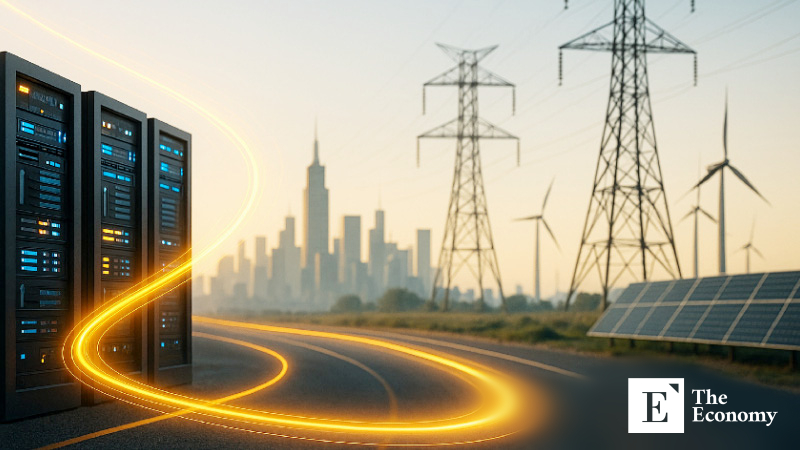
The U.S. artificial intelligence (AI) data center market has encountered significant headwinds. Supply chain bottlenecks have disrupted the procurement of critical equipment, while mounting pressure from local communities and political circles over massive power consumption has begun to constrain infrastructure expansion. In response, major technology firms are accelerating efforts to secure independent energy supplies and advancing research into space-based data center technologies as alternative solutions.
U.S. Data Center Market Losing Momentum
On April 2 (local time), Bloomberg reported that roughly half of the data center projects planned in the United States this year are at risk of delays or cancellations. Disruptions in the supply of essential equipment, including transformers, have made it increasingly difficult for many facilities to establish foundational electrical infrastructure. As a result, expansion plans for AI infrastructure across the market have been broadly curtailed. According to analysis by market research firm Sightline Climate, total power capacity for U.S. data centers targeted for operation this year stands at 12GW, yet actual construction volume amounts to only around 4GW, or roughly one-third of the total.
Local opposition has also emerged as a frequent obstacle to data center development. The immense power demand of such facilities places significant strain on regional grids, while nearby communities face a range of associated risks, including increased water usage, noise and heat emissions, and environmental degradation. According to Miguel Villa, a researcher at AI safety consultancy 10a Labs, at least 48 data center projects—valued at approximately $156 billion—were halted or delayed over the past year due to organized opposition.
Political pressure in the United States is also intensifying. At least 12 states are currently reviewing potential suspensions of data center construction, while dozens of local governments, including those in New Orleans and Chandler, have implemented moratoriums. On March 25, Senator Bernie Sanders (I-VT) and Representative Alexandria Ocasio-Cortez (D-NY) introduced legislation calling for a nationwide halt to data center construction until comprehensive federal AI safety regulations are established. The bill stipulates that construction should remain suspended until the federal government enacts safeguards addressing AI safety and wealth redistribution, effectively seeking to regulate the pace of technological advancement through policy intervention.
Big Tech’s Energy Procurement Strategies
As turbulence surrounding the data center market intensifies, major U.S. technology firms are increasingly turning to self-sufficient energy strategies to secure operational continuity. Meta, for instance, recently announced plans to construct 10 large-scale natural gas power plants to support its Hyperion data center in Louisiana. With a planned power capacity of 7.5GW—equivalent to nearly 30% of Louisiana’s total generation capacity of approximately 24.7GW—the project underscores the scale of energy demand involved. Without dedicated supply channels, such facilities would impose overwhelming strain on regional grids. Meta plans to fully fund the necessary energy infrastructure in partnership with Southwestern Electric Power Company and implement air-based cooling systems to minimize electricity consumption.
Direct power purchase agreements (PPAs) with energy suppliers are also becoming increasingly prevalent. Google signed a renewable energy PPA with NextEra Energy in 2024. Amazon has secured power for its U.S. and European data centers through offshore wind PPAs with Ørsted, while Meta has entered long-term agreements with Invenergy to source large-scale solar and wind energy. Apple is likewise procuring data center power directly through solar PPAs with NextEra and Lightsource BP across locations including Nevada and North Carolina.
Investment in nuclear energy is also gaining momentum. Microsoft has decided to restart Unit 1 of the Three Mile Island nuclear plant—previously shut down following a 2024 incident—and secure exclusive power supply for 20 years, with operations targeted to resume in 2028. Google, in October of the same year, signed a corporate PPA with Kairos Power, a developer of next-generation small modular reactors (SMRs). The two companies plan to deploy six to seven reactors sequentially by 2035, with initial operations slated for 2030. Around the same period, Amazon invested $500 million in SMR developer X-energy and is planning to construct SMR facilities in partnership with Energy Northwest to secure long-term power supply.
Space-Based Data Centers Gain Traction
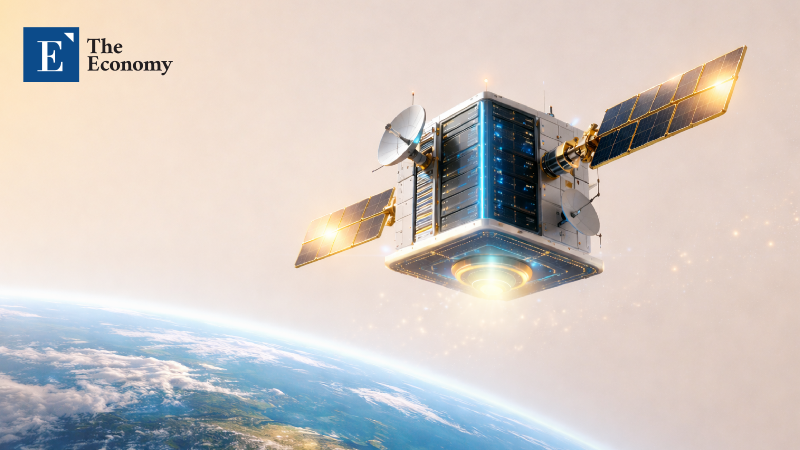
Efforts to establish data centers in space are also accelerating. According to Nikkei, Google plans to launch two prototype satellites equipped with its proprietary Tensor Processing Units (TPUs) into Earth orbit by early 2027. This initiative is part of the company’s previously announced Project Sun Catcher, which aims to test and validate the concept of space-based data centers that utilize solar energy beyond Earth’s atmosphere to perform AI computations.
SpaceX, led by Elon Musk and currently preparing for an initial public offering (IPO), also intends to allocate raised capital toward the development of space-based AI data centers. In January, the company submitted a satellite launch application to the U.S. Federal Communications Commission (FCC), outlining plans to build a solar-powered network capable of accommodating surging data demand driven by AI. The proposal includes deploying a constellation of one million satellites in Earth orbit to function as data centers, harnessing the full spectrum of solar energy.
Venture firms are also accelerating related technological development. Space startup Starcloud recently deployed Starcloud-1, a satellite equipped with NVIDIA H100 GPUs, to conduct training for its NanoChat language model. According to a report published on NVIDIA’s tech blog, Starcloud-1 is a compact satellite weighing approximately 60kg, comparable in size to a small refrigerator. Starcloud CEO Philip Johnston stated, “Utilizing space-based data centers could reduce costs—including launch and energy—by a factor of ten compared to Earth-based systems,” adding that “within a decade, nearly all new data centers will be constructed in space.”
Siobhán Delaney is a Dublin-based writer for The Economy, focusing on culture, education, and international affairs. With a background in media and communication from University College Dublin, she contributes to cross-regional coverage and translation-based commentary. Her work emphasizes clarity and balance, especially in contexts shaped by cultural difference and policy translation.
Similar Post