“From Automobiles to Air Defense and Armor” Germany’s Auto Giants Accelerate Strategic Pivot Into Defense Industry

Anne-Marie Nicholson is a fearless reporter covering international markets and global economic shifts. With a background in international relations, she provides a nuanced perspective on trade policies, foreign investments, and macroeconomic developments. Quick-witted and always on the move, she delivers hard-hitting stories that connect the dots in an ever-changing global economy.
Authored On
Modified
Volkswagen joined by Mercedes in defense-sector expansion
Idle factories repurposed for military production amid Europe’s security crisis
Rising defense budgets and regulatory easing create favorable industrial climate
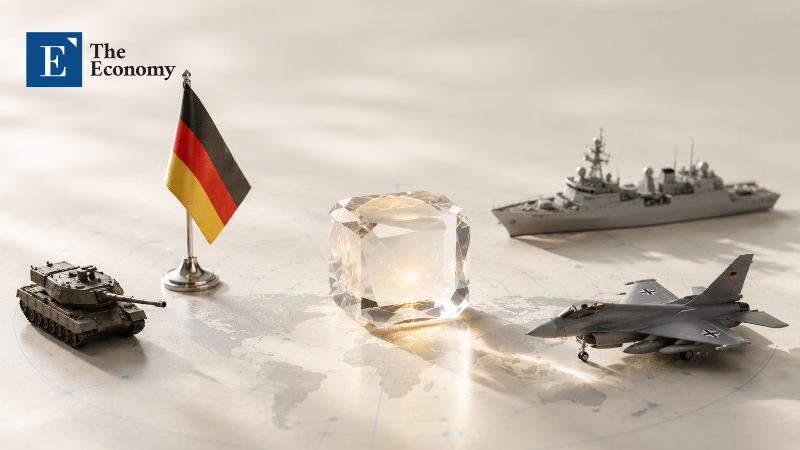
As Europe’s security anxieties intensify amid the prolonged Russia-Ukraine war and mounting geopolitical instability in the Middle East, German luxury automaker Mercedes-Benz has formally declared its intention to enter the defense and military equipment sector. The move is widely interpreted as a strategic attempt by Germany’s auto industry to establish defense manufacturing as a new growth engine while grappling with mounting earnings pressure stemming from delayed electrification efforts and deteriorating competitiveness in the Chinese market.
Mercedes Signals Defense Expansion Amid Automotive Slump
According to The Wall Street Journal (WSJ) on May 17, Mercedes-Benz Chief Executive Officer Ola Källenius stated in an interview that “it is clear Europe needs to strengthen its defense capabilities,” adding that “if we can play a positive role in that process, we would be willing to do so.” The remarks made clear that the company is prepared to enter defense production should the business case prove commercially viable.
Källenius’ comments emerged as Germany’s long-stagnant industrial sector increasingly positions itself as a major supplier within the Western defense supply chain. Mercedes-Benz recorded approximately $12 billion in costs tied to U.S. tariffs last year, contributing to a collapse in annual profit that was cut roughly in half from the previous year. Analysts believe the company has identified the defense sector as a strategic alternative market after factory utilization rates plunged amid intensifying competition from Chinese high-performance electric vehicle manufacturers in its largest overseas market.
Källenius emphasized that “the greatest strength of automotive companies is the ability to mass-produce high-quality precision machinery.” While defense-related operations may account for only a small portion of total revenue, the company appears to view the sector as a highly profitable niche market. Mercedes-Benz already spun off its heavy military truck division in 2021 while retaining its position as the largest shareholder, and it has long supplied military variants of its G-Class sport utility vehicles to armed forces around the world.
Attention has also turned toward the future of Mercedes production facilities. Franco-German defense manufacturer KNDS is reportedly in negotiations to acquire the Ludwigsfelde plant near Berlin, one of Mercedes-Benz’s major production sites. According to the Financial Times (FT), KNDS plans to invest approximately $1.1 billion into new production lines to meet soaring European Union (EU) weapons demand. The Ludwigsfelde facility, which currently manufactures Sprinter van bodies, is scheduled to transfer production lines to Poland by 2030. The two sides are reportedly discussing multiple deal structures, including the transfer of roughly 2,000 employees to KNDS.
Volkswagen, BMW, and Schaeffler Also Pursue Defense Pivot
Mercedes-Benz is far from alone in Europe’s automotive-defense convergence. Citibank analysts recently described the strategic direction of European automakers as an “Anything-but-cars” strategy, underscoring the accelerating pace of industrial pivoting. French automaker Renault has partnered with defense company Turgis & Gaillard on the military drone initiative “Chorus,” expanding into both military and civilian drone manufacturing. German supplier Schaeffler has joined forces with German AI drone company Helsing and plans to scale drone output from an initial 10,000-20,000 units annually to as many as 100,000 units over the longer term.
Volkswagen is reportedly in discussions with Israeli defense company Rafael over producing components for missile defense systems, including Iron Dome, while the potential conversion of its Osnabrück facility into a missile-defense parts manufacturing site is also under review. BMW, meanwhile, is expanding armored vehicle-grade ballistic protection technologies beyond civilian applications into military platforms. At the same time, Germany’s largest defense contractor Rheinmetall has been moving to convert struggling automotive component factories into defense production sites while absorbing skilled labor from the automotive sector. The developments have rapidly accelerated broader discussions in Germany over redirecting the nation’s automotive manufacturing capabilities toward defense production.
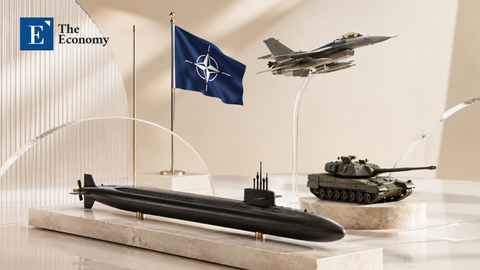
According to defense outlet Breaking Defense, most automakers are not attempting to directly manufacture full-scale weapons systems such as tanks or self-propelled artillery. Instead, they are positioning themselves as suppliers of “less core” components, including vehicle platforms, chassis structures, power systems, wiring systems, and electronic components. The strategy reflects an effort to horizontally transfer advanced manufacturing expertise, large-scale supply chain management capabilities, and mass-production know-how accumulated through automotive production into military manufacturing.
Canada Pursues Defense Cooperation With EU Over United States
The most powerful driver behind Europe’s automotive-defense transformation remains the sharp rise in military spending. Following Russia’s invasion of Ukraine in 2022, the German federal government has aggressively expanded defense expenditures to meet NATO’s 2% spending target. According to German daily Frankfurter Allgemeine Zeitung (FAZ), Germany’s 2026 budget proposal allocates approximately $920 billion to defense spending, representing a 32% increase from the previous year. Subsequent fiscal guidelines also outline plans to boost defense spending by an additional 28% in 2027 to exceed roughly $1.1 trillion. The figure would amount to approximately 3.1% of Germany’s gross domestic product (GDP), a symbolic benchmark reflecting the historic transformation of postwar German security policy.
The regulatory environment surrounding defense-sector expansion is also becoming increasingly favorable. Regulatory easing measures introduced by both Germany and the EU have significantly improved financing conditions for defense firms, with reports indicating that roughly 90% of venture capital flowing into Europe’s defense sector has been directed toward German companies. At the EU level, the bloc is also advancing large-scale defense and military manufacturing reinforcement packages under the “ReArm Europe” initiative, involving investment commitments ranging from tens of billions to hundreds of billions of dollars.
In addition, Germany’s Federal Armed Forces Planning and Procurement Acceleration Act (BwPBBG), implemented earlier this year, lowered institutional barriers by allowing military procurement authorities to make broader use of commercial off-the-shelf (COTS) products and proven civilian technologies. The result has been the creation of a more accessible framework for automotive, machinery, electrical, and electronics companies seeking entry into defense supply chains.
Export prospects are also improving. On March 17, Canadian Ambassador to Italy Elissa Goldberg reportedly delivered an urgent message to Italy’s ministers of finance, foreign affairs, defense, and enterprise, expressing Canada’s desire to deepen defense industrial cooperation with Italy and the EU. The letter stated that Canada required Italy’s support in participating in the EU’s rearmament initiatives. However, EU procurement rules currently allow the purchase of weapons only from EU member states, EU candidate countries, or nations maintaining official security and defense partnerships with the bloc. Eight countries currently qualify under the framework: South Korea, Japan, Norway, Albania, North Macedonia, Moldova, Ukraine, and Türkiye.
Canada has therefore signaled its intention to establish a formal security and defense partnership with the EU in order to gain market access, using Italy as a diplomatic entry point. Ambassador Goldberg stated that Canada could provide advanced defense technologies such as drones, satellite communications, robotics, artificial intelligence (AI), and cybersecurity, alongside vast reserves of critical minerals including nickel, cobalt, and lithium essential for renewable energy systems. In return, Canada indicated it could increase purchases of EU-made weapons systems. Goldberg added that Canada plans to procure several critical capabilities in the near term, including 12 submarines potentially sourced from European suppliers, additional fighter aircraft, and armored vehicles.
Anne-Marie Nicholson is a fearless reporter covering international markets and global economic shifts. With a background in international relations, she provides a nuanced perspective on trade policies, foreign investments, and macroeconomic developments. Quick-witted and always on the move, she delivers hard-hitting stories that connect the dots in an ever-changing global economy.
Similar Post