Trump Tightens Pressure on Iran Through Parallel Military Coercion and Conciliatory Signals, as China-Russia Summit and Tehran’s ‘Choice’ Poised to Shape War Trajectory

Authored On
Modified
“Time is of the essence,” Trump says as Washington escalates pressure on Tehran while demanding rapid negotiations
Conciliatory proposals emerge on key issues including Iran’s nuclear program and oil exports
China and Russia expected to coordinate joint Middle East response ahead of bilateral summit
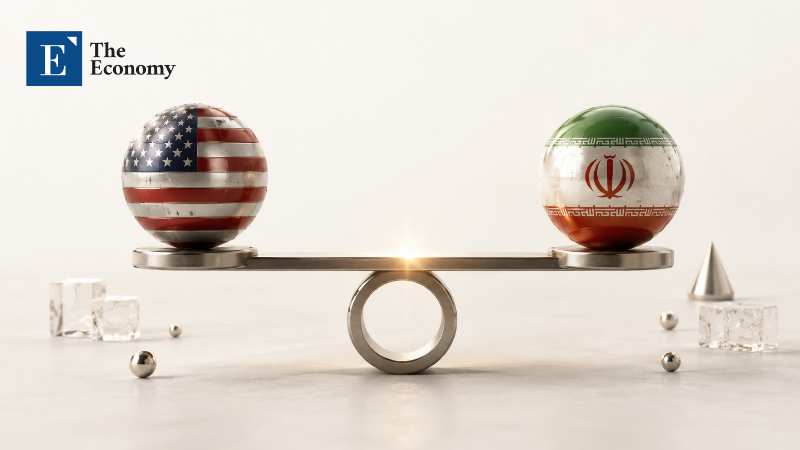
U.S. President Donald Trump has once again intensified military pressure on Iran. As ceasefire negotiations between Washington and Tehran remain deadlocked, the White House has simultaneously floated conciliatory proposals on oil exports and the nuclear program while demanding swift talks, effectively narrowing Iran’s strategic options. Against this backdrop, the international community increasingly views the coordinated response of China and Russia — both of which have maintained close ties with Tehran — along with Iran’s own willingness to pursue a settlement, as decisive variables capable of altering the course of the conflict.
Trump’s Pressure Campaign Against Iran
According to CNBC on May 17 local time, Trump wrote on his social media platform Truth Social that “Iran does not have much time left,” adding that “if Iran does not move quickly, it will completely collapse,” and stressing that “time is very important.” He did not elaborate on what actions Tehran should take or what specific measures Washington would pursue should negotiations fail. However, international outlets including The Times of Israel and Xinhua, citing Iranian state media, reported the same day that Trump and Israeli Prime Minister Benjamin Netanyahu held a phone call to discuss potential strikes against Iran.
Trump’s remarks are widely interpreted as a direct attempt to undermine Tehran’s strategy of endurance. Although the two sides reached a dramatic temporary ceasefire agreement early last month, subsequent negotiations aimed at formally ending the war have failed to bridge major differences. Washington demanded the dismantling of Iran’s nuclear program and the reopening of the Strait of Hormuz as preconditions for peace, while Tehran countered by demanding the lifting of the U.S. maritime blockade, compensation for wartime damages, and the immediate suspension of military operations by U.S. forces and allied powers across the Middle East. Iran had effectively wagered that Washington would eventually yield first under mounting economic and political pressure. Tehran calculated that prolonged high oil prices would weigh heavily on domestic sentiment ahead of the November midterm elections, ultimately forcing Trump into concessions.
Contrary to those expectations, however, Washington has now begun presenting conciliatory options even on the nuclear issue, effectively compelling Tehran to make a strategic decision. On May 15, after meeting Chinese President Xi Jinping in Beijing, Trump told reporters aboard Air Force One that “20 years would be enough” regarding the suspension of Iran’s nuclear activities, adding that “the issue is the guarantee from Iran, and it has to be a real 20 years.” The remarks signaled openness to a deal based on temporarily restricting Iran’s nuclear program. Trump had previously maintained that Iran must permanently halt uranium enrichment and never possess nuclear weapons under any circumstances. During his first administration in 2018, he withdrew the United States from the Joint Comprehensive Plan of Action (JCPOA) negotiated under the Barack Obama administration and sharply criticized the so-called “sunset clauses” that allowed certain restrictions to expire over time.
Review of Sanctions Relief on China-Iran Oil Trade
Trump has also openly discussed the possibility of easing sanctions, formally signaling a shift in Washington’s Iran policy. On May 15, he said the administration was reviewing the removal of sanctions on Chinese companies importing Iranian crude oil. Trump stated that the matter had been discussed with Xi and that a decision could be made within days. Earlier, on May 1, the U.S. Treasury Department sanctioned Chinese firms and individuals accused of serving as gateways for Iranian petroleum imports. On May 8, Washington imposed additional sanctions on 10 Chinese and Hong Kong-based companies and individuals allegedly involved in supporting Iranian weapons and drone production. On May 11, three individuals and nine companies accused of facilitating Iranian crude exports to China were also targeted by U.S. sanctions.
If sanctions relief materializes, it would represent a substantial concession for Tehran, given that the overwhelming majority of demand for Iranian crude now comes from China. Although Washington has enforced sweeping sanctions against Iranian oil exports since Trump’s first administration, China’s small independent refiners — commonly known as “teapots” — have continued purchasing Iranian crude despite mounting pressure. Through close coordination with Tehran, they effectively constructed one of the world’s largest sanctions-evasion networks. According to The Wall Street Journal, Chinese exports accounted for roughly 30% of Iran’s oil production a decade ago. That figure has now risen to virtually the entirety of Iranian exports.
Iran is believed to have continued selling billions of dollars worth of crude oil to China each month despite sanctions, with total sales estimated at $31.2 billion last year. Should those export channels to China be severed, Tehran would face the evaporation of a substantial portion of government revenues, potentially triggering a currency and inflation crisis. Compounding the risk, Iran’s oil storage facilities are reportedly nearing saturation due to consecutive sanctions and blockades. A production shutdown caused by excess inventories could inflict severe damage on the Iranian economy. Oil production facilities are designed for continuous operation, and abrupt shutdowns can lead to pressure imbalances, temperature fluctuations, equipment damage, wax and moisture buildup, and pipeline blockages, significantly increasing restart costs. Iran’s aging oil fields are viewed as especially vulnerable, raising the possibility that production levels may never fully recover once halted. Against that backdrop, sanctions relief from Washington would effectively provide a critical lifeline for the Iranian economy.
China-Russia Summit as Potential Turning Point
However, the future course of China’s response — long viewed as Iran’s primary economic backstop — remains uncertain. On May 15, when asked whether Xi had pledged to pressure Iran into reopening the Strait of Hormuz, Trump replied, “I do not ask for favors,” adding that “if you ask for favors, you have to return favors.” He continued by stating that “Xi already wants the Strait of Hormuz reopened,” arguing that “China gets a significant portion of its oil from the Gulf, whereas the United States gains absolutely nothing from reopening the Strait.” Yet contrary to Trump’s assertions, China immediately rejected a U.S.-backed resolution condemning Iran following the conclusion of the U.S.-China summit. China’s ambassador to the United Nations stated that both the content and timing of the resolution were inappropriate, while the Chinese Foreign Ministry declared that the Iran war should never have occurred in the first place.
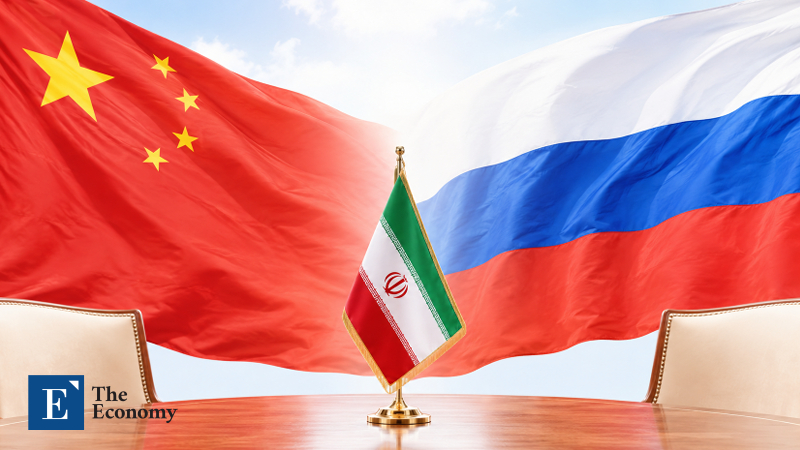
Analysts increasingly believe Beijing will formalize its strategic direction during an upcoming summit with Russia. On May 16, China and Russia announced that Russian President Vladimir Putin will visit China for two days beginning May 19 for summit talks with Xi. In a statement, the Kremlin said the visit would commemorate the 25th anniversary of the “China-Russia Treaty of Good-Neighborliness and Friendly Cooperation” signed in 2001, adding that the two leaders would discuss ways to further strengthen their comprehensive partnership and strategic cooperation. The Kremlin also noted that Putin and Xi would exchange views on international and regional issues and sign a joint declaration following the talks.
Research institutions expect the two countries to use the summit to coordinate a joint response framework regarding the Iran conflict. In a recent report, the Washington-based Jewish Institute for National Security of America (JINSA) assessed that China and Russia are likely to favor a “managed stabilization strategy” aimed at preserving the Iranian regime through diplomatic, energy, and financial support rather than direct military intervention. Should that assessment prove accurate, Iran’s own strategic choice may ultimately emerge as the final decisive variable. One diplomatic expert noted that “if China and Russia provide reliable backing, Iran could decide to endure short-term humiliation and preserve the regime by leaning on those powers,” adding that “Tehran may also opt for a prolonged standoff with support from Beijing and Moscow, though China is likely to prefer an early ceasefire and regional stabilization over prolonged instability in the Middle East.”
Similar Post