Rise of “Cognitive Protection Assistants” Targets Side Effects of AI Dependence, Highlighting Need for Thinking Processes Over Results

Stefan Schneider brings a dynamic energy to The Economy’s tech desk. With a background in data science, he covers AI, blockchain, and emerging technologies with a skeptical yet open mind. His investigative pieces expose the reality behind tech hype, making him a must-read for business leaders navigating the digital landscape.
Authored On
Modified
Cognitive safeguards emerge as a core issue
AI use expands across tasks, exploration, and synthesis
Conversational users diverge from delegation-driven users
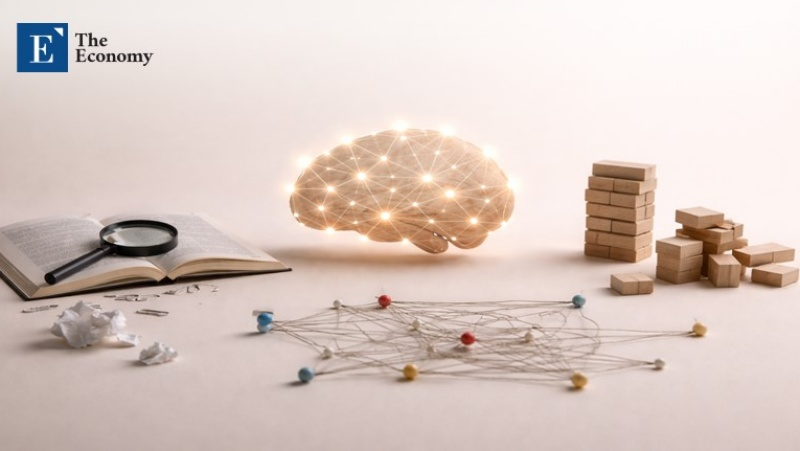
Artificial intelligence is evolving beyond simply providing answers to given problems, moving toward maintaining and actively intervening in human thinking processes. Recently introduced cognitive protection systems are drawing attention by analyzing users’ levels of understanding and engagement to adjust the degree of intervention, with a focus on reducing excessive dependence. This trend has emerged as AI usage has expanded beyond simple search into actual work and learning processes. In educational settings, changes in learning methods have already begun, while differences in AI usage levels among users are increasingly translating into disparities in real-world performance outcomes.
Emphasis on shift toward “delegation-centric AI use”
On the 23rd (local time), industry sources reported that TetiAI, a Delaware-based AI cognitive protection technology firm, recently unveiled an open-source cognitive protection system called “Lucid” and integrated it into its AI assistant, Teti. Developed based on more than 30 research studies, the system aims to mitigate “cognitive dependence” arising from interactions between users and AI. While conventional AI systems focus on delivering answers, Lucid differentiates itself by controlling AI behavior in a way that preserves and strengthens users’ thinking processes.
Lucid is also designed to distinguish between healthy and problematic delegation. It allows repetitive tasks such as document organization or translation while encouraging direct user participation in reasoning and decision-making. Protection policies vary by age, with stronger intervention applied to users under 25, including reducing session time from 45 minutes to 30 minutes and limiting messages from 30 to 20. These features position Lucid not as a tool that produces results on behalf of users, but as a system that manages the thinking process itself, signaling a shift in AI assistants from output-oriented tools to cognition-focused systems.
This shift reflects a fundamental change in how AI is used. As AI capabilities expand to include document generation, coding, and decision support, users increasingly delegate not only simple searches but also abstracted units of work. In this process, the ability to understand or verify system operations has weakened, with cases emerging even in software development where results are used without understanding underlying code behavior. As AI takes on execution while humans merely verify outcomes, the thinking process is often bypassed.
The MIT Media Lab has described this phenomenon as “cognitive debt,” noting that “repeated delegation of cognitive tasks to AI tends to diminish critical thinking abilities.” It added that “in environments where reasoning and judgment are left to AI, opportunities for human cognitive training inevitably shrink.” Similarly, Aikido’s “2026 AI Security and Development Report” found that one in five development teams in Japan had experienced serious incidents caused by AI-generated code, while roughly 70% reported identifying vulnerabilities introduced by AI assistants.
Concerns over answer-oriented usage patterns
Despite these concerns, AI continues to penetrate rapidly across all sectors, including education. French weekly L’Express recently reported that “AI has moved beyond simple information retrieval to act as a personalized tutor that adapts explanations to each learner’s level,” adding that “the very mode of knowledge delivery in education and the labor market has changed.” The publication noted that AI’s role has grown significantly in explaining complex concepts through analogies and applying existing knowledge to new contexts.
It also observed that “questions that learners might hesitate to ask human teachers can be posed instantly to AI, lowering barriers to learning.” However, as interactions with AI become more natural, learners increasingly adopt a passive approach, accepting results without constructing their own reasoning or thought processes. L’Express described this as an “illusion of learning,” warning that “repeated reliance on AI-generated answers in place of genuine understanding is likely to reduce actual cognitive ability.” The need to shift from efficiency-driven usage to thinking-integrated usage has thus emerged as a key issue.
Actual usage patterns support these concerns. A study conducted by researchers at the University of Duisburg-Essen and Ruhr University Bochum, involving 113 professors and 123 students, found that students’ frequency of AI use was on average 0.35 points higher than that of professors on a five-point scale. On a 100-point scale, students’ level of task delegation to AI was 15.72 points higher than that of professors, indicating a growing tendency among students to entrust entire assignments to AI. Differences were also observed across task types, including information search (0.73, effect size 0.75), programming (0.61, effect size 0.63), literature review (0.50, effect size 0.51), and writing (0.48, effect size 0.50).
Both professors and students were also found to overestimate each other’s level of AI usage. Each group perceived the other’s usage frequency to be higher by an average of 1.02 points and delegation levels by 25.89 points. The researchers noted that “this perception gap could undermine mutual trust in educational settings,” recommending “bidirectional transparency, where both professors and students disclose their AI usage.” They concluded that “as AI usage itself is reshaping the structure of learning, clear guidelines on how and to what extent it should be used must be established.”

Only a minority design goals and context for AI use
Experts broadly agree that differences in AI usage methods will determine users’ performance levels and role scope. KPMG reached this conclusion by tracking 1.4 million AI prompts generated over eight months by 2,500 employees in collaboration with researchers from the University of Texas at Austin. Using OpenAI’s reasoning model ChatGPT o1 for evaluation, the firm found that while approximately 90% of employees used AI regularly, fewer than 5% used it in a highly sophisticated manner. This indicates that even with the same tools, users can be segmented based on their level of utilization.
Highly skilled users incorporated specific conditions and context into initial prompts and refined outputs through extended, iterative conversations. They treated AI as a “reasoning partner,” applying strategic techniques such as role assignment, output examples, and iterative revisions. When handling complex, multi-step tasks, they clearly defined goals and constraints, extending AI use beyond writing assistance to areas such as idea generation, market analysis, and technical consulting. This reflects an approach that integrates AI across the entire workflow.
In contrast, most users remained limited to simple question-and-answer interactions. Junior employees, particularly those in younger age groups, were more likely to use AI for personal purposes outside work and frequently did so without a structured strategy. This finding challenges the assumption that familiarity with digital tools leads to higher utilization, instead indicating that problem definition and task design capabilities are the primary determinants of effective AI use. Even with the same AI tools, differences in approach create variations in the scope of achievable work.
These differences are beginning to influence organizational practices. Based on its findings, KPMG plans to adjust talent development and performance management systems to focus on improving usage methods. The firm intends to introduce training based on real-world scenarios and differentiate expectations for AI usage across business divisions such as audit, tax, and advisory. A KPMG official stated that “simply providing AI tools is not enough,” adding that “we will define which usage methods lead to performance outcomes at the organizational level and continuously reflect them in training and evaluation.”
Stefan Schneider brings a dynamic energy to The Economy’s tech desk. With a background in data science, he covers AI, blockchain, and emerging technologies with a skeptical yet open mind. His investigative pieces expose the reality behind tech hype, making him a must-read for business leaders navigating the digital landscape.
Similar Post