U.S. Economy Pushed to the Brink of Slowdown, “$125 Oil Seen as Tipping Point”

Authored On
Modified
Rising oil prices directly feed into inflation and rate paths
Economic slowdown reduces demand, feeding back into oil prices
Existing drag factors such as tariff burdens remain in place
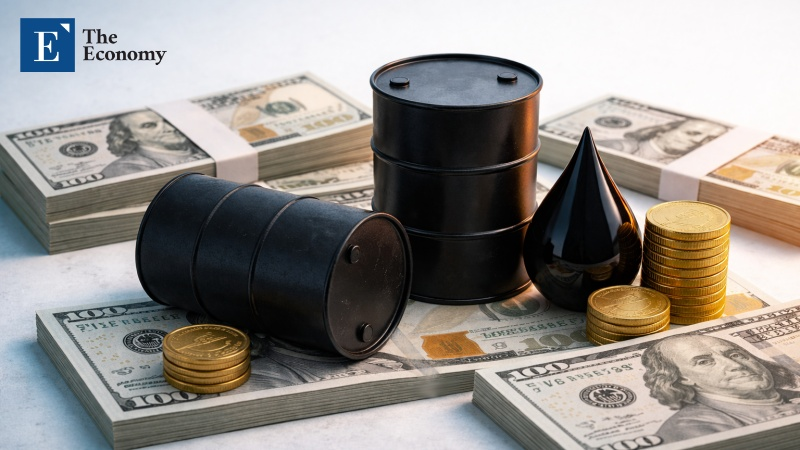
As global oil prices have climbed above $100 per barrel in the wake of the Middle East conflict, warnings have emerged that a move toward $125 could trigger a U.S. recession. The concern is that higher energy costs would weigh on growth and suppress consumption, transmitting pressure across the broader economy. Markets are increasingly focused on the link between rising oil prices and inflation, with concerns growing over heightened volatility, including the risk of further interest rate increases. At the same time, accumulated tariff burdens and lingering supply chain disruptions are beginning to amplify stress across multiple industries.
Pressure builds to revise corporate and policy plans
On the 24th, Business Insider reported, citing Moody’s Analytics Chief Economist Mark Zandi, that “if global oil prices reach $125 per barrel, it could serve as a trigger for a U.S. recession.” In a post on X the same day, Zandi referenced results from Moody’s global macroeconomic model simulations, noting that “given the elevated tensions between the United States and Iran, such price levels are not an unrealistic scenario.” This has led to interpretations that corporate and policy plans—originally based on assumptions of $50–$60 per barrel at the start of the year—have entered a phase where revisions are increasingly unavoidable.
Revisions to oil price forecasts are already feeding directly into macroeconomic indicators. This month, Moody’s raised its oil price outlook for the year by $15 compared with February, prior to the Iran conflict. This adjustment alone reduced the U.S. real GDP growth forecast by 0.2 percentage points. Moody’s also warned that if the baseline oil price were increased by at least another $10 in its April outlook, growth could decline by an additional 0.15 percentage points. Taken together, the cumulative effect of these revisions could push downward pressure on growth to as much as 0.35 percentage points compared with pre-conflict expectations.
The impact of rising oil prices has been amplified by supply-side disruptions. With oil shipments through the Strait of Hormuz effectively halted due to U.S.-Iran tensions, global oil prices have surged by roughly 40% in March alone. Brent crude climbed above $119 per barrel, reaching a four-year high, while production cuts among major oil-producing nations have further intensified supply concerns. On the previous day, West Texas Intermediate (WTI) for April delivery settled at $98.71 per barrel on the New York Mercantile Exchange, up 3.11% from the prior session, while Brent crude fluctuated around the $100 level.
Markets are closely watching how higher oil prices transmit across the broader economy. Moody’s estimates that for every $10 increase in oil prices, U.S. households could face up to $450 in additional annual expenses. This burden feeds into a downward cycle of weaker consumption, declining corporate revenues, and reduced employment. Zandi noted that “even if the United States produces oil at levels comparable to its own consumption, rising oil prices hit consumers faster and more severely,” adding that “consumer spending is likely to freeze more quickly than investment by oil producers can ramp up in response to higher prices.”
The paradox of rising oil prices
While higher oil prices are contributing to economic slowdown, signs are emerging that the slowdown itself may begin to restrain further price increases. As rising costs are directly reflected in consumption and investment, demand contracts, weakening the momentum that supports price increases. The longer high oil prices persist, the more they reinforce conditions that limit further gains. Following a U.S. strike on Iran’s Kharg Island last week and Iran’s retaliatory attack on the UAE’s oil facilities in Fujairah, supply uncertainty has intensified. If this is combined with weakening demand, market functionality is likely to deteriorate further.
Preliminary data from the U.S. Bureau of Economic Analysis showed that fourth-quarter GDP growth last year came in at 0.7%, roughly half the previously estimated 1.4%. This suggests that economic slowdown was already underway before the recent surge in oil prices, with rising energy costs now adding further strain. Financial markets are increasingly concerned that inflationary pressures will drive interest rates higher. Since the onset of the Middle East conflict, the yield on 10-year U.S. Treasury bonds has climbed to 4.38%, rising 0.44 percentage points in three weeks, while the more policy-sensitive 2-year yield has increased by 0.5 percentage points over the same period, entering the 3.9% range.
Expectations for monetary policy have also shifted sharply. On the 23rd, the CME FedWatch tool indicated a 31% probability that the Federal Reserve will raise its benchmark rate by at least 0.25 percentage points by October. The Bank of England has likewise maintained its tightening stance, withdrawing prior guidance toward rate cuts at its latest policy meeting, a move interpreted by markets as a signal of liquidity tightening. The result is a feedback loop in which rising oil prices lead to higher inflation, prompting rate increases, slowing growth, reducing demand, and ultimately exerting downward pressure on oil prices.
However, interpretations of these dynamics remain divided. Ed Yardeni of Yardeni Research argued that “the U.S. economy now requires significantly less energy per unit of GDP than it did before the 2000s,” suggesting that the impact of rising oil prices may be more limited than in the past. In contrast, Jeffrey Roach of LPL Financial warned that “inflation is likely to rise again, delaying the Federal Reserve’s rate-cut cycle,” adding that “if high oil prices persist, the trajectory of monetary policy itself could shift.”
Risk of losing key economic support
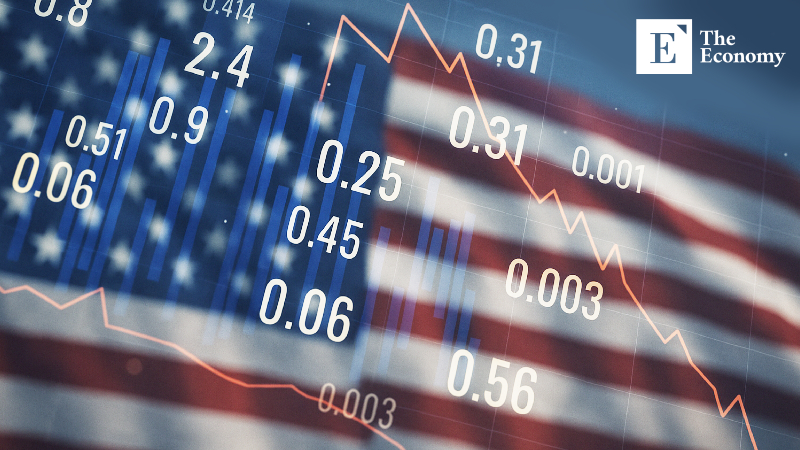
The growing pessimism is rooted in the cumulative impact of tariffs already weighing on the U.S. economy. Even before the Middle East conflict and the surge in oil prices, growth had been slowing, with tariff burdens feeding into corporate costs and consumer prices, weakening economic resilience. Moody’s economic indicator model estimated in February—prior to the escalation with Iran—that the probability of a U.S. recession within the next 12 months stood at 49%. Moody’s noted that “since late last year, nearly all economic indicators have weakened alongside a softening labor market.” The current rise in oil prices is thus an additional shock layered onto an already fragile economy.
Despite these pressures, the U.S. economy has been supported in part by increased investment in artificial intelligence. Surging demand for data centers and semiconductors has sustained growth in related industries, providing a buffer in terms of both investment and employment. However, supply chain disruptions following the conflict have begun to undermine this support. Constraints on the supply of energy and raw materials essential for semiconductor production have put pressure on manufacturing. For example, the price of bromine, a key material used in semiconductor wafer etching processes, rose by 12.28% within a week of the outbreak of the conflict.
The World Trade Organization (WTO) has also warned that a prolonged U.S.-Iran conflict could derail the AI-driven investment boom and contribute to economic slowdown. Speaking at a briefing in Geneva on the “2026 World Trade Outlook Report” on the 19th, WTO Chief Economist Robert Staiger said, “if energy prices remain elevated throughout the year, they will weigh on the AI boom,” adding that “AI-related goods accounted for roughly 70% of total investment growth in North America during the first three quarters of last year, meaning that any contraction in this sector would have ripple effects across the global economy.”
Market expectations are also trending downward. In a Wall Street Journal survey conducted earlier this month, 32% of U.S. economists said they expect a recession within the next 12 months. When asked what oil price level would push recession probability above 50%, responses ranged from $90 to $200 per barrel, with an average of $138. Meanwhile, the year-end forecast for real GDP growth was revised down to 2.1% from 2.2% in January, while the Consumer Price Index (CPI) forecast was raised to a 2.9% increase from a prior estimate of 2.6%.
- Previous Rise of “Cognitive Protection Assistants” Targets Side Effects of AI Dependence, Highlighting Need for Thinking Processes Over Results
- Next As the United States raises tariff barriers, the EU is diversifying its trade partners, signaling the opening salvo of a reshaping of the global trade order
Similar Post