As the United States raises tariff barriers, the EU is diversifying its trade partners, signaling the opening salvo of a reshaping of the global trade order

Anne-Marie Nicholson is a fearless reporter covering international markets and global economic shifts. With a background in international relations, she provides a nuanced perspective on trade policies, foreign investments, and macroeconomic developments. Quick-witted and always on the move, she delivers hard-hitting stories that connect the dots in an ever-changing global economy.
Authored On
Modified
Amid U.S.-China tensions, the bloc seeks out new economic partners
FTA concluded with Australia following Indonesia, South America and India
An EU-centered trade network takes shape on the basis of multilateral accords
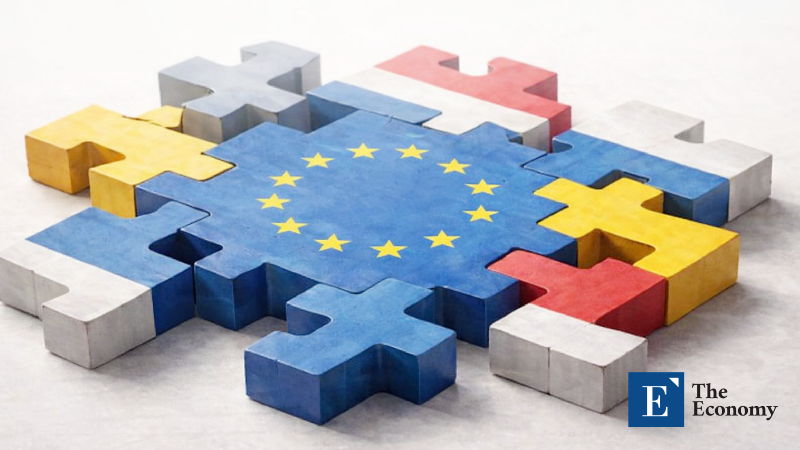
The European Union and Australia have abruptly concluded a free trade agreement after eight years of protracted wrangling, foreshadowing a seismic shift in the global trade landscape. The deal marks the latest in a سلسلة of breakthroughs following agreements with Southeast Asia, South America and India, reflecting the EU’s strategic effort to ease supply-chain instability stemming from U.S.-China tensions. At a moment when U.S. tariff barriers under the banner of protectionism are hardening, the EU is moving to expand its open trade footholds and reinforce economic cohesion.
Conclusion of the EU-Australia FTA, elimination of tariffs on 99% of goods
According to major foreign media outlets including the Associated Press on the 24th local time, European Commission President Ursula von der Leyen and Australian Prime Minister Anthony Albanese formally signed the final FTA agreement at Australia’s Parliament House in Canberra that day. It was a breakthrough achieved eight years after the first negotiations began in 2018. The two sides had previously suspended talks entirely in October 2023 after failing to bridge differences over expanding Australian beef export volumes and recognizing the geographical indication of the Italian sparkling wine Prosecco. As external trade pressures intensified, however, they returned to the negotiating table last year and found common ground in less than a year.
Under the agreement, Australia will immediately abolish tariffs imposed on 98% of goods exported to the EU. Wine, seafood and processed horticultural products are cited among the principal beneficiaries. The EU, for its part, agreed to create an import quota for 30,600 tons of Australian red meat annually and allow 55% of that volume to enter duty-free. In return, Australia will no longer be permitted to use the name “Prosecco” for sparkling wine products intended for export beginning 10 years after the agreement takes effect.
Tariff barriers on automobiles will also be substantially lowered. Australia raised the luxury-car-tax threshold on European electric vehicles to about $84,000, allowing most European-made EVs to qualify for tax exemption. The EU, meanwhile, has secured a more stable supply chain for critical raw materials abundant in Australia, including lithium and tungsten, laying the groundwork for reducing dependence on China and strengthening competitiveness in advanced industries. In services, the two sides agreed to expand EU companies’ access to Australia’s telecommunications and financial markets.
Alongside economic cooperation, the security alliance will also be materially strengthened. The two sides agreed separately on a security and defense partnership and pledged to jointly advance cooperation in the defense industry, maritime security, cybersecurity and counterterrorism. They also reaffirmed their unwavering support for Ukraine in its confrontation with Russia. In addition, they agreed to begin negotiations on Australia’s participation as an associate country in Horizon Europe, the EU’s advanced research funding program. “The geographical distance between the EU and Australia is great, but our view of the world has grown closer,” von der Leyen said, underscoring the cohesion of the values shared by both sides.
Acceleration of the EU’s Trade-Network Realignment
Behind the rapid convergence between the EU and Australia lies a transformed global trade environment. Since last year, Donald Trump’s second administration has unilaterally imposed tariffs on countries around the world, undermining the globalization and free-trade order built since World War II. For now, the United States alone is attempting to break from the free-trade system, while other countries, though engaging in trade retaliation, have not broadly moved to impose tariffs on one another, meaning the overall commitment to free trade remains intact.
At present, the EU is widely viewed as the only actor capable of assuming the role of guardian of the globalized free-trade order in America’s place. China has little room to exercise leadership given its history of state subsidies and technology misappropriation, while Japan’s influence remains constrained by the scale of its economy. The number of trade agreements already concluded between the EU and its trading partners now exceeds 40, with additional accords still being pursued. Over the past year, new trade agreements with major economic blocs have been concluded in succession, opening the way not only to tighter economic cooperation but also to broader partnerships. The agreement with Indonesia was politically concluded in September last year, and in January this year the EU signed an accord with the four Mercosur nations of Argentina, Brazil, Paraguay and Uruguay.
The Mercosur agreement had been under discussion for decades and was concluded despite strong opposition from some countries, including France, which had raised concerns about the impact on farmers. The European Commission decided to provisionally apply the agreement from May 1, on the condition that the four Mercosur countries complete their domestic ratification procedures. Uruguay and Argentina have already ratified it. Although the European Parliament has referred the agreement to the European Court of Justice, questioning its legal soundness in the agricultural sector, provisional application remains legally possible.
Revival of the 19th-Century Zollverein Model
The same holds true for the agreement with India. After nearly two decades of discussion, the two sides reached a final agreement at the end of January this year. Since the early 21st century, India has been one of the world’s more protectionist economies. Having surpassed China as the world’s most populous country, India long maintained a cautious stance toward free trade in order to shield its vast domestic market. For the EU, however, the Indian market, marked by economies of scale and exceptionally rapid growth, was a major target. The EU accordingly launched formal FTA discussions with India in 2007, but the gap in positions proved difficult to narrow.
The long-stalled negotiations resumed in 2022 and have shown dramatic progress over the past six months. As with the Mercosur agreement, geopolitical considerations served as the decisive catalyst for a deal. Under the new accord, India will apply tariff reductions to EU products at “a level never before offered to any other trading partner.” That means tariffs on 96.6% of the EU’s exports to India will either be eliminated or reduced. The EU expects its exports to India to more than double by 2032.
In more granular terms, India’s tariffs on European automobiles, currently at 110%, will be reduced in stages to 10%, subject to an annual quota of 250,000 vehicles. Tariffs on European machinery, at up to 44%, chemicals, at 22%, and pharmaceuticals, at 11%, will largely be eliminated. Tariffs on steel and steel products, which reach as high as 22%, will also be phased out over 10 years. Tariffs exceeding 36% on European food products, which the EU had criticized as “effectively trade-prohibitive,” will also be abolished. Tariffs on European wine will fall from 150% to 75%, before ultimately declining to as low as 20%. The 45% tariff on European olive oil will be reduced to 0% over five years, while tariffs of as much as 50% on processed agricultural goods such as bread and confectionery will also disappear.
The EU is currently pushing beyond Australia and India to pursue agreements with Thailand, Malaysia and the Philippines. A revised agreement with Mexico, which had also drifted for years, is likewise set for a signing ceremony at the end of May this year. With the United Kingdom, the EU is reviewing its existing agreement and discussing ways to ease some non-tariff barriers in sanitary and phytosanitary measures. It has also recently reached an accord with Switzerland aimed at facilitating trade.
The EU’s push to build a broad-based trade network amounts to a modern adaptation of the Zollverein, the German customs union led by Prussia in the 19th century. Just as the German confederation, once fragmented into hundreds of principalities, achieved economic unification by abolishing internal tariffs and imposing a common external tariff, the EU is now forging a vast economic community by strengthening ties with countries beyond its borders. This movement serves as an effective defensive mechanism, consolidating the fragmented responses of individual countries into a single front capable of countering the great powers’ nation-first trade strategies.
Anne-Marie Nicholson is a fearless reporter covering international markets and global economic shifts. With a background in international relations, she provides a nuanced perspective on trade policies, foreign investments, and macroeconomic developments. Quick-witted and always on the move, she delivers hard-hitting stories that connect the dots in an ever-changing global economy.
Similar Post