Australia Faces Fuel Supply Emergency Amid Middle East Risk, Government Rolls Out Stopgap Measures as Industrial Strain Intensifies

Oliver Griffin is a policy and tech reporter at The Economy, focusing on the intersection of artificial intelligence, government regulation, and macroeconomic strategy. Based in Dublin, Oliver has reported extensively on European Union policy shifts and their ripple effects across global markets. Prior to joining The Economy, he covered technology policy for an international think tank, producing research cited by major institutions, including the OECD and IMF. Oliver studied political economy at Trinity College Dublin and later completed a master’s in data journalism at Columbia University. His reporting blends field interviews with rigorous statistical analysis, offering readers a nuanced understanding of how policy decisions shape industries and everyday lives. Beyond his newsroom work, Oliver contributes op-eds on ethics in AI and has been a guest commentator on BBC World and CNBC Europe.
Authored On
Modified
“No Way to Import” — Australia’s Energy Supply Chain Nears Breakdown
Persistent Fuel Shortages Trigger Disruptions Across Local Industries
Government Moves to Secure Energy Security and Cushion Market Shock
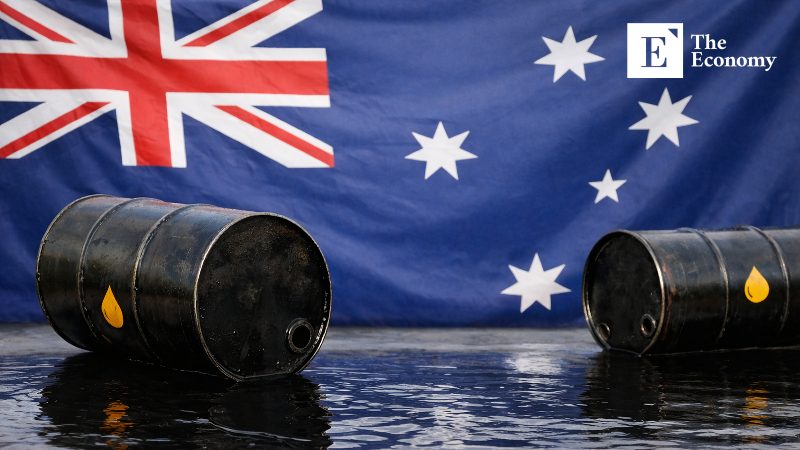
Australia’s fuel shortage crisis is intensifying by the day. As South Korea, a key fuel supplier, has slowed petroleum product exports due to the Middle East conflict, efforts to secure alternative sources have also stalled, sending tremors across the entire energy supply chain. With domestic industries reeling under unprecedented disruption, the Australian government is scrambling to mitigate the crisis by releasing high-sulfur fuel and easing environmental regulations on diesel.
Fuel Supply Crunch Weighs on Australia
According to a Bloomberg report on the 25th (local time), Australia’s Minister for Climate Change and Energy Chris Bowen told parliament the previous day that fuel stockouts had occurred at at least 600 gas stations. These shortages affected roughly 10% of all stations, concentrated in densely populated regions such as New South Wales (NSW) and Victoria. Australia’s current diesel reserves are estimated to cover only 30 days, while gasoline supplies are projected to last just 38 days.
The root cause of this instability lies in the inherent vulnerability of Australia’s energy supply chain. The country is heavily dependent on imports, sourcing more than two-thirds of its gasoline, diesel, and jet fuel from overseas. Compounding the issue, South Korea—Australia’s largest fuel supplier—imposed an export cap on petroleum products on the 13th, limiting shipments to last year’s average levels. At the same time, following U.S. and Israeli airstrikes on Iran, the Strait of Hormuz—through which 20% of global oil shipments pass—has effectively been blocked, severely constraining alternative supply routes.
Amid these constraints, domestic fuel demand has surged sharply. Rowan Rie, CEO of the Australasian Convenience and Petroleum Marketers Association (ACAPMA), told Bloomberg that “fuel demand has doubled since the war,” attributing the spike to preemptive buying driven by fears of price increases. The Australian government, however, maintains that the current shortage reflects a temporary imbalance rather than a systemic supply crisis. Minister Bowen stated that even when inventories run low, “stocks are typically replenished within 24 to 48 hours.”
Industrial Disruption Spreads
Skepticism toward the government’s assessment continues to grow within Australia, as tangible disruptions ripple across industries. The mining sector, a cornerstone of Australia’s exports, has been particularly vulnerable. Warren Pearce, CEO of the Association of Mining and Exploration Companies (AMEC), revealed that some junior mining firms have fuel reserves sufficient for only about five days of operations, warning that any delay in supply could trigger immediate production halts. Tania Constable, CEO of the Minerals Council of Australia (MCA), also noted that smaller mining and exploration firms are facing severe pressure both in securing fuel and managing costs. BlueCap Mining, an Australian mining and exploration company, has already scaled back operations and sent employees home due to fuel shortages.
Farmers, preparing for the autumn planting season, are also grappling with fuel and fertilizer shortages. The Middle East—now engulfed in military conflict—is home to major nitrogen fertilizer producers such as Qatar, Iran, and Saudi Arabia. Currently, approximately 1.1 million tons of fertilizer cargo remain stranded near the Gulf, unable to depart. Supply disruptions have driven nitrogen fertilizer prices sharply higher, pushing operational costs for farmers in Australia and elsewhere to unsustainable levels. Hamish McIntyre, president of the National Farmers’ Federation (NFF), warned that “nothing in agriculture can function without fuel and fertilizer,” adding that reduced planting could lead to lower crop yields and increased volatility in food prices.
Australia’s logistics sector is also sounding alarms over rising food prices. Elizabeth Jackson, a supply chain and agri-food logistics expert, stated on an SBS Australia podcast that “it is only a matter of time before food prices rise,” warning that consumers could begin to feel the impact within weeks. Given the sector’s heavy reliance on diesel, any increase in fuel costs inevitably translates into higher transportation expenses, which are ultimately passed on to consumers. Jackson explained that “all products from Australian farms are transported via diesel-powered vehicles,” encompassing everything from fresh, unprocessed fruits and vegetables to processed export goods. She added that diesel dependency is equally high in mechanized farming processes, including the operation of tractors.
Government Eases Restrictions to Contain Crisis
Australia’s aviation industry is also under mounting pressure. Jet fuel, used in aircraft, is subject to stricter quality standards and has a higher risk of degradation compared to other refined products, making long-term storage difficult. It is widely regarded as one of the most supply-sensitive fuels in times of disruption. In response to the Middle East conflict, countries worldwide have begun restricting or banning jet fuel exports to prioritize domestic demand. For Australia, which imports a significant portion of its jet fuel, procurement has become increasingly challenging. As of early this month, the country’s jet fuel reserves stood at just 32 days. Industry sources warn that if current conditions persist, normal flight operations could face disruption as early as next month.
As fuel shortages intensify across multiple sectors, the Australian government has taken decisive action by temporarily releasing high-sulfur fuel—previously restricted in the market—to safeguard energy security. Announced on the 13th, the measure will remain in effect for 60 days. Authorities estimate that the release will add approximately 100 million liters of fuel supply per month, equivalent to roughly two days of nationwide consumption.
On the 24th, the government also announced plans to lower the diesel flashpoint standard from 61.5°C to 60.5°C for the next six months, a move aimed at facilitating rapid imports of diesel produced in regions such as the United States, Canada, and Europe, where standards are less stringent. On the 25th, legislation was introduced to increase the maximum fines for unfair trade practices—including price collusion and false advertising—by refiners and distributors from approximately $33 million to approximately $66 million.
Oliver Griffin is a policy and tech reporter at The Economy, focusing on the intersection of artificial intelligence, government regulation, and macroeconomic strategy. Based in Dublin, Oliver has reported extensively on European Union policy shifts and their ripple effects across global markets. Prior to joining The Economy, he covered technology policy for an international think tank, producing research cited by major institutions, including the OECD and IMF. Oliver studied political economy at Trinity College Dublin and later completed a master’s in data journalism at Columbia University. His reporting blends field interviews with rigorous statistical analysis, offering readers a nuanced understanding of how policy decisions shape industries and everyday lives. Beyond his newsroom work, Oliver contributes op-eds on ethics in AI and has been a guest commentator on BBC World and CNBC Europe.
Similar Post
















