France Shifts From “Strategic Autonomy” to Considering South Korea’s Chunmoo Amid Budget Strain and Capability Gaps

Stefan Schneider brings a dynamic energy to The Economy’s tech desk. With a background in data science, he covers AI, blockchain, and emerging technologies with a skeptical yet open mind. His investigative pieces expose the reality behind tech hype, making him a must-read for business leaders navigating the digital landscape.
Authored On
Modified
Exposure of gaps in France’s domestic artillery systems
Supply instability and fiscal pressure weaken production capacity
European defense realignment gathers pace amid NATO fractures
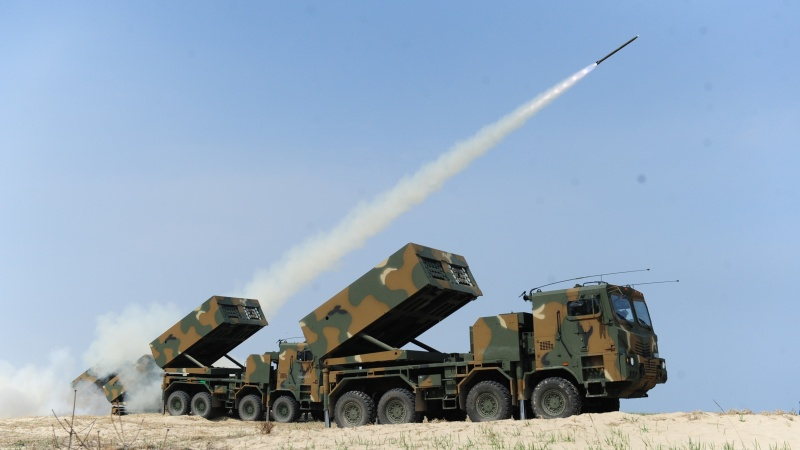
France is reviewing the acquisition of South Korea’s K239 Chunmoo multiple rocket launcher to fill an impending gap left by the retirement of its domestic systems, signaling a shift from its longstanding reluctance to procure foreign weapons. As the Russia-Ukraine war has underscored the importance of long-range precision strike capabilities, Chunmoo has emerged as an immediately deployable alternative. Industry observers cite weakening cooperation within Europe and NATO, along with setbacks in naval defense contracts, as factors behind France’s changing stance toward South Korea’s defense sector.
Growing alarm over lack of precision strike capability
According to defense outlet Defense24, French military authorities have recently begun reviewing the introduction of South Korea’s K239 Chunmoo system. France has long emphasized strategic autonomy and avoided foreign arms procurement, but the Ukraine war has heightened awareness of its shortfall in long-range precision strike capabilities. The French Institute of International Relations (IFRI) also noted in a recent report that Chunmoo represents a more practical option for France’s defense strategy than U.S.-made HIMARS or Israel’s PULS.
A central driver of this reassessment is a looming capability gap caused by timing mismatches. France’s current M270 multiple launch rocket systems are scheduled for full retirement by 2027, while a domestically developed 150-kilometer-class missile is not expected to be operational until after 2030. This creates a gap of at least three years in long-range firepower, making the procurement of ready-to-deploy systems an unavoidable requirement. Limitations in production capacity and delivery timelines among existing European systems have further narrowed available options.
Performance and operational conditions have also been weighed. HIMARS has been criticized for high costs and long delivery wait times, while reliance on U.S. ammunition systems raises concerns over operational autonomy. By contrast, Chunmoo’s open-architecture design allows integration of various munitions, including France’s domestically developed missiles in the future. Leo Peria-Peigné, an IFRI researcher, said that “Chunmoo is currently the most modern multiple rocket launcher and offers France an opportunity to join a user community that could integrate domestic munitions and even enable re-exports.”
The system’s growing adoption across Europe has also influenced France’s calculations. Poland has already deployed more than 150 units of a localized Chunmoo variant, known as Homar-K. France aims to secure 13 new systems by 2030 and a total of 26 by 2035, and is also considering leasing part of Poland’s inventory to bridge the interim gap. At the same time, discussions have begun on forming joint artillery units based on cooperation with Poland, indicating that France’s Chunmoo review could extend into a broader reconfiguration of European artillery systems.
Shift from “competitor” to “candidate for adoption”
France’s increasingly proactive posture marks a sharp contrast with its previous stance of viewing South Korea as a competitive supplier to be checked. In April 2024, President Emmanuel Macron, speaking at Sorbonne University before European Union officials, stated that “since the outbreak of the Ukraine war, we have responded by purchasing American and South Korean weapons,” and called for greater reliance on European-made systems. It was unusual for a head of state to explicitly criticize dependence on foreign arms from specific countries, underscoring how South Korea’s growing presence in the European defense market was perceived as a challenge.
Market developments had already pointed to structural shifts. South Korea’s defense industry rapidly expanded its foothold in Europe following a $7 billion arms export deal with Poland in 2022. Countries including Norway, Finland, and Estonia adopted the K9 self-propelled howitzer, while the Czech Republic and Romania selected South Korean air defense and anti-tank systems. These countries valued South Korean equipment for offering competitive pricing, strong performance comparable to U.S. systems, and, crucially, shorter delivery timelines.
France’s efforts to counter South Korea extended into individual projects. In the KF-21 fighter jet program jointly developed by South Korea and Indonesia, Indonesia delayed more than $650 million in contributions and halted a separate $850 million submarine deal. It subsequently opted for 42 French Rafale fighter jets, 12 used Mirage aircraft, and two Scorpène submarines. The contracts included French financial support, highlighting how procurement decisions were shaped by financing terms and diplomatic influence.
France’s situation has since shifted markedly. Fiscal deterioration has placed its defense industry under strain, forcing a reassessment toward cost-effective foreign alternatives. According to South Korea’s National Assembly Research Service, France replaced five prime ministers between 2024 and the following year, undermining policy continuity, while government bond yields rose to around 4.5% and fiscal deficits reached 118.4% of GDP at the end of last year. Political and fiscal instability have simultaneously weakened key European Union initiatives led by France, including European rearmament, joint weapons development (PESCO), ammunition production (ASAP), and joint procurement (SAFE).
Rising opportunity for external suppliers
Strained relations with Germany, a core partner within both the EU and NATO, have further eroded France’s position. The Future Combat Air System (FCAS) program jointly pursued by France, Germany, and Spain—initially planned at a scale of $115 billion—has effectively stalled amid disputes over leadership and design authority. A source familiar with the matter said that “there is no trust left between the two countries,” while domestic calls for independent fighter development have grown. The two countries have since considered scaling cooperation back to a “combat cloud” framework instead of full aircraft development.
At the same time, shifts within NATO have accelerated. The United States formed the AUKUS alliance with the United Kingdom and Australia, leading to the abrupt cancellation of France’s $51 billion submarine contract with Australia. The loss dealt a major blow to France’s naval defense sector, stripping it of a key order base. As a U.S.-centric defense order took shape, France lost strategic ground and saw its influence within NATO diminish. As traditional European defense structures weaken, reliance on external suppliers has become a more realistic option.
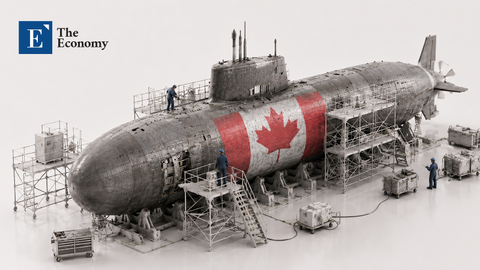
France has attempted to regain momentum by competing for Canada’s next submarine patrol project and Poland’s Orka submarine program, but has faced challenging conditions. South Korea’s Dosan Ahn Changho-class submarine, featuring lithium-ion battery-based extended endurance, vertical launch systems, and submarine-launched ballistic missile capabilities, has been seen as surpassing conventional diesel submarine limitations. By contrast, French models have been criticized for relying on older designs and carrying higher costs relative to performance. Persistent issues of delivery delays and cost overruns among European defense firms have further undermined confidence.
In this context, France’s challenges reflect broader fractures within the European defense ecosystem. Weakening cooperation with Germany, realignments highlighted by AUKUS, and repeated failures in naval contract bids have all combined to erode France’s strategic autonomy. As the traditional model of relying on European production and development becomes less viable, demand for readily available external suppliers is rising. This shift explains why France can no longer view South Korea—whose capabilities have been validated through production bases and operational track records in Europe—solely as a competitor.
Stefan Schneider brings a dynamic energy to The Economy’s tech desk. With a background in data science, he covers AI, blockchain, and emerging technologies with a skeptical yet open mind. His investigative pieces expose the reality behind tech hype, making him a must-read for business leaders navigating the digital landscape.
Similar Post