“Practicality vs. Regulation” Meta-Ray-Ban Smart Glasses Face Design Overhaul Shock Ahead of European Entry

Niamh O’Sullivan is an Irish editor at The Economy, covering global policy and institutional reform. She studied sociology and European studies at Trinity College Dublin, and brings experience in translating academic and policy content for wider audiences. Her editorial work supports multilingual accessibility and contextual reporting.
Authored On
Modified
Launch Timeline Delayed by Battery and AI Regulatory Variables
Need to Reconsider Design Direction Toward Modular Structure
Contrasts With Rising Sales and Mainstream Adoption in North America
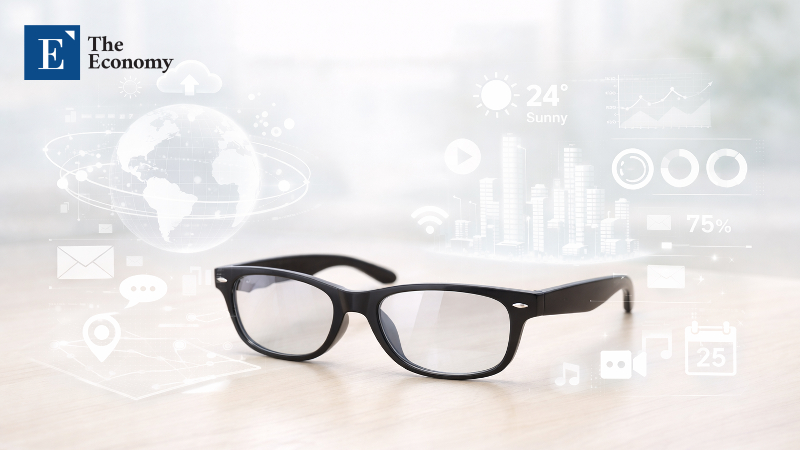
Meta and Ray-Ban’s jointly developed display smart glasses have hit a roadblock ahead of their European launch. The sales timeline has become uncertain as the integrated battery structure and real-time artificial intelligence (AI) features are expected to fall short of regulatory requirements. A product that achieved high technical completeness has instead run into regulatory constraints, forcing a comprehensive reassessment of its design architecture. Meanwhile, demand in North America is expanding rapidly, highlighting how the same product is delivering sharply different outcomes depending on the region.
Rising Expectations Meet Regulatory Barriers
According to Bloomberg, the “Ray-Ban Display” smart glasses co-developed by Meta and Ray-Ban face an indefinite delay in their European release after failing to meet legal standards related to their integrated battery structure and AI-based object recognition capabilities. Bloomberg noted that competing products such as Alibaba’s “Quark AI S1” and “Inmo Go 3” have already adopted replaceable battery designs, adding that “unless Meta is willing to sacrifice its sleek design and lightweight wearability, redesigning the product for the European market will not be easy.”
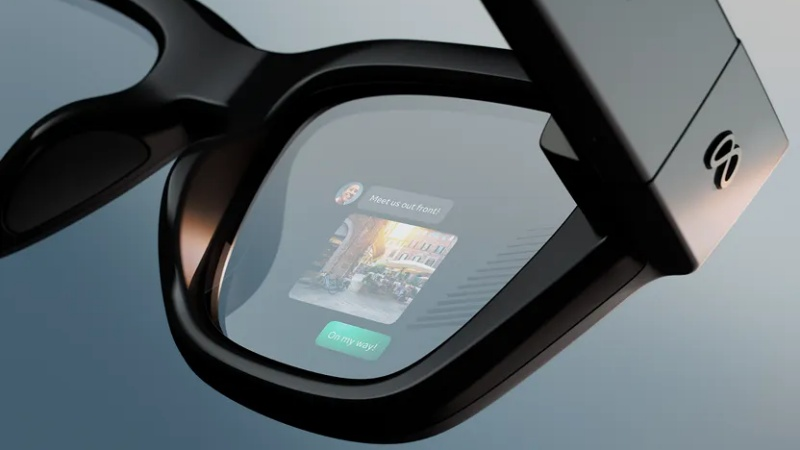
Meta first unveiled the consumer-grade “Ray-Ban Display” smart glasses at IFA 2025, Europe’s largest consumer electronics exhibition, in September last year. The device, which overlays a semi-transparent display onto one lens, drew attention for its ability to present messages, translations, navigation, and other information directly within the user’s field of vision. Controls are managed through a wrist-worn “neural band,” which uses electromyography (EMG) technology to interpret finger movements for functions such as music playback and volume adjustment. The battery offers up to six hours of use, with the charging case extending total usage beyond 30 hours.
However, such technological promise is unlikely to overcome Europe’s regulatory barriers. The European Union has already signaled enforcement of its “Sustainable Batteries Regulation,” which requires all portable devices to be designed so that consumers can easily remove and replace batteries. The law, passed in 2023, includes a four-year grace period to allow manufacturers to adjust their production lines and is set to take effect in 2027. Meta has requested exemptions for wearable devices, including smart glasses, but the outcome remains uncertain.
AI regulation presents an additional hurdle. The EU AI Act, set to take effect in August, mandates risk-based assessments for AI functions involving biometric data processing and real-time monitoring. Core features embedded in the Ray-Ban Display—such as computer vision, real-time subtitles and translation, and visual AI assistants—fall within the scope of this regulation. Privacy concerns further complicate the European rollout, as regulatory reviews based on the General Data Protection Regulation (GDPR) are underway across the region. Italy’s data protection authority, Garante, has already issued formal inquiries to Meta regarding its data collection practices.
Design Trade-Off: Integrated vs. Replaceable
At the center of the battery issue lies whether a design optimized around an integrated structure can coexist with regulatory requirements. The EU’s Sustainable Batteries Regulation allows exceptions for medical devices and underwater equipment but does not extend them to wearable devices such as smart glasses or earbuds. The Meta Ray-Ban Display incorporates a 960mWh battery fixed inside the frame using high-performance adhesives, integrated alongside chips, display components, and cameras. This design does not allow user removal, meaning compliance would require a fundamental redesign of the product.
Such a redesign directly affects performance. Adopting a removable battery would likely increase housing size and shift weight distribution, potentially degrading comfort. It could also introduce energy efficiency losses and thermal management challenges. Given that smart glasses rely on densely packed components within a compact structure, heat control is critical, and a modular design complicates that requirement. These constraints are expected to impact overall product competitiveness, as achieving both lightweight design and replaceable battery functionality remains a technically demanding challenge.
Market reactions reflect this tension. A Spanish user on Reddit wrote, “The Meta Ray-Ban Display is perfect for me in terms of design, overall concept, and even the monocular head-up display (HUD),” adding disappointment that it would not be available in Europe this year. Comments on the post referenced alternatives such as Alibaba’s Inmo Air3, TCL’s RayNeo X3 Pro, and Even Realities. Some users suggested that Meta could bypass regulations by selectively launching in specific countries, but given the EU’s unified regulatory framework and integrated supply and distribution systems, such scenarios appear unlikely.
Diverging Paths Between the U.S. and Europe
Meanwhile, the smart glasses market in North America has entered a phase of accelerated growth. According to HSBC Global Research, the number of smart glasses users is projected to increase from 15 million last year to 289 million by 2035, representing more than an 18-fold expansion over a decade. The market size is also expected to reach $200 billion by 2040. In the U.S. market in particular, sales have surged since the second half of last year, with demand beginning to outpace supply, reflecting a structure in which relatively low regulatory barriers are translating early demand into market growth.
Meta sits at the center of this trend. Data from Counterpoint Research shows that Meta held a 73% share of the global smart glasses market in the first half of last year. Despite a $799 price tag, the Ray-Ban Display recorded more than triple the sales of its predecessor, even triggering supply shortages. In response, Meta is pushing to increase its production target to over 20 million units. TrendForce also projects that global smart glasses shipments will reach 950,000 units this year, driven in part by Meta’s expanded component orders.
Competition is also intensifying. Apple is developing smart glasses under the codename “N50,” targeting a 2027 release, with features expected to include speakers, microphones, high-resolution cameras, and AI-enabled lenses. Google plans to unveil smart glasses alongside its Android extended reality (XR) platform at its developer conference in May, supported by collaborations with Samsung Electronics, Gentle Monster, and Warby Parker to integrate hardware, design, and software. These aggressive moves by major players indicate that competition in the smart glasses market is expanding beyond functionality to encompass entire ecosystems.
Ultimately, North America is emerging as a market where both demand and supply are expanding simultaneously, while Europe faces constrained growth due to regulatory barriers and supply limitations. As the same product exhibits sharply different adoption trajectories across regions, the smart glasses market is beginning to show signs of entrenched regional divergence from an early stage. This dynamic raises the likelihood that future standards and ecosystem leadership will be shaped by specific regions. Meta has also stated that “unprecedented demand for the Ray-Ban Display has created supply constraints,” indicating that its immediate focus will remain on meeting North American demand.
Niamh O’Sullivan is an Irish editor at The Economy, covering global policy and institutional reform. She studied sociology and European studies at Trinity College Dublin, and brings experience in translating academic and policy content for wider audiences. Her editorial work supports multilingual accessibility and contextual reporting.
Similar Post