[U.S.-Iran War] If Imports Are Cut Off, Can Production Sustain It? Iran Deploys Its “Resistance Economy” Card

Niamh O’Sullivan is an Irish editor at The Economy, covering global policy and institutional reform. She studied sociology and European studies at Trinity College Dublin, and brings experience in translating academic and policy content for wider audiences. Her editorial work supports multilingual accessibility and contextual reporting.
Authored On
Modified
Activating a “survival economy strategy” in preparation for a prolonged war
Scenarios emerge for ground operations and strikes on energy hubs
Disruptions in resource supply ripple across entire industries
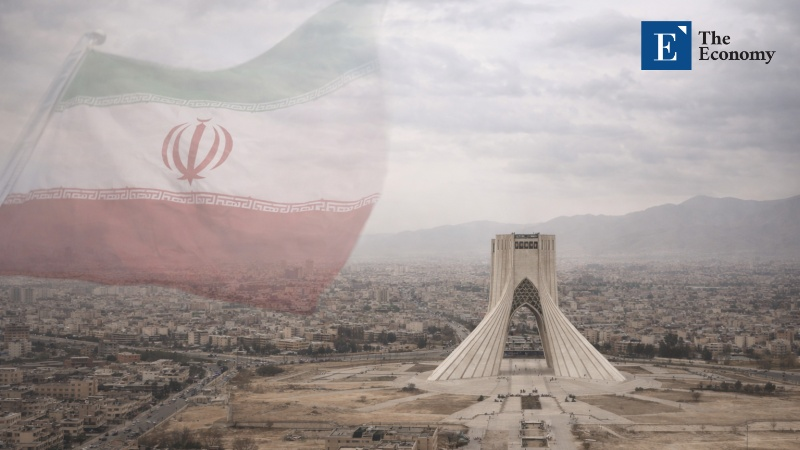
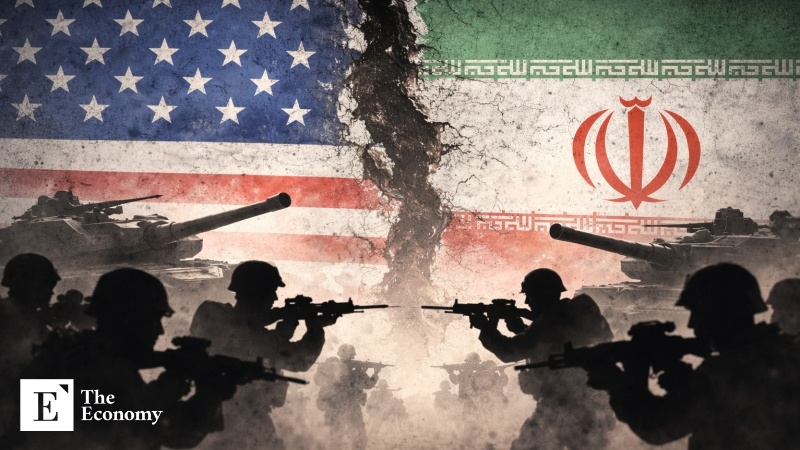
As the Middle East war enters its fourth week, Iran has shifted its national operating system toward a wartime footing. The country is replacing key imports—such as pharmaceuticals, auto parts, and home appliances—with domestic production, while securing food and machinery through barter arrangements using oil. Combined with the dispersion of power plants and a parallel economic structure, Iran is making an all-out effort to maintain supply chains even under airstrikes. As the United States escalates pressure by considering ground operations and strikes on energy infrastructure, the war’s impact is spreading across Middle Eastern countries and global supply chains.
Prioritizing stability in essential goods supply
According to the Financial Times, Iran has recently begun substituting domestic production for items expected to face import disruptions, including pharmaceuticals, auto parts, and home appliances. At the same time, it is dispersing power plants nationwide and engaging in oil-for-goods barter to absorb the shock of war. Over the past several decades, Iran has built an economic system designed to withstand external shocks based on repeated sanctions experience. In this conflict as well, it has turned to barter arrangements using oil to secure food and machinery while circumventing financial sanctions.
Specifically, Iran has adopted a strategy of distributing hundreds of power plants across the country to protect its electricity grid. The design aims to prevent a complete grid collapse even if individual facilities are precisely targeted. Meanwhile, religious foundations known as “bonyads” continue to operate separate economic activities outside the government budget, supplementing more than 30% of central government spending. These financial flows function independently of official fiscal channels and serve to ease fiscal pressure during wartime.
The manufacturing base forms another critical pillar of Iran’s war response. The country is estimated to produce more than 80% of key goods domestically, including pharmaceuticals, auto parts, and home appliances. Djavad Salehi-Isfahani, a professor at Virginia Tech, said, “Unlike neighboring Gulf states, Iran has maintained an industrial base dating back to the Pahlavi era,” adding that “it has the flexibility to switch to domestic production when imports are cut off.” This production structure helps sustain the supply of essential goods in the market even under airstrikes, preventing supply instability from escalating rapidly.
Since the war began on the 28th of last month, the United States and Israel have targeted not only Iran’s military facilities but also fuel storage sites, major gas complexes, financial institutions, and some steel plants. Despite this, Iranian authorities say supplies of essential goods such as food remain stable. At the same time, rising global oil prices have pushed Brent crude above $100 per barrel, increasing oil revenues and partially offsetting wartime costs. However, in advanced sectors such as semiconductors, precision equipment, and aviation components, where external dependence is high, supply disruptions remain a risk if logistics routes are affected.
U.S. expands military options
The United States is also gradually increasing military pressure on Iran with a prolonged conflict in mind. On the 28th, The Washington Post reported that “the U.S. military has begun examining, in the form of war games, scenarios involving the seizure of Kharg Island—Iran’s key oil export hub—and amphibious raids along the coast near the Strait of Hormuz.” The move is seen as preliminary planning to provide a range of military options to President Donald Trump. The fact that scenarios including ground operations are under consideration suggests an assumption that the conflict will not end quickly.
However, these military strategies are colliding with domestic political conditions in the United States. On the 28th, “No Kings” protests involving more than 8 million people took place across all 50 states. Protesters expressed opposition to both the expansion of war and authoritarian governance. Scenes of families of deployed Marines demanding that their sons be brought home highlighted the extent of social fatigue over the war. Even within conservative circles, divisions have begun to surface, as evidenced by visible generational differences at the Conservative Political Action Conference (CPAC) in Texas on the same day.
Concerns are also emerging over military sustainability. In the first 16 days of the war, U.S. forces used more than 11,000 rounds of munitions, at a cost of $26 billion. More than 850 Tomahawk missiles were fired over four weeks, exceeding annual production levels. If such consumption continues, there are concerns that forces could reach a “Winchester” state—effectively running out of ammunition—within a month. This could also affect military readiness in other regions, including the Taiwan Strait and Ukraine.
Even so, some in the United States maintain that the broader economic impact of the war will remain limited. Torsten Sløk, chief economist at Apollo Management, said, “Markets are overreacting to volatility expected to last around four to six weeks,” arguing that the Iran conflict will not significantly damage the U.S. economy. He noted that while consumer sentiment has softened somewhat, actual consumption remains resilient, with stable demand for air travel and hotels. This perspective helps explain why the United States continues to escalate military pressure on Iran despite strong criticism.
Oil and supply chain risks spread rapidly
In practice, the war’s effects are spreading more quickly in neighboring countries than in the primary belligerents. Goldman Sachs estimates that if the conflict continues through late April and the Strait of Hormuz is closed for about two months, GDP in Qatar and Kuwait could contract by 14% each—the steepest declines since the early 1990s Gulf War. Saudi Arabia and the United Arab Emirates are expected to see GDP reductions of 3% and 5%, respectively. Goldman Sachs stated that “for many Gulf countries, this war will leave a deeper impact than the COVID-19 pandemic,” adding that “it will take considerable time for market confidence to recover even after the war ends.”
Energy supply disruptions are also transmitting across industries. Qatar accounts for about 35% of global helium production capacity, and its helium production lines have been destroyed following attacks on the Ras Laffan LNG facility. In this regard, Air Liquide CEO François Jackow said, “If helium production in Qatar is halted for another four to eight weeks, supply shortages will intensify, potentially creating a serious problem that could constrain even advanced semiconductor manufacturing.” Helium is an essential gas in key semiconductor processes, and prolonged supply disruptions would inevitably lead to production setbacks.
With about 20% of global LNG supply disrupted, fertilizers are also affected. Nitrogen fertilizer prices have surged by more than 50% in a month. Concerns are growing that reduced corn production—due to its heavy reliance on nitrogen fertilizers—could drive up feed costs and, in turn, increase pressure on meat prices. In the aluminum market, prices in London rose 5.1% due to supply disruptions from the Middle East, even as energy shocks raise concerns about economic slowdown. As a result, cost pressures are spreading across industries heavily dependent on aluminum, including automotive parts and beverages.
The shock from high oil prices is amplifying pessimistic outlooks as it interacts with fiscal conditions worldwide. Global public debt had already exceeded $100 trillion during the COVID-19 pandemic. With interest rates remaining elevated compared to past crises, the outbreak of war is further intensifying inflation concerns. In response, the U.S. state of Georgia suspended its gasoline tax of 33 cents per gallon, while the United Kingdom announced support for household heating costs. In Asia, China, South Korea, and Thailand have restricted fuel exports, and New Zealand has outlined a plan to provide $120 per month to low- and middle-income households.
Niamh O’Sullivan is an Irish editor at The Economy, covering global policy and institutional reform. She studied sociology and European studies at Trinity College Dublin, and brings experience in translating academic and policy content for wider audiences. Her editorial work supports multilingual accessibility and contextual reporting.
Similar Post