“Windfall From the U.S.-Iran War” Saudi Arabia, Russia and Pakistan Reap a Paradoxical Boom, but Lasting Gains Remain Uncertain

Authored On
Modified
Saudi Arabia safeguards its crude export network by running its Red Sea pipeline at full capacity
Pakistan draws diverted global shipping into the Port of Karachi
Russia secures massive additional revenue from rising energy prices
As the closure of the Strait of Hormuz caused by the war with Iran drags on, neighboring countries are absorbing unexpected gains. Saudi Arabia has reinforced its grip on supply-chain leadership through rerouted exports via the Red Sea corridor, while Russia has secured additional profits on the back of a surge in crude prices and a broader easing trend in sanctions. Pakistan, too, is rapidly expanding its port role by absorbing transshipment demand amid the vacuum left by Gulf logistics hubs. The supply shock unleashed by the war is increasingly translating into a paradoxical windfall for select states.
Saudi Pipeline Bypassing Hormuz Runs at Full Capacity of 7 Million Barrels a Day
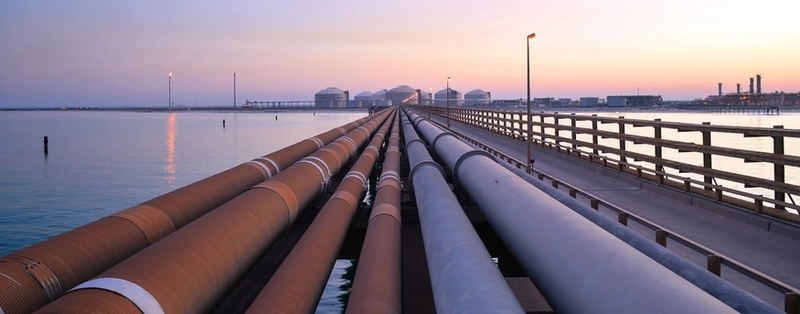
According to Bloomberg on March 29 local time, Saudi Arabia’s East-West pipeline is currently operating at its maximum transport capacity of 7 million barrels per day. The pipeline is a critical piece of infrastructure that allows crude to be shipped to the Red Sea port of Yanbu without passing through the Persian Gulf. Earlier this month, Saudi state oil company Aramco designated Yanbu as the loading point for some customers.
The move forms part of an emergency response introduced after U.S. and Israeli strikes on Iran on the 28th of last year effectively rendered the Strait of Hormuz incapable of functioning as a major export route. The vital maritime corridor, through which 20% of global crude oil and liquefied natural gas shipments pass, has in effect been paralyzed, and Iran’s parliament is even pushing ahead with a formal system to levy “transit fees” on vessels passing through the Strait of Hormuz. Since the outbreak of war, Iran has allowed only select vessels from friendly nations such as China and India to pass through the strait. Some ships are reported to have paid tolls of as much as $2 million. Iran is now seeking to institutionalize the arrangement.
Against that backdrop, crude exports via Yanbu are currently estimated at around 5 million barrels per day, while refined products are also being shipped at a rate of 700,000 to 900,000 barrels per day. The East-West pipeline stretches 1,200 kilometers from the Abqaiq crude processing facility on the Persian Gulf to Yanbu on the Red Sea. After its capacity was expanded by around 3 million barrels per day in 2019, it became capable of exporting up to 7 million barrels of crude daily. Tankers are already converging on Yanbu instead of the Persian Gulf. The Financial Times reported that “around 30 very large crude carriers capable of loading more than 2 million barrels of oil are expected to head to Yanbu over the next few days.”
Port of Karachi Earns a Year’s Worth of Transshipment Revenue in Just 24 Days of War
Pakistan is likewise benefiting from the closure of the Strait of Hormuz. As the Middle East’s traditional logistics hubs have been crippled, Pakistan’s Port of Karachi has rapidly emerged as a new stopover point. According to Pakistan’s federal maritime ministry, the pace of transshipment cargo handling at Karachi has reached an unprecedented level.
After Iran shut the Strait of Hormuz earlier this month, cutting off access to Gulf hub ports such as Dubai and Salalah in Oman, global shipping companies including Maersk and COSCO began unloading cargo in Karachi, which lies in close geographic proximity. The swift support for cargo diversion by global port operators already established in Karachi, including Hong Kong’s Hutchison Ports, also proved decisive, as they leveraged existing networks to facilitate the shift immediately.
As a result, Karachi handled a volume of transshipment cargo in just 24 days equivalent to what it processed in an entire year in the past. Maritime Minister Muhammad Junaid Anwar Chaudhry said, “About 8,300 transshipment containers were handled during the whole of 2025, but 8,313 were processed in the past 24 days alone.” In just over three weeks, the port matched a full year’s performance.
The Pakistani government is moving aggressively to capitalize on the opportunity by rolling out fiscal incentives to lure shipping lines. A representative measure was the policy introduced on the 18th to cut port charges by as much as 60%. Ironically, one reason Karachi currently has ample room to absorb large volumes of cargo is the closure of the border with Afghanistan. With inland transit trade halted, idle terminal space has become a buffer zone for global transshipment cargo. Experts say the boom has served as a proving ground for Pakistan’s ability to process international cargo reliably and is helping the country build an image as a viable alternative to Gulf logistics hubs.
Russian Crude Jumps 53% in a Month as Sanctions Are Also Lifted
Russia, too, is reaping substantial gains as the Iran war drives energy prices sharply higher. With the closure of the Strait of Hormuz nearing one month and cutting off Middle Eastern oil and gas supplies, Asian countries including India and China are rushing to buy Russian crude as an alternative source.
The numbers reflect the trend clearly. Russia’s Urals crude averaged $52 a barrel in January and February, before the Iran war, but surged into the $70-$80 range in March. Russia’s additional oil export revenue in the first 12 days after the outbreak of war alone is estimated at as much as $1.9 billion. According to Reuters, President Vladimir Putin told a meeting with oil and gas suppliers last week that Russia “must make use of the additional profits generated by the spike in energy prices following the Iran war and the closure of the Strait of Hormuz.”
Adding to that, a temporary suspension of Western sanctions on Russia has delivered an unexpected tailwind for Moscow. U.S. President Donald Trump recently informed Putin in a phone call that sanctions related to Russian oil and gas would be lifted for one month, while the European Commission has also delayed plans for a permanent ban on Russian oil imports, citing geopolitical circumstances. With the international community’s focus now fixed on the Iran war, U.S. and EU military resources are being diverted toward the Middle East, undermining support for the Ukrainian front as well. That was the context behind European Council President António Costa’s remark at a Brussels meeting on the 10th that “the only winner of the Iran war is Russia.”
Only a Short-Term Windfall, With Real Gains Dependent on a Protracted Conflict
Even so, it remains unclear whether the windfall enjoyed by Saudi Arabia, Pakistan and Russia can endure permanently. For Saudi Arabia, the most immediate risk is the strong possibility that the Iran-aligned Houthi rebels could blockade the Red Sea. The Houthis are stationed in Yemen, which sits astride the southern maritime route from the Red Sea. If the Houthis seize control of the Bab el-Mandeb Strait, ships departing Yanbu would no longer be able to exit the Red Sea. The Houthis previously occupied the Red Sea and attacked civilian vessels during the Israel-Hamas conflict in November 2023.
Pakistan, for its part, already faces elevated security instability stemming from its long-running tensions with Afghanistan’s Taliban, and if the war drags on and its repercussions spread, Pakistan could face a direct hit as a state bordering Iran. Pakistan also plans to maximize port capacity, but doing so would require large-scale investment in a multimodal logistics system integrating container terminals, warehouses, and rail and truck transport. Many analysts point out that Pakistan’s chronic fiscal distress could become a major obstacle to the infrastructure upgrades required.
Russia, too, is unlikely to enjoy the boom for long, analysts say. Zhao Long, a researcher at the Shanghai Institutes for International Studies, said, “It is questionable how long Russia can continue to benefit,” adding that Trump is expected to mobilize every available tool to drive down oil prices ahead of the November midterm elections. Sun Taiyi, a professor at Christopher Newport University, also said, “The scale of Russia’s gains will depend on the duration and scope of the Iran war,” adding that “short-term profits alone will not be enough to resolve Russia’s severe fiscal problems.” He went on to note, “Russia would stand to gain more if the war drags on without regime change in Iran, but there is a strong possibility that the United States will declare a swift victory and withdraw.”
Similar Post