[Ceasefire Negotiations] The Contours of Washington’s Endgame Come Into View, as a One-Sided U.S. “Exit” Begins Even With the Strait of Hormuz Still Blockaded

Matthew Reuter is a senior economic correspondent at The Economy, where he covers global financial markets, emerging technologies, and cross-border trade dynamics. With over a decade of experience reporting from major financial hubs—including London, New York, and Hong Kong—Matthew has developed a reputation for breaking complex economic stories into sharp, accessible narratives. Before joining The Economy, he worked at a leading European financial daily, where his investigative reporting on post-crisis banking reforms earned him recognition from the European Press Association. A graduate of the London School of Economics, Matthew holds dual degrees in economics and international relations. He is particularly interested in how data science and AI are reshaping market analysis and policymaking, often blending quantitative insights into his articles. Outside journalism, Matthew frequently moderates panels at global finance summits and guest lectures on financial journalism at top universities.
Authored On
Modified
A ‘Self-Styled End of War’ Unconstrained by Negotiations
Trump: “My Sole Objective Has Already Been Achieved”
Opening Hormuz Left to Other Nations, War Costs to Be Borne by Middle Eastern States
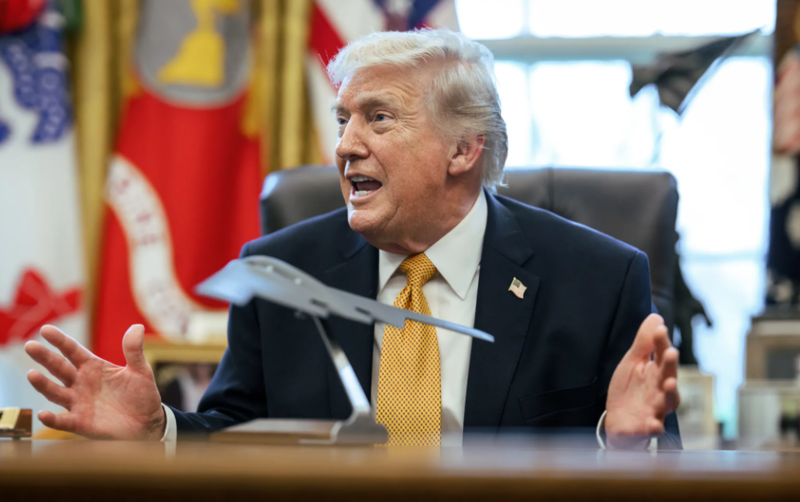
The Iran war has entered an off-ramp toward its conclusion just 32 days after hostilities erupted. The United States is now pursuing a strategy aimed at narrowing the rationale for continuing the war, having concluded that its core objectives have already been achieved through strikes on nuclear facilities and the disabling of military infrastructure. At the same time, Washington is ratcheting up pressure by openly raising the prospect of an “end to the war without an agreement,” effectively reshaping the negotiating framework on its own terms. The approach is widely viewed as a quintessential Trump-style bargaining tactic designed to convert military gains into diplomatic leverage.
Trump Says U.S. Will Withdraw From Iran War Within 2 to 3 Weeks, No Deal Needed
According to Bloomberg and other major foreign media outlets on March 31 (local time), President Trump told reporters at the White House that day, “We’ll be leaving very soon.” Asked about the timing of the withdrawal, he said it was “expected within 2 to 3 weeks.” He stressed that “my only goal was that they not have a nuclear weapon, and that goal has been achieved.” He went on to say, “We will completely eliminate everything related to the nuclear weapons they have,” adding that “mission completion could take within two weeks, or perhaps a few days longer.” Reuters noted that the remarks marked Trump’s clearest indication yet of his intention to bring the Iran war to an end.
Trump also signaled that the United States could unilaterally declare “the end of the war” even in the absence of a formal settlement. “It would be nice if Iran came to the negotiating table, but whether we have a deal or not, it is irrelevant,” he said. “We will leave, and it doesn’t matter.” The comment was interpreted as leaving open the possibility of an agreement between Washington and Tehran while making clear that such a deal is not a precondition for ending the war.
He further explained the rationale for withdrawal by saying, “When we determine that they will remain in the stone ages for a long time and be unable to develop nuclear weapons, we will withdraw,” adding that “Iran will not be able to build nuclear weapons for years to come.” Trump also reiterated his claim that Iran’s leadership had been eliminated twice, and said of the current leadership engaged in negotiations that “they are very different from before, far more rational and less radical. Because we have pushed them back so substantially, it does not matter whether they come to the negotiating table or not.”
Strategic Objectives Achieved Through Degradation of Iran’s Military and Missile Capabilities
Behind Trump’s repeated messaging on a unilateral end to the war lies the military success the United States believes it has already secured. Having successively achieved such objectives as eliminating Iran’s leadership, destroying nuclear facilities, and striking major military infrastructure, Washington has gained the conditions to scale back the perceived necessity of prolonging the war. A prime example came on March 30, when U.S. forces dropped a 907-kilogram bunker-buster bomb on an ammunition depot in Isfahan, where nuclear facilities are located. Isfahan is home to a concentration of key Iranian nuclear sites, and assessments have emerged that the strike substantially crippled Iran’s military capacity itself by directly hitting an area adjacent to its nuclear infrastructure.
Later, Defense Secretary Pete Hegseth said during a Pentagon briefing on March 31, “If no agreement is reached, even more intense military action will follow,” delivering an extraordinarily hard-line message with the declaration that “we negotiate with bombs.” He also claimed that although Iran’s missile attack capability remains intact, it is fully interceptable, and asserted that a decline in the frequency of recent attacks and signs of flagging morale within the Iranian military had been detected, suggesting that psychological warfare was being waged in parallel.
At the same briefing, Chairman of the Joint Chiefs of Staff Dan Caine announced that “more than 11,000 targets were struck over 30 days and B-52 strategic bomber missions have begun.” He explained that U.S. forces are concentrating on disrupting the logistics and supply chains supporting Iran’s missiles, drones, and naval assets. Analysts say such conditions are highly likely to serve as a decisive factor in entrenching a negotiation structure fundamentally tilted in Washington’s favor.
The deployment of the U.S. Army’s elite 82nd Airborne Division to Iran is also interpreted as part of a strategy to maximize pressure and further raise tensions. The 82nd Airborne, trained to infiltrate behind enemy lines by parachute, is one of Washington’s premier rapid-deployment forces for conflict zones. Trump warned that U.S. forces would destroy all of Iran’s critical infrastructure. That includes every power plant and oil field, Kharg Island, and even desalination facilities. The message amounts to a threat to sever not only Iran’s oil revenues, the regime’s financial lifeline, but also electricity and drinking water, thereby crippling the functioning of the state itself. In particular, a scenario involving the direct airborne penetration of Iran’s interior core by thousands of elite troops could put the limits of Iran’s air defense network to the test.
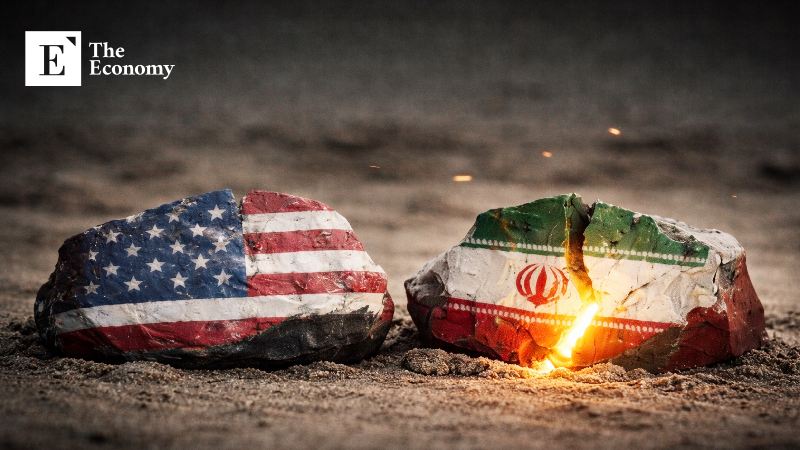
“The Strait of Hormuz Has Nothing to Do With the United States”
Trump also appeared to distance himself from the Strait of Hormuz, which Iran has been using as a pressure point against the United States in an effort to force an early withdrawal. His argument is that the strait was never related to Washington’s objectives in the first place. “The Strait of Hormuz has nothing to do with us. Whatever happens there, we will not be involved,” Trump said. “We will leave within 2 to 3 weeks.” He also claimed that U.S. military operations had already made the Strait of Hormuz safe, adding that “if France or other countries want oil or gas, they can figure it out themselves.”
He continued, “You need to start learning how to fight for yourselves,” adding, “Just as you were not there for us, the United States will no longer be there to help you.” He then said, “Iran has been decimated, the hard part is over. Go and secure your own oil.” Hegseth likewise said, “Securing the Strait of Hormuz waterway is not the responsibility of the United States alone,” adding that “many countries around the world need to be prepared to expand their role.”
According to the Associated Press, Trump and his aides have concluded that any operation to forcibly reopen the Strait of Hormuz would extend the duration of military operations beyond the originally envisioned 4-to-6-week window. Against that backdrop, the United States is said to be considering a course under which it would △ achieve its core objective of degrading Iran’s naval and missile capabilities △ wind down the current military confrontation △ and induce the normalization of maritime trade through diplomatic pressure. Washington is also reportedly weighing an option under which, if diplomacy fails, European and Gulf allies would be pressured to take the lead in reopening the strait.
Trump’s review of the war’s financial bill has also offered another glimpse into his determination to end the conflict. White House press secretary Karoline Leavitt said at an afternoon briefing on March 30, “President Trump is very interested in asking Arab states to bear the cost of the war.” She added that it was “one of the president’s ideas,” signaling that further remarks on the matter could follow. The idea is interpreted as drawing on the precedent of the 1991 Gulf War, when Saudi Arabia, Kuwait, and the United Arab Emirates were among the states that bore the war’s costs. Still, the outlook for any burden-sharing arrangement remains uncertain, given that many Arab countries hosting U.S. military bases also suffered substantial damage from Iranian retaliation.
Matthew Reuter is a senior economic correspondent at The Economy, where he covers global financial markets, emerging technologies, and cross-border trade dynamics. With over a decade of experience reporting from major financial hubs—including London, New York, and Hong Kong—Matthew has developed a reputation for breaking complex economic stories into sharp, accessible narratives. Before joining The Economy, he worked at a leading European financial daily, where his investigative reporting on post-crisis banking reforms earned him recognition from the European Press Association. A graduate of the London School of Economics, Matthew holds dual degrees in economics and international relations. He is particularly interested in how data science and AI are reshaping market analysis and policymaking, often blending quantitative insights into his articles. Outside journalism, Matthew frequently moderates panels at global finance summits and guest lectures on financial journalism at top universities.
- Previous [Donroism] “Has the Collective Security System Reached the End of Its Shelf Life?” As the United States Warns of a NATO Exit, the End of “80 Years of Peace” Looms
- Next [Ceasefire Negotiations] “Europe Must Open the Route” — Trump Sidesteps Hormuz Blockade as Ground Troop Deployment Remains on the Table
Similar Post