[U.S.-Iran War] Iranian Administration Signals Willingness to End War, Military Vows Fight to the Death; Curbing Military Backlash and Forging Compromise Seen as Key to Ceasefire

Anne-Marie Nicholson is a fearless reporter covering international markets and global economic shifts. With a background in international relations, she provides a nuanced perspective on trade policies, foreign investments, and macroeconomic developments. Quick-witted and always on the move, she delivers hard-hitting stories that connect the dots in an ever-changing global economy.
Authored On
Modified
Iranian president says conflict can end if essential conditions are met
Five demands include reparations and control over the Strait of Hormuz
Islamic Revolutionary Guard Corps threatens attacks on big tech firms including Google
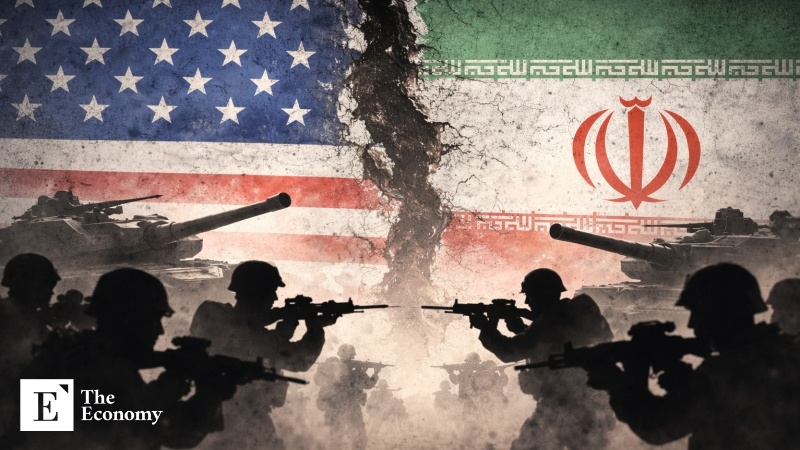
Iranian President Masoud Pezeshkian has said he is willing to end the war with the United States provided essential conditions, including safeguards against renewed aggression, are met. Yet uncertainty over the implementation of any negotiated settlement is mounting as a power realignment centered on Iran’s military establishment collides with internal confusion in decision-making. With hyperinflation and the depletion of basic supplies pushing the public livelihood crisis to a breaking point, the fragmented resistance of Iran’s military apparatus is emerging as the single biggest variable that will determine whether a ceasefire takes hold.
Iranian President Expresses Intent to End War, Reiterates ‘Five Conditions’
On April 1 local time, President Pezeshkian said in a “letter addressed to the American people and the world,” released through Iranian media outlets that day, that “continuing down the path of confrontation is meaningless and demands a greater cost than ever before,” signaling his willingness to end the war. Referring to the ongoing ceasefire negotiations, he said, “The choice between confrontation and cooperation is a real and consequential decision that will determine the fate of future generations.”
Pezeshkian had also signaled a desire to end the war the previous day. In a phone call with European Council President Antonio Costa, he said, “We have the will necessary to end this conflict if the essential conditions are met, particularly if the prevention of renewed aggression is guaranteed.” The remarks amounted to Iran’s formal position as it continued backchannel ceasefire contacts through mediating states amid the threat of a U.S. ground offensive.
The essential conditions cited by Pezeshkian are widely interpreted as a reaffirmation of the five demands Iran had previously laid out during exchanges over a negotiating framework with Washington. Through state media, an Iranian official earlier set out five conditions under which Tehran could agree to end the war: a complete halt to aggression and assassinations by the enemy; the establishment of a robust mechanism to prevent the recurrence of war against Iran; clear reparations for war damage; a complete end to the war across all fronts and resistance organizations throughout the Middle East; and recognition and guarantees of Iran’s lawful exercise of sovereignty over the Strait of Hormuz.
Most of those five conditions, however, are seen as demands Washington would find difficult to accept. In particular, Iran’s demand that the United States pay reparations despite America’s de facto status as the victor could trigger bipartisan backlash in Congress, while the call to halt attacks on the Axis of Resistance across the Middle East effectively repudiates Israel’s core security doctrine. Iran is also demanding the right to levy transit fees in the Strait of Hormuz, as is done in the Suez Canal. Yet unlike the man-made Suez Canal, the Strait of Hormuz is a naturally formed waterway, and international law does not permit the collection of tolls there. More importantly, the strait is a critical artery for global oil shipments, meaning any Iranian push for closure or tighter control would inevitably send shock waves through global energy markets.
Gap Between Civilian Government and Military Power Center
Compounding matters, Iran’s internal communications and decision-making channels have become so impaired that even forging internal consensus over negotiations or concessions to Washington has grown more difficult. The New York Times reported that Iran’s negotiators may not even know what their own government is willing to concede, or whom within the regime they should consult. U.S. and Israeli airstrikes have already killed many figures regarded inside Iran as comparatively rational and pragmatic, severing the links between security, military and civilian decision-makers. In that environment, the grip of the hard-line IRGC over state affairs is only tightening.
IRGC Threatens Big Tech Infrastructure in the Middle East
The IRGC, in fact, has continued to escalate its military posture even after Pezeshkian publicly raised the prospect of ending the war. The corps has framed the conflict as “terrorism” by the United States and Israel and has threatened attacks on American big tech companies it says assisted those operations. In a statement issued April 1, the IRGC said, “Behind the terrorist attacks that killed Iranian citizens are U.S. information and communications technology and AI companies that designed and tracked the targets,” adding, “From this point forward, the main institutions involved in terror operations will become legitimate targets of our strikes.” A total of 18 big tech companies were named as potential retaliation targets. The list includes Google, Apple, Microsoft, Meta, Intel, HP, Oracle, IBM, Dell, Nvidia, Palantir, Cisco, Boeing and Tesla. The IRGC warned that for every assassination inside Iran, it would destroy one Middle East business site belonging to a U.S. company.
Hostilities are continuing as well. In a statement on April 1, the IRGC said it had launched ballistic missiles, cruise missiles and drones before dawn that day at targets in the Israeli heartland and across several parts of the Middle East. It said the targets included two U.S. radar systems installed on structures off the coast of the United Arab Emirates, an external troop shelter at the U.S. Navy’s Fifth Fleet base in Bahrain, a U.S. military helicopter at Kuwait’s Al Adairi base, and the USS Abraham Lincoln carrier strike group in the northern Indian Ocean. The IRGC had said the previous day that it struck a secret gathering point for U.S. military officers in the UAE, killing 37 people.
Iran is also urging civilians to embrace a fight-to-the-death posture. According to Iran’s state-run IRNA news agency, footage of a recent military parade on Kharg Island has been circulating on social media. Kharg Island is a critical hub for Iranian crude exports and is widely seen as one of the principal potential targets of U.S. strikes. The footage showed large formations of fully armed troops massing on the island. Some participants were also seen wearing headbands bearing the phrase “fight to the death.” At the same time, a mobilization campaign known inside Iran as “Janfada” is spreading. Israel’s Channel 12 reported on March 31 that text messages urging voluntary enlistment were being sent across Iran. Janfada, a term combining life and sacrifice, is understood to signify the offering of one’s body in sacrifice.
Deepening Leadership Rift and a Livelihood Crisis at the Breaking Point
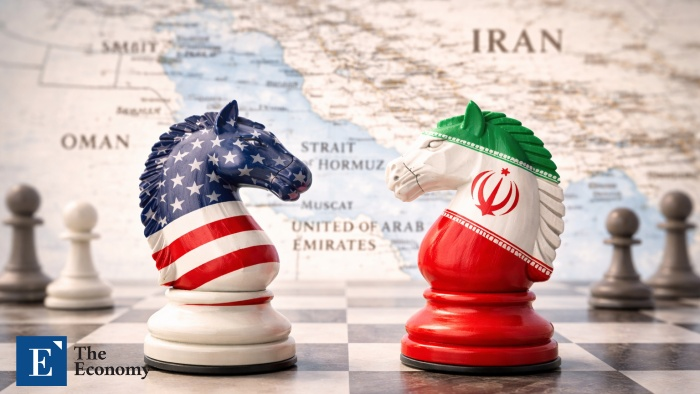
Experts say the success or failure of ceasefire negotiations will hinge on whether the Iranian leadership can suppress resistance from the military establishment and forge an internal compromise. Despite outward signals of willingness to end the war, Iran’s internal decision-making structure has descended into severe disorder, raising doubts about its capacity to carry out any agreement in practice. According to the Iranian opposition outlet Iran International, the rift between the president and the military leadership has recently deepened. Pezeshkian and IRGC Commander-in-Chief Ahmad Vahidi are reportedly at odds over the IRGC’s continuing drone and missile attacks on nearby Gulf states.
Pezeshkian’s view is that the IRGC’s strategy of escalating tensions across the Middle East by striking neighboring countries will inflict long-term damage on Iran’s economy and society as a whole. According to internal sources, the president stressed that “without a ceasefire, Iran’s economy will completely collapse within three weeks to one month,” and ordered the IRGC to halt its attacks. Yet as the corps continued its drone and missile strikes even afterward, the clash over operational authority intensified further. Pezeshkian demanded that administrative and managerial authority be restored to the civilian government, but Vahidi flatly rejected that position, widening the breach between the two sides. Vahidi instead rebuked the administration, saying that “the current crisis is the government’s responsibility for failing to carry out structural reforms before the war.”
The problem is that Iran’s economy has already reached an extremely grave stage. As the financial system lurches violently, cash machines in major cities are increasingly either empty or nonfunctional, while shortages of raw materials and the collapse of supply chains are rapidly choking industrial output. Inflation has already moved beyond the realm of control. Prices of some daily necessities have surged by more than 50% from prewar levels, and cumulative inflation, already well above double digits even before the conflict began, has effectively pushed the country into a phase of hyperinflation.
Poverty levels in Iran are also setting new highs by the day. More than 40% of the total population is now believed to be living below the absolute poverty line, and in the capital Tehran the figure is estimated to exceed 50%. Against that backdrop, some are warning that rising anger across society could trigger a renewed wave of mass anti-government protests. Beginning in late December last year and continuing for roughly a month, anti-government demonstrations swept across Iran amid economic hardship, and at least 3,000 people were reportedly killed in the government’s bloody suppression of the unrest. Even if ceasefire conditions are adjusted to a certain degree, analysts say the possibility of internal resistance erupting during the implementation phase will remain ever-present. In particular, integrating Iran’s fragmented resistance forces and rebuilding a collapsed civilian livelihood system may require more pain and more time than the war itself.
Anne-Marie Nicholson is a fearless reporter covering international markets and global economic shifts. With a background in international relations, she provides a nuanced perspective on trade policies, foreign investments, and macroeconomic developments. Quick-witted and always on the move, she delivers hard-hitting stories that connect the dots in an ever-changing global economy.
Similar Post