"From Power Plants to Core Industries" Data Center Investment Floods into Texas, Accelerating Infrastructure Concentration

Authored On
Modified
Microsoft Pushes Ahead with Texas Power Plant in Partnership with U.S. Energy Firms
Big Tech Players Including Meta and Google Plan New Data Centers in Texas
Texas Emerges as Hub for Core Industries Including Semiconductors, Driving Full-Scale Infrastructure Clustering
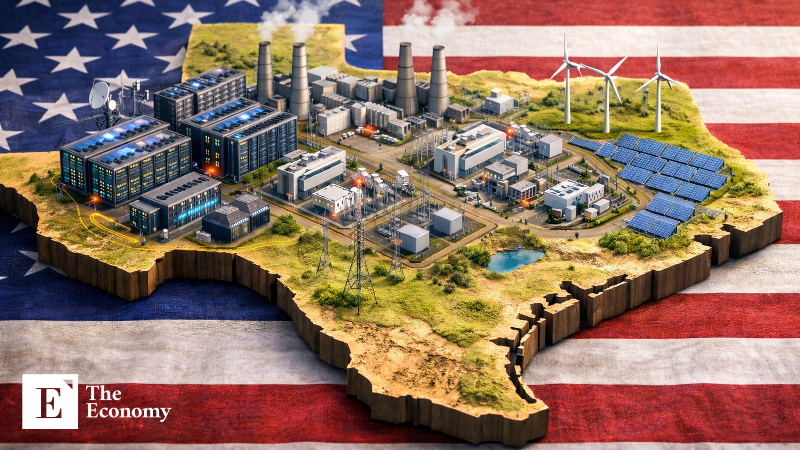
Microsoft (MS) is advancing plans to build a natural gas power plant in Texas. The strategy centers on directly securing electricity required for large-scale data center campuses in a state abundant in natural gas resources. In parallel, multiple Big Tech firms—including Meta and Google—are pursuing data center construction projects across Texas, while companies in other core industries are increasingly establishing production bases in the state.
Microsoft’s Texas Power Plant Plan
According to Bloomberg on April 1 (local time), Microsoft is currently engaged in exclusive negotiations with U.S. energy major Chevron and investment firm Engine No. 1 to secure long-term power purchase agreements for a natural gas power plant in West Texas. The project is estimated to cost approximately $7 billion, with an initial generation capacity of 2,500 megawatts (MW). However, other commercial terms remain undecided, and a final agreement has yet to be reached.
If finalized, the deal would enable Microsoft to directly secure electricity for its large-scale data center campuses. As surging investment in artificial intelligence (AI) infrastructure pushes U.S. power grids toward capacity limits, the company is turning to direct supply strategies to mitigate constraints. Delivering power directly from the plant to data centers significantly reduces both the time and cost required to build or reinforce transmission infrastructure. For the power plant operator, the arrangement also lowers project uncertainty by ensuring a stable demand base.
Markets are particularly focused on Microsoft’s decision to source power from West Texas. The region sits atop the Permian Basin, the largest oil and gas production area in the United States, offering abundant natural gas resources. According to the U.S. Energy Information Administration (EIA), as of December last year, the Permian Basin produced 6 million barrels of crude oil per day and 22.2 billion cubic feet of dry natural gas per day. This accounts for 44% of total U.S. oil production and 19% of natural gas output. Chevron, currently in talks with Microsoft, is also advancing a natural gas power project for AI data centers in the Pecos region of West Texas.
Shift of Data Center Investment from California to Texas
Beyond Microsoft, numerous Big Tech companies are ramping up data center investments in Texas. California, once the primary hub for data center construction, has encountered constraints related to power availability, costs, and regulatory hurdles. Texas, by contrast, offers easier access to land and electricity along with comparatively lower regulatory barriers, positioning it as a practical alternative for expanding AI infrastructure. Meta, for instance, recently committed $10 billion to a data center currently under construction in El Paso, Texas. This represents a more than sixfold increase from the $1.5 billion pledged in October last year.
The facility, slated to begin operations in 2028, will have a power capacity of 1 gigawatt (GW), sufficient to supply electricity to approximately 750,000 households. Given the scale of the project, it is expected to generate significant local economic benefits. Meta plans to employ over 300 full-time workers upon completion, while peak construction phases are projected to involve more than 4,000 temporary workers on-site.
Google has also announced plans to build new data centers in Texas as of November last year. The total investment amounts to $40 billion, marking the largest single-state investment by Google in the United States. The new facilities will be developed in Armstrong County and Haskell County by 2027. One of the Haskell County sites will integrate solar power generation and a large-scale energy storage system (ESS). In addition, Google intends to continue investing in its Midlothian and Red Oak data centers near Dallas, strengthening cloud and AI processing capabilities across Texas.
Formation of a “Proximity Supply Chain” in Texas
Companies in industries supporting data centers are also establishing production bases in and around Texas. U.S. energy startup EnergyX recently launched a pilot plant, “Project Lone Star,” in Hooks, Texas, capable of producing battery-grade lithium at commercial scale. The facility produces approximately 250 tons of lithium carbonate equivalent (LCE) annually, with plans to expand capacity to over 100,000 tons per year following performance validation. Lithium carbonate is a key raw material for ESS, which ensures stable power operations for data centers.
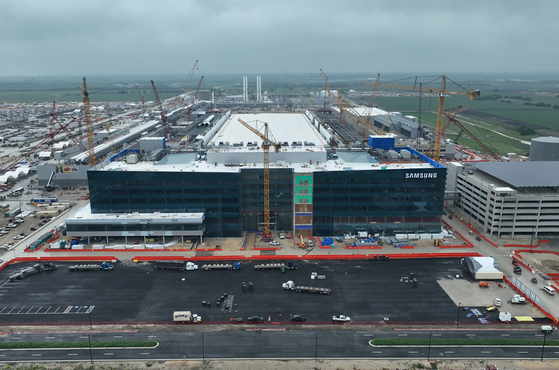
Samsung Electronics is constructing an advanced foundry semiconductor fabrication plant in Taylor, Texas, with an investment exceeding $45 billion. The facility received a temporary certificate of occupancy (TCO) in January for an 88,000-square-foot area, allowing limited on-site operations to begin. Industry consensus suggests the Taylor fab will complete preparations by the end of this year and commence full-scale mass production in early 2027. Recent reports also indicate that Samsung has begun preliminary preparations for a second production facility.
At the end of last month, the Taylor City Council unanimously approved a proposal by Dallas-based real estate developer KDC to build a 220-acre data center complex. The project, named “Project Comal,” involves constructing a large-scale data center campus directly adjacent to Samsung’s Taylor fab. This configuration places advanced foundry operations and hyperscale data centers in immediate proximity. Such an arrangement is expected to reduce logistics costs associated with chip supply while enhancing collaboration for system optimization.
Similar Post