[U.S.-Iran War] “This Time, It’s a Bridge” — U.S. Sustains Airstrikes on Iran to Force a Deal, with Tehran’s Remaining Military Capacity Emerging as Key Variable

As one of the youngest members of the team, Tyler Hansbrough is a rising star in financial journalism. His fresh perspective and analytical approach bring a modern edge to business reporting. Whether he’s covering stock market trends or dissecting corporate earnings, his sharp insights resonate with the new generation of investors.
Authored On
Modified
U.S. Bombs Iran’s Largest ‘B1 Bridge’
Hardline Stance: “We Will Turn Iran Back to the Stone Age”
With Iran’s Warfighting Capacity Degraded, Questions Rise Over Potential Support from Allies Such as North Korea
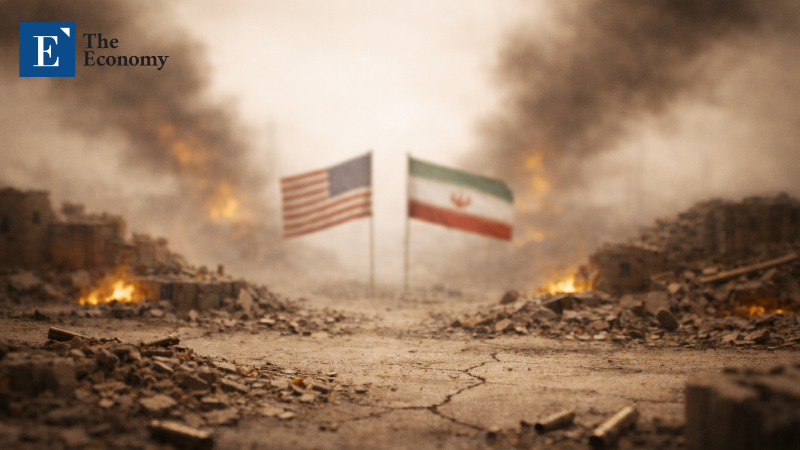
The United States has escalated military pressure by destroying Iran’s largest bridge. As Tehran continues to show little sign of backing down despite ongoing backchannel negotiations, Washington has issued a renewed warning by underscoring the prospect of large-scale airstrikes. With tensions between the two countries visibly intensifying, analysts note that Iran’s remaining warfighting capability and the potential involvement of its allies could prove decisive in shaping the trajectory of the conflict.
Collapse of Iran’s B1 Bridge Under U.S. Airstrike
On April 2 (local time), U.S. President Donald Trump wrote on his social media platform Truth Social, “The largest bridge in Iran has collapsed and is no longer usable,” adding, “More is coming, and now is the time for Iran to make a deal before it’s too late.” He also released a 10-second video showing thick black smoke rising as the massive bridge collapsed following the strike. According to AFP, the structure has been identified as the ‘B1 Bridge,’ which connects Tehran to the strategic western hub of Karaj. AFP reported that the B1 Bridge, with a pier height of 136 meters, is the tallest in the Middle East and had not yet been fully completed.
Iran’s semi-official Fars News Agency reported that eight people were killed and 95 injured in the attack. State broadcaster IRIB said two airstrikes were carried out roughly an hour apart, with the second strike occurring while rescue teams were assisting the wounded. The bridge demolition operation appears to have been conducted solely by U.S. forces. A U.S. military official told The New York Times that the operation aimed to sever supply routes for Iran’s missile and drone units. However, Iranian local media countered that the bridge had not yet opened and was not being used for military logistics.
The latest strike is widely interpreted as a warning to Iran, which has continued its resistance despite ongoing backchannel negotiations. In recent weeks, Iran has targeted U.S. air defense detection assets as part of a strategy to maximize the effectiveness of its asymmetric capabilities, including ballistic missiles and suicide drones, by blinding U.S. surveillance systems. A notable example occurred on March 28, when Iran damaged a U.S. ‘E-3 Sentry’ airborne early warning and control aircraft stationed at a U.S. base in Saudi Arabia. Replacing such equipment costs approximately $700 million per unit.
In mid-March, an ‘AN/TPY-2’ radar system in Jordan was also destroyed. According to French daily Le Figaro, the radar is designed to calculate the trajectory of hostile projectiles and distinguish between missiles and decoy systems used to deceive air defense networks. Additionally, on April 1, Iran announced via Fars News that it had launched drone strikes targeting deployment sites of U.S. AWACS aircraft and aerial refueling tankers at Israel’s Ben Gurion International Airport in Tel Aviv, as well as radar installations in the United Arab Emirates used for detecting and intercepting missiles and combat drones, along with electronic warfare facilities tasked with counter-drone operations.
Repeated U.S. Warnings to Iran
The sustained military standoff between the two sides is rooted in a strategic contest to secure negotiating leverage. Washington has warned that if its demands are not met and the Strait of Hormuz is not reopened by April 6, it will devastate Iran’s power plants, oil fields, and desalination facilities. In a national address delivered at the White House on April 1, Trump stated, “We will deliver extremely powerful strikes over the next two to three weeks,” adding that the United States could “effectively send Iran back to the Stone Age.” He further warned, “If no deal is reached, we are prepared to strike all major targets, especially power generation facilities simultaneously and with overwhelming force.”
On March 31, U.S. Secretary of War Pete Hegseth, speaking alongside Chairman of the Joint Chiefs of Staff Dan Caine during a press briefing on the Iran conflict, said, “Iran knows that the coming days will be decisive,” asserting that “there is very little they can do militarily.” He added, “If Iran is willing to abandon its (nuclear) materials and ambitions, we strongly prefer a negotiated solution,” emphasizing that “we do not seek military action beyond what is necessary.”
At the same time, Hegseth warned, “If Iran shows no willingness to reach an agreement, the Department of War will continue operations at an even greater intensity.” He added, “We will negotiate with bombs,” expressing hope that a deal could still be reached, but underscoring readiness to continue military operations otherwise. Regarding the possibility of deploying ground forces, including to Iran’s key oil export hub Kharg Island, he stated, “We will not rule out any option,” stressing that revealing operational intentions, including ground troop deployments, would undermine the ability to win a war.
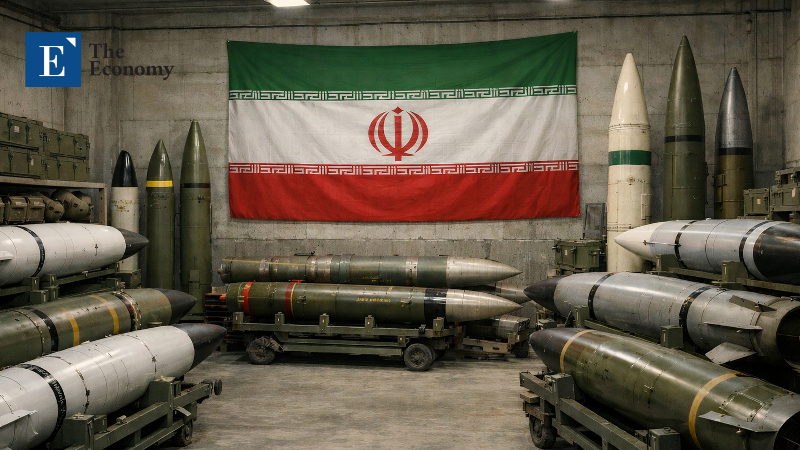
Potential North Korean Drone Support Emerges as Variable
As tensions escalate, Iran’s remaining warfighting capacity has emerged as a critical factor that could determine the future course of the Middle East conflict. The U.S. government claims that Iran’s military capability has been largely decimated. According to U.S. Central Command, more than 12,300 targets have been struck inside Iran to date. Trump declared that “Iran’s weapons factories and rocket launchers have been shattered, with almost nothing left,” while Hegseth stated that Iran’s ballistic missile and drone attacks have declined by 90% compared to the early stages of the war.
Israeli Prime Minister Benjamin Netanyahu also said in a March 30 interview with Newsmax that “we have already passed the halfway point in achieving our mission,” highlighting significant progress in degrading Iran’s military, nuclear, and industrial infrastructure. He added, “We have already weakened their missile capabilities, destroyed factories, and eliminated key nuclear scientists,” emphasizing that these actions have “substantially set back Iran’s ambitions.”
However, the potential for military support from Iran’s allies, including North Korea, remains a key variable. North Korea previously acted as a logistical hub supporting Russia’s acquisition of artillery shells and missiles during the Ukraine war. Russia, in turn, shared modified Shahed-series drones sourced from Iran with North Korea, which has since been producing unmanned aerial vehicles at facilities believed to be located at Banghyeon Airfield in North Pyongan Province and in the Pyongsong area near Pyongyang.
Construction of a new drone production facility reportedly began at the Banghyeon site in July 2024. On March 25, U.S.-based North Korea monitoring outlet 38 North reported, based on satellite imagery, that three new buildings believed to be drone production facilities, along with supporting infrastructure, had been completed in the area over the winter. If confirmed, this would indicate the establishment of a joint drone production network linking Iran, Russia, and North Korea. Analysts suggest that North Korea, having secured drone manufacturing capabilities, could potentially support Iran as it faces mounting pressure from prolonged attritional warfare, with domestically produced replicas of Iran’s Shahed drones possibly being exported back to Tehran as substitutes.
As one of the youngest members of the team, Tyler Hansbrough is a rising star in financial journalism. His fresh perspective and analytical approach bring a modern edge to business reporting. Whether he’s covering stock market trends or dissecting corporate earnings, his sharp insights resonate with the new generation of investors.
Similar Post