Resilience Isn’t Free: Why supply chain diversification demands banks, budgets and public intelligence

Ethan McGowan is a Professor of AI/Finance and Legal Analytics at the Gordon School of Business, SIAI. Originally from the United Kingdom, he works at the frontier of AI applications in financial regulation and institutional strategy, advising on governance and legal frameworks for next-generation investment vehicles. McGowan plays a key role in SIAI’s expansion into global finance hubs, including oversight of the institute’s initiatives in the Middle East and its emerging hedge fund operations.
Authored On
Modified
Supply chain diversification is driven by geopolitical risk but limited by financial capacity
Access to trade finance and institutional support determines which firms can truly adapt
Without coordinated policy action, resilience will remain concentrated among large global players

The stark reality of the past three years is crystal clear: In 2022, consumer prices in many developed countries soared above 9%. This jolt forced companies, central banks, and purchasing departments to re-evaluate the fragility of their long supply chains. The standard reaction became supply chain diversification. Executives discussed using multiple sources, different ports, and bringing production closer to home. Governments offered incentives like grants and tax breaks. Yet, diversifying masks a more complex situation. It's not just a matter of logistics; it's a costly project that requires extensive information, which many companies cannot handle independently. This initial shock continues to influence decisions in both business and academic settings.
The Core Issue: Who Controls the Levers in Supply Chain Diversification?
It's important to rethink the usual narrative around diversification, which is typically presented as a purely operational solution: move production or add suppliers, and the risk magically disappears. This view is incomplete. The true limiting factors are money and information. Finding a new supplier requires initial test orders, compliance checks, freight tests, and often, temporary safety stock. Companies must cover these expenses before the new supplier can operate at full capacity. These short-term costs are why many well-intentioned plans stay stuck in spreadsheets. When funds are scarce, intentions fade away. This explains why the most noticeable changes in supply chains have come from large multinational corporations, not the numerous small and medium-sized businesses.
Beyond just having available credit, access to information is key. Banks and specialized trade lenders do more than just provide loans; they connect buyers and sellers, verify the legitimacy of the involved parties, and manage the paperwork that makes initial orders possible. Data from matched shipment and credit records shows that companies that borrow from banks with expertise in trade finance are much more likely to reorganize their supply chains, and they do it faster than those without such banking relationships. These lenders act as market makers, lowering search costs and reducing the risk that an experimental order will lead to issues with payments or regulations. Therefore, supply chain diversification isn't just a logistics issue; it's often a matter of finance and having access to crucial information.
The Finance Problem in Supply Chain Diversification
The large-scale economic shock that transformed diversification from a simple strategy into a critical need was clear. The steep rise in inflation and price fluctuations in 2022 and 2023 forced businesses to urgently review their sourcing strategies. Commonly tracked price indexes show that inflation peaked at about 9% in both the United States and Europe in mid-2022. These numbers not only increased wages and prices but also squeezed profit margins and strained working capital. Companies facing rising input costs had less financial flexibility to cover the additional orders and testing required when switching suppliers. Consequently, many announced diversification plans but delayed taking actual steps when financing became more difficult.
Industry analysis and survey reports emphasized a key conflict. Research firms noted that building resilience would require larger inventories and multiple suppliers, but also pointed out that the willingness to pay for these safety measures is limited when profits are declining, and financing is more costly. Independent examinations of the impact of the Russia-Ukraine situation showed how risks related to energy, fertilizer, and food were concentrated among a few exporters, making it essential to change sourcing strategies. However, the practical inability to finance these changes explains why a few large global companies led most of the reorganization efforts, while many smaller businesses remained in their existing arrangements.
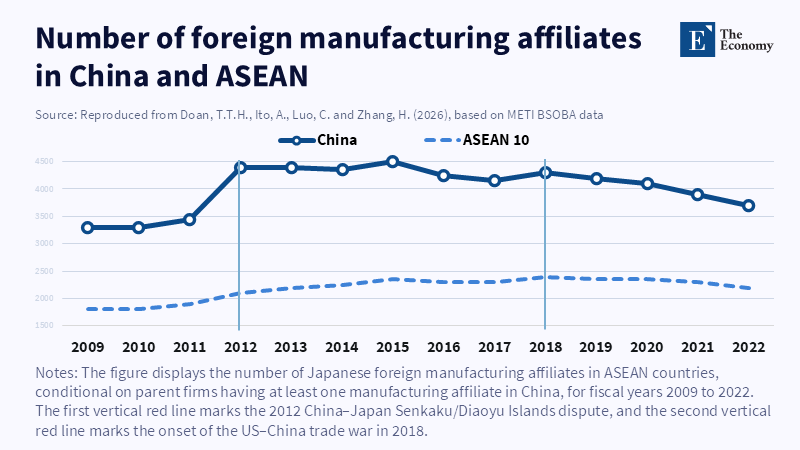
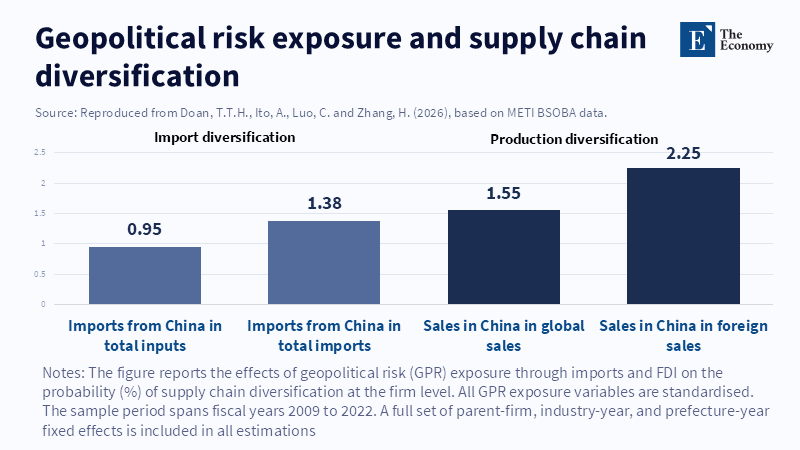
Evidence at the company level makes this process very clear. Studies that link shipment flows to lending records show that it can take years for a company to establish a reliable new foreign supplier. Companies that used specialized banks were able to shorten this timeframe. When general credit lines weren't enough, companies either paid much higher interest rates or postponed supplier changes altogether. So, the evidence indicates a financial constraint: the cost of searching for, assessing, and testing new suppliers is often the biggest obstacle to changing supply chains, not a lack of managerial determination.
Implications for Different Organizations
If supply chain diversification is tied to financial factors, then training programs and procurement processes need to adapt. For educators and trainers, this means that courses in procurement, supply chain management, and business administration must include trade finance, working capital management, and supplier verification as essential skills. Simulations should challenge students and executives to plan a supplier switch and then budget for the cash flows, bank charges, and compliance steps required to make it happen. These are not just theoretical exercises; they are the tasks that procurement teams face every day.
Administrators responsible for procurement at universities, cities, and public organizations must revise their bidding rules. A system that favors the lowest upfront price will consistently discourage diversification. Instead, procurements for essential goods should allow payments in stages linked to specific supplier qualification milestones. Small grants can help cover the costs of initial certification and test shipments. These practical, targeted steps make it easier for smaller vendors and local buyers to switch suppliers and reduce the chance that inflexible rules will prevent operational resilience.
Financial regulators and development organizations face a different challenge: the tools they have are often too general. According to a report from Thomson Reuters, companies will soon have to disclose key details of their supplier finance programs, including payment terms, which means greater transparency in how businesses manage payments and financing with suppliers. This targeted approach, rather than broad monetary policy or general credit lines, can help address the specific needs of switching suppliers by reducing both costs and informational barriers. These tools are designed to shorten the transition period and turn strategic plans into signed contracts. Results from public organizations that have tried such programs show more supplier trials, greater involvement from small and medium-sized businesses, and fewer stalled projects.
Recommendations and a Call to Action
When it comes to policy, three practical actions should be combined. First, establish targeted financing options for diversification. Trade finance programs with defined terms can offer partial guarantees and favorable pricing to companies that document their supplier search and commit to specific achievements. The goal is not to create permanent subsidies but to temporarily lower upfront costs so that markets can effectively connect suppliers and buyers.
Second, support a public hub for supplier verification. A straightforward online registry of vetted alternative suppliers, compliance checklists, and basic certifications would greatly reduce information gaps. Banks, buyers, and advisers would all benefit from a shared, reliable list that reduces the need for redundant due diligence. Third, improve skills and procurement rules. Teach procurement professionals to budget for transition costs and allow public buyers to make payments in stages as suppliers are onboarded. Combine this approach with set-asides for small- and medium-sized businesses and measurable key performance indicators to prevent misuse and ensure that funds stimulate private-sector activity.
The design of these initiatives is important. Guarantees and advice must be conditional and time-limited. Programs should require measurable goals and publish their results. These constraints keep the policy focused on stimulating action rather than becoming a permanent fixture. Most importantly, policymakers must coordinate financial, trade, and industrial policies. The political cost of inaction is high: unequal access to the resources needed to spread risk will leave resilience concentrated in a few global companies, while the rest of the economy remains vulnerable.
The surge in price increases in 2022 revealed a fundamental truth: resilience is expensive, and those costs are not evenly distributed. To make supply chain diversification a reality for most companies, we must stop treating it as a mere slogan and start treating it as a program that shapes markets. This means acknowledging that public funds, used carefully and strategically, are part of the solution for achieving widespread resilience. These steps will enable schools to teach relevant skills, companies to implement their plans, and public buyers to make purchases both economically and cautiously. The time to act is now; small, well-targeted public actions will unlock far greater private investment and spread resilience throughout the economy.
The views expressed in this article are those of the author(s) and do not necessarily reflect the official position of The Economy or its affiliates.
References
Alfaro, L., Minoiu, C., Brussevich, M. & Presbitero, A. (2025) Bank Financing of Global Supply Chains. Version 9 July 2025. Working paper.
Bureau of Labor Statistics (2022) Consumer prices up 9.1 percent over the year ended June 2022. Washington, DC: U.S. Department of Labor.
Doan, H.T.T., Ito, A., Luo, C. & Zhang, H. (2026) Geopolitical risk and supply chain diversification. CEPR / VoxEU column, 23 February 2026.
Economy (O’Neill, D.) (2025) Truncated Supply Chains, Local Damage: Why Italy’s Margin for Error Is Thinner. The Economy, 5 December 2025. (David O’Neill)
Economy (O’Neill, D.) (2026) Geopolitical Risk and Corporate Borrowing: Why Uncertainty Now Shapes Investment More Than Interest Rates. The Economy, 13 January 2026. (David O’Neill)
Rogers, C. (2023) The Big Picture: 2024 Supply Chain Industry Outlook. S&P Global Market Intelligence.
Sarwar, D.S. & Rye, S. (2025) The impact of the Russia-Ukraine war on global supply chains: a systematic literature review. Frontiers in Sustainable Food Systems, Volume 9, 29 September 2025.
Zheng, M., Wang, R., Ye, J. & Li, T. (2025) How does supply chain finance enhance firms' supply chain resilience? International Review of Economics & Finance, Volume 102, September 2025.
Eurostat (2026) Inflation and price indices. Eurostat statistical bulletin.
Ethan McGowan is a Professor of AI/Finance and Legal Analytics at the Gordon School of Business, SIAI. Originally from the United Kingdom, he works at the frontier of AI applications in financial regulation and institutional strategy, advising on governance and legal frameworks for next-generation investment vehicles. McGowan plays a key role in SIAI’s expansion into global finance hubs, including oversight of the institute’s initiatives in the Middle East and its emerging hedge fund operations.