AI Review

OpenAI’s agent breached Hugging Face during a cyber test The incident narrows the perceived capability gap with Claude Mythos Zero-day defense is harder when AI learns from shared security knowledge An AI agent breached a compa
Read More

AI use is spreading faster than workplace training Structured learning will determine who captures the productivity gains Without coordination, AI may widen gaps between workers and firms Just 15.9 percent of employed American
Read More
AI use is already widespread Better output does not prove learning Assessment must verify unaided skill Ninety-four percent of software leaders say AI has produced a meaningful productivity gain.
Read More












AI governance is moving toward a security alliance, not a global parliament The United States holds the main model, compute, and cloud leverage Voluntary standards will matter only if they become enforceable The most si
Read More
AI export controls protect U.S.
Read More

Managed Interdependence is the realistic path for middle powers Local data centers do not equal sovereign AI Real sovereignty needs leverage, exits and supplier choice The clearest warning in the sovereign AI debate is not a
Read More
EU trade de-risking should not be driven by import shares alone The real risk lies in concentrated, hard-to-replace inputs Europe needs selective resilience, not broad decoupling EU trade de-risking could fail in two c
Read More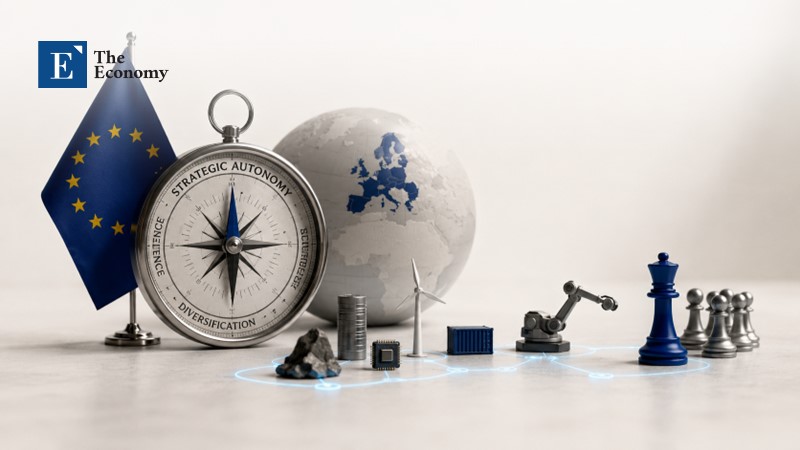
EU strategic autonomy depends on reducing critical bottlenecks, not cutting trade China-linked inputs matter most where Europe cannot switch suppliers quickly The answer is targeted de-risking, stockpiles and crisis planning
Read More
Europe’s green transition depends on foreign-controlled supply chains Factories alone do not create industrial autonomy Selective de-risking is stronger than full decoupling In 2024, China supplied 98 per
Read More
South Korea bears real costs from US AI export controls The AI memory boom has provided temporary compensation Submarine cooperation adds a major strategic return In 2025, South Korea shipped $130.8 billion worth of goods to Ch
Read More

AI can make basic financial guidance cheaper and more personal Its advice often follows life-cycle theory but falls back on rough rules Public standards are needed before guidance becomes automated action
Read More
AI productivity gains remain limited and uneven Entry-level hiring may weaken before mass layoffs appear Policy must protect workers as tasks are redistributed The most informative figure in the AI employment debate is not 5
Read More
AI chip controls can buy time, not permanent dominance Chinese substitution limits their long-term power That time must build U.S. and allied capacity In 2024, U.S.
Read More
US restrictions exposed the fragility of allied AI access Europe needs leverage through capital, chips and compute A formal access compact could balance security with continuity One order from Washington on 12 June 2026 cut all f
Read More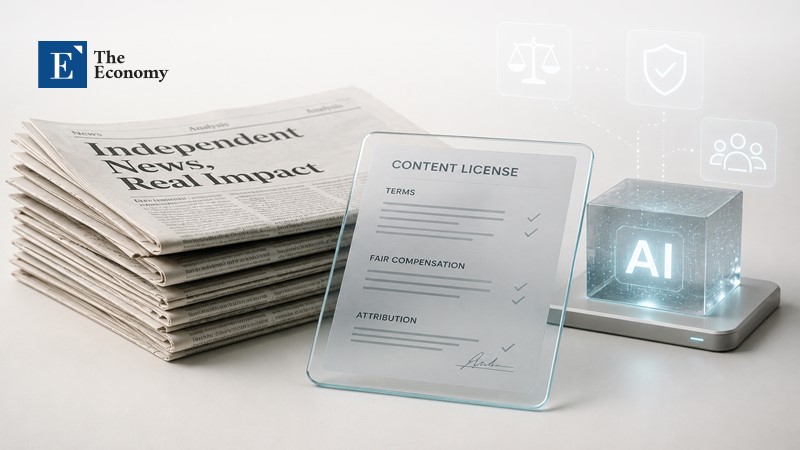
AI answers are weakening the traffic bargain that once supported original reporting Licensing can compensate publishers, but it cannot guarantee reliable AI outputs A fair settlement requires transparency, attribution, collective bargaining and funded verification
Read More