Silicon Leverage: Why AI Chip Export Controls Are Really About Strategic Power

Working across research, policy, and data-driven analysis, the Editorial Board ensures that published pieces reflect a consistent institutional perspective grounded in quantitative reasoning and long-term structural assessment.
Published
Modified
AI chip export controls are tools of geopolitical leverage, not just technology denial
China’s pragmatic strategy limits the long-term impact of chip restrictions
Effective AI chip export controls must tie semiconductor access to strategic conditions
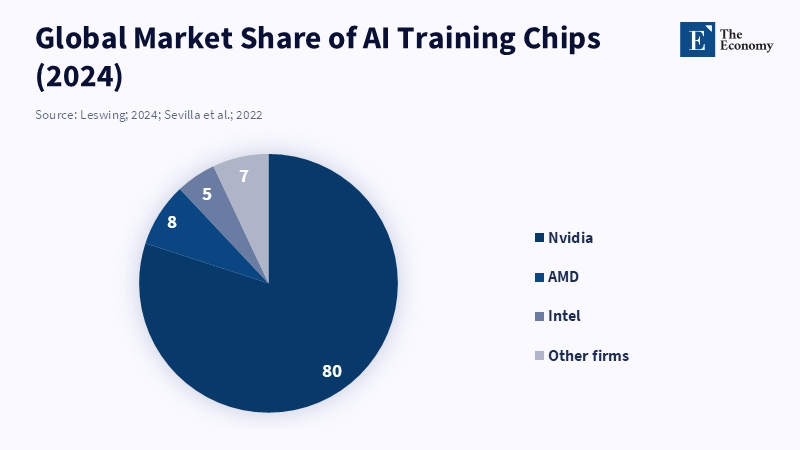
In 2024, Nvidia, an American company, held approximately 80% of the worldwide market share for advanced AI training accelerators. These specialized processors are necessary for instructing cutting-edge artificial intelligence models. This concentration reveals an important aspect of the world’s technological situation. Access to these advanced computing chips now determines which entities can instruct the most capable AI systems. Talks surrounding AI chip export rules usually frame the matter too narrowly. Government officials often ask whether limiting chip exports might impede China’s tech progress or safeguard American innovation. While these are important considerations, they do not capture the overall plan behind export limits. Semiconductor rules are not merely protective economic measures; they are tools for shaping global politics. These advanced chips influence military strength, supply routes, and worldwide tech leadership. The main concern for decision-makers is not simply whether the U.S. should limit semiconductor exports to China, but rather what strategic outcomes these limits aim to achieve. Without a defined policy that links chip access to broader international actions, export rules could become mere symbolism rather than effective tools to address tech competition.
AI Chip Export Rules and the Limitations of Tech Denial
The U.S. started broad export limits on advanced semiconductors to China in October 2022. These limits targeted high-performance computing chips and the tools required to create them. They were intended to prevent Chinese companies from obtaining the computing resources needed to develop advanced AI systems. The reasoning was simple: training advanced machine learning models requires significant computing power, and limiting access to the most powerful chips could hinder a competitor’s progress.
Evidence indicates that computing resources are crucial to modern AI development. Studies on machine learning show that the computational demands of leading AI systems have increased significantly over the last 10 years. Large language models and advanced AI systems often require thousands of high-performance processors working together. Limiting access to advanced chips then creates actual tech challenges. Even small delays in obtaining new hardware can slow research progress.
Yet, export rules rarely stop the spread of tech completely. Instead, they tend to change it. Chinese tech companies have already invested in local semiconductor production due to export restrictions. Government-supported plans and national investment funds have invested heavily in reducing dependence on foreign semiconductor suppliers. According to a CIO report, Chinese companies have been bypassing US export restrictions on advanced technologies by accessing computing power through cloud services offered by American firms such as Amazon. This highlights a serious challenge in enforcing export controls. In a linked semiconductor world, tech flows rarely vanish; they change. Experts at the Council on Foreign Relations have said that some aspects of the current export control system are difficult to enforce. Companies can change their products to stay within the rules while still offering major computing power. This unclear rule situation weakens enforcement and makes it harder to achieve the aims behind export rules.
Still, just stopping tech was never the real aim of these rules. Export rules also create negotiating power. Access to advanced semiconductors becomes conditional. This lets governments link tech transfers to bigger political or strategic promises. So, the success of export rules depends less on the amount of chips limited and more on how well that power is used.
AI Chip Export Rules, Strategic Power, and China’s Useful Strategy
The outcome of export rules depends on the target country's response. China’s actions show a useful way of thinking, largely driven by national interest. China’s industrial policy has always focused on tech self-reliance in key areas such as artificial intelligence and semiconductor manufacturing.
Plans such as Made in China 2025 show China’s long-term aim to lower dependence on foreign tech suppliers. Semiconductor making has become a key part of this plan. China’s government has invested billions of dollars in local chip production and research. Instead of stifling tech ambition, export rules may strengthen the drive toward tech independence.
This useful way of thinking makes it harder to believe that export rules alone can keep Western tech benefits. Some experts have said that easing chip export rules might help American companies while maintaining tech leadership if artificial superintelligence remains far off. Still, this idea misses the wider strategic effects of computing power. Advanced AI chips are more than mere tools for business innovation. They are also essential components of modern military technology.
Artificial intelligence is increasingly helping the defense. This includes independent systems, intelligence study, and cyber actions. Greater access to advanced computing infrastructure could accelerate the development of these skills. The worry behind export rules is not the coming of superintelligent machines. Instead, advanced computing power could help accelerate the development of military AI skills.
China’s past approach to international tech rules makes the policy situation more difficult. China’s rule actions have often been useful and flexible. They focus on local growth goals rather than strictly adhering to external expectations. Because of this, deals or informal promises tied to tech transfers may not always lead to the expected agreement. This raises real questions about whether semiconductor offers can drive strategic changes in behavior.
For universities and research groups, these situations have real effects. Academic labs are using high-performance computing groups more for AI research. Without proper control systems, this setup could inadvertently support projects with potential military applications. As advanced computing becomes increasingly important in global tech competition, research groups must develop stronger control mechanisms and rule systems.
Rethinking AI Chip Export Rules: Target Actions, Not Hardware
To make export rules deliver meaningful strategic results, officials must shift their focus from limiting hardware to taking action. The goal should not just be to block semiconductor exports, but to base access to an advanced computing setup on clear promises that address broader international concerns.
Recent research on artificial superintelligence highlights the value of official systems capable of monitoring the growth of strong AI systems. The writers argue that international agreements and oversight may be needed to address the risks associated with advanced AI technologies. While the research centers mostly on long-term safety worries, its results relate to current international problems. Strong control needs enforceable promises and clear monitoring systems.
Using this idea in semiconductor policy signals a more planned way to export rules. Instead of using blanket limits, governments could tie chip exports to specific conditions. These might include openness needs for research projects, limits on military use, or working together to ensure supply chain stability.
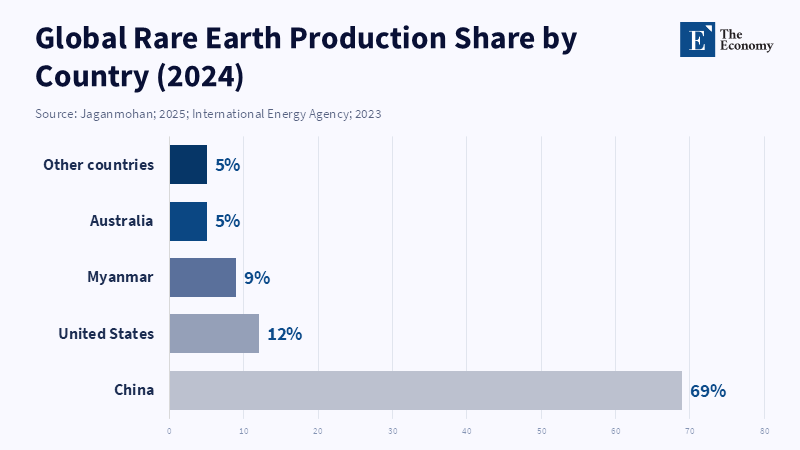
One especially important part involves critical minerals. Semiconductor production depends heavily on materials such as gallium, germanium, and rare-earth elements. China is currently a main player in the worldwide production of several of these materials. This creates possible supply chain weaknesses for tech-producing economies. Export talks about advanced chips could then be used to get stable mineral supply deals or spread out worldwide production networks.
Without these conditions, relaxing export limits could strengthen China’s tech skills without creating strategic benefits. On the other hand, very strict controls could accelerate the separation of tech while harming global innovation networks. The policy challenge is then to create export systems that balance business competition with national safety.
Schools play a key part in this new policy situation. Engineering and computer science programs are training researchers who will work in settings determined by international tech control. Adding export-control knowledge, technical policy studies, and international awareness to AI education can help prepare future engineers for the strategic context of advanced computing.
Strategic Power in Silicon
The worldwide competition around artificial intelligence is often called a run for algorithms and data. Really, it is also a run for a computing setup. Advanced semiconductors underpin modern AI growth, and access to these chips has significant international implications.
AI chip export rules show one of the few areas where the U.S. keeps structural power in the worldwide tech world. Still, power is only useful when used deliberately. Policies that focus solely on limiting chip exports may miss broader diplomatic opportunities within semiconductor supply chains.
The main question is not whether chips should be limited. It is what strategic results those limits aim to reach. If export rules act only as walls to the spread of tech, their effect will likely be short-lived. If they are used as tools for international action, they may shape the structure of the new global AI order.
For officials, teachers, and research groups, the effects are big. Universities must add policy awareness to tech education. Governments must work with allies to strengthen the rule and close gaps. Tech companies must recognize that their products now operate in a strategic environment where business decisions have international consequences.
In the new age of artificial intelligence, semiconductors are more than parts. They are tools of power. The result of AI chip export rules will depend not on how many chips are limited, but on how those chips are used to shape the rules governing global tech competition.
The views expressed in this article are those of the author(s) and do not necessarily reflect the official position of The Economy or its affiliates.
References
Center for Strategic and International Studies (2024) Collateral Damage: The Domestic Impact of U.S. Semiconductor Export Controls. Washington, DC: Center for Strategic and International Studies.
Fan, H., Zhou, H., Huang, G., Raman, P., Fu, X., Gupta, G., Ram, D., Wang, Y. and Huan, J. (2024) HLAT: High-quality Large Language Model Pre-trained on AWS Trainium. arXiv preprint.
Horowitz, M.C. (2018) ‘Artificial Intelligence, International Competition, and the Balance of Power’, Texas National Security Review, 1(3), pp. 37–57.
Information Technology and Innovation Foundation (2024) China's Semiconductor Strategy Produces Uneven Results, New Report Finds. Washington, DC: Information Technology and Innovation Foundation.
International Energy Agency (2023) The Role of Critical Minerals in Clean Energy Transitions. Paris: International Energy Agency.
Jaganmohan, M. (2025) Rare Earths: Production Share by Country 2024. Statista.
Kennedy, S. (2015) Made in China 2025. Washington, DC: Center for Strategic and International Studies.
Leswing, K. (2024) ‘Nvidia dominates the AI chip market, but there’s rising competition’, CNBC, 2 June.
MacCarthy, M. (2024) If Superintelligence Isn’t Imminent, the Trump Administration May Be Right to Loosen Advanced Chip Export Controls. Washington, DC: Brookings Institution.
McGuire, C. (2024) The New AI Chip Export Policy to China Is Strategically Incoherent and Unenforceable. New York: Council on Foreign Relations.
Nvidia Corporation (2024) NVIDIA Annual Report 2024. Santa Clara: Nvidia Corporation.
Sacks, S. and Triolo, P. (2023) China’s Semiconductor Strategy and Industrial Policy. Washington, DC: Center for Strategic and International Studies.
Scher, A., Abecassis, D., Barnett, P. and Abeyta, B. (2025) An International Agreement to Prevent the Premature Creation of Artificial Superintelligence. arXiv preprint.
Sevilla, J., Heim, L., Ho, A., Besiroglu, T., Hobbhahn, M. and Villalobos, P. (2022) ‘Compute Trends Across Three Eras of Machine Learning’, Proceedings of the International Conference on Machine Learning.
Shankar, S. and Reuther, A. (2022) Trends in Energy Estimates for Computing in AI/Machine Learning Accelerators, Supercomputers, and Compute-Intensive Applications. arXiv preprint.
United States–China Economic and Security Review Commission (2024) Made in China 2025: Evaluating China’s Performance. Washington, DC: U.S.–China Economic and Security Review Commission.
U.S. Department of Commerce (2022) Export Controls on Advanced Computing and Semiconductor Manufacturing Items to the People’s Republic of China. Washington, DC: Bureau of Industry and Security.
Working across research, policy, and data-driven analysis, the Editorial Board ensures that published pieces reflect a consistent institutional perspective grounded in quantitative reasoning and long-term structural assessment.










Comment